

21 Aug A Complete Guide to Buying an Expandable Container House in 2025
You might want an expandable container house if you like flexible homes. These homes are modern and very popular now. The global market will be $10.99 billion in 2025. It is expected to keep growing fast.
Metric | Value/Description |
|---|---|
Global market size (2025) | $10.99 billion |
Projected market size (2032) | $22.55 billion |
CAGR (2025-2032) | 10.8% |
When you shop for container homes, you may worry about the material quality. You might also care about expandability and energy efficiency. Many buyers look at durability, cost, and warranty. Some people check zoning laws too. Others worry about thermal performance or resale value. A shipping container house gives you new options, but you should know what to look for.
Key Takeaways
Expandable container houses give you flexible, modern places to live. They can get bigger or smaller to fit what you need. These homes help you save money because they cost less. They are built fast and use less energy with insulation and solar panels. You can pick the size, layout, and design you want. You can choose from 20ft to 40ft models. There are options for bedrooms and finishes. Make sure to check the material quality and local building rules. Also, look at the supplier’s reputation. This helps you get a safe, strong, and legal home. Prefabricated models are set up quickly. Custom-built homes let you make a special space that fits your style.
Expandable Container House Basics
What Is an Expandable Container House
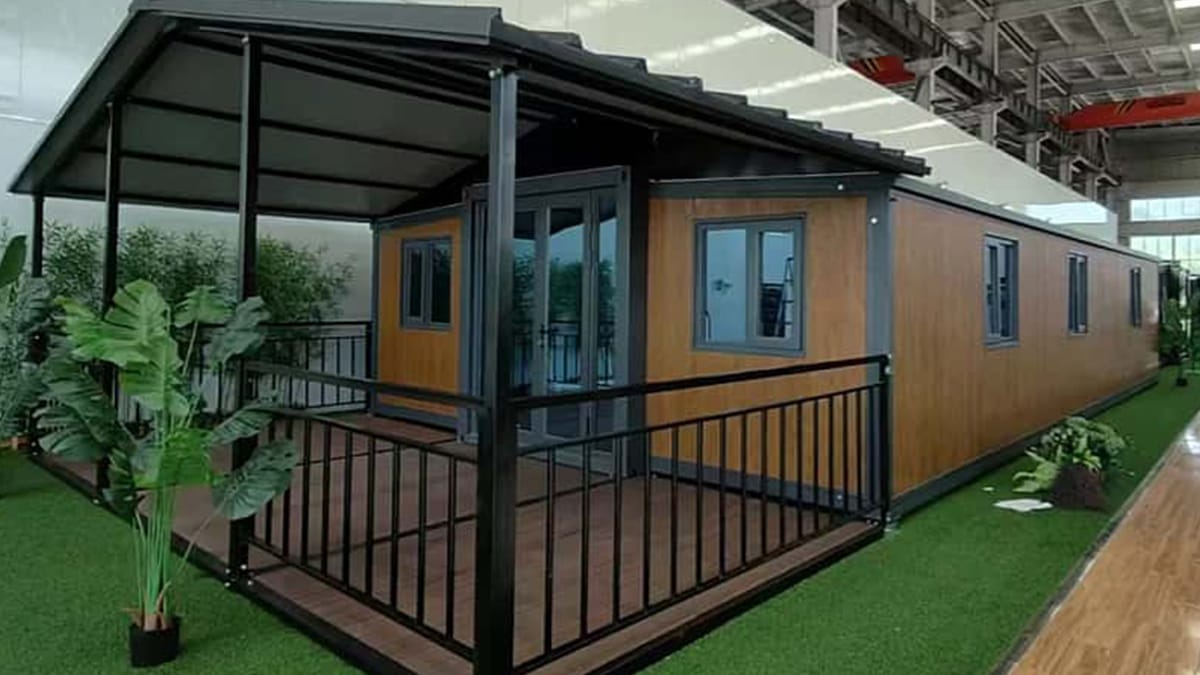
Shipping container homes are seen in many places now. These homes use strong steel boxes that travel by ship or truck. When you pick a container home, you get space that can change size. Expandable container homes are special because you can fold or slide parts to make more room. You might start with a small unit and make it bigger later. Many people use 40ft expandable container houses for families or offices. These homes use modular construction, so you can add more units or change the layout. You can choose plans that fit your needs, from studios to three-bedroom homes.
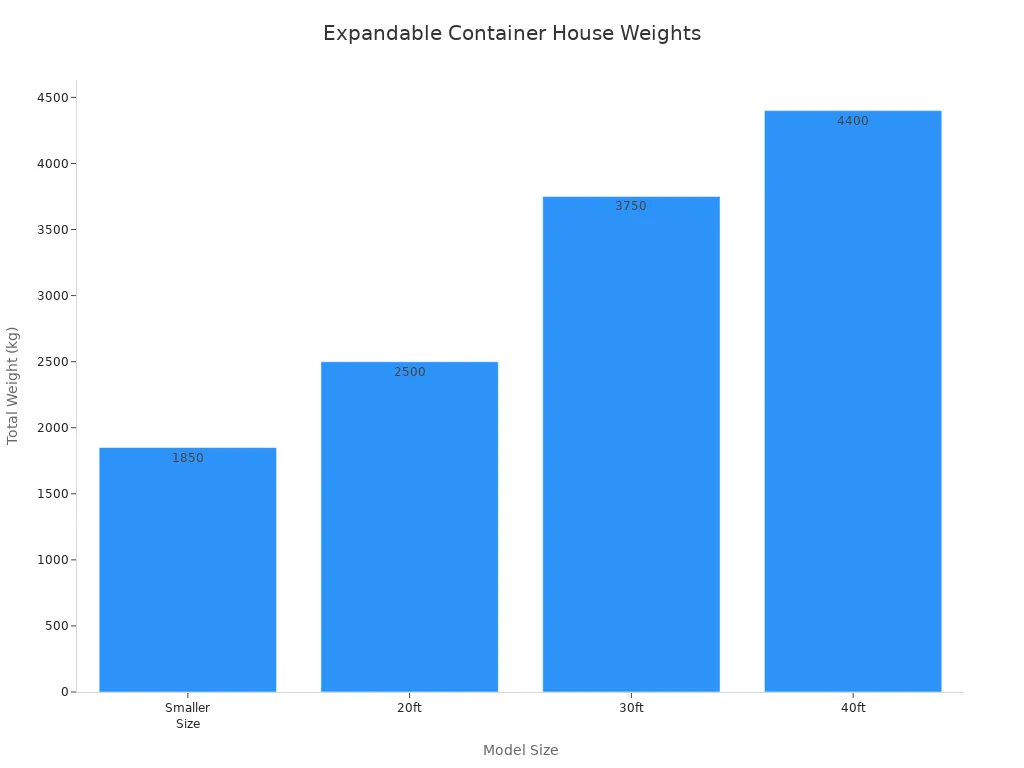
Model Size | External Dimensions (mm) | Internal Dimensions (mm) | Folded Dimensions (mm) | Total Weight (kg) |
|---|---|---|---|---|
20ft | Width 6320 x Length 5900 x Height 2480 (Side 2270) | Width 6160 x Length 5560 x Height 2240 (Side 2150) | Width 2200 x Length 5900 x Height 2480 | 2500 |
30ft | Width 6360 x Length 9000 x Height 2480 (Side 2180) | Width 6200 x Length 8660 x Height 2240 (Side 2060) | Width 2200 x Length 9000 x Height 2480 | 3750 |
40ft | Width 6240 x Length 11800 x Height 2480 (Side 2180) | Width 6080 x Length 11540 x Height 2200 (Side 2060) | Width 2200 x Length 11800 x Height 2480 | 4400 |
Smaller Size | Width 4820 x Length 5900 x Height 2480 (Side 2270) | Width 4660 x Length 5560 x Height 2240 (Side 2150) | Width 700 x Length 5900 x Height 2480 | 1850 |
Expandable container house designs use walls, floors, and roofs that move. You get lots of space and easy setup. Most shipping container homes use eco-friendly materials for safety and strength. You can pick the color, layout, and size you want. Many 40ft expandable container houses have good insulation and waterproofing. You also get help with moving, setting up, and fixing your home.
How Expandable Container Homes Work
Expandable container homes use smart systems to change size. You use hydraulic or mechanical parts to slide or fold the house. You can make a 20ft container go from 160 to 480 square feet. This lets you use the space for a studio or a three-bedroom home. Modular construction lets you join several container homes for bigger spaces. You can set up 40ft expandable container houses in 4-8 weeks. You get foldable furniture and smart technology inside.
Tip: You can change a 40㎡ expandable container house from one bedroom to three bedrooms in minutes.
Expandable container homes use strong steel frames and expansion joints. You get safe and steady buildings. Modular plumbing and electricity make setup easy. You can add appliances with hidden ports. Shipping container homes use sliding sides for permanent expansions and fold-out panels for extra space. You get fast setup and easy take-down. Many plans let you pick the number of rooms and features. In the future, expandable container homes will have more smart features and better energy efficiency.
Roof, floor, and wall panels that move
Folding parts save space
Fast loading and unloading
Interiors and exteriors you can change
Great heat and sound insulation
Waterproof and strong design
Shipping container homes are used for emergency shelters, vacation rentals, and offices. Modular construction makes 40ft expandable container houses good for many uses. You can choose plans that fit your needs and budget.
Benefits of Expandable Container Homes
Cost Savings
You can save a lot of money with container homes. Expandable container homes cost about $20,000 to $50,000 for basic models. This is much cheaper than most regular houses. Builders use old shipping containers and eco-friendly materials. This makes the homes more affordable. The building process is quick and easy, so workers do not need as much time. This means you pay less for labor. The steel frame is strong and does not break easily. You do not have to fix it often. Good insulation and solar panels help you save on bills. These homes are good for your budget and help the planet.
Tip: You save money over time with expandable container homes. You do not need big repairs because you can change or grow your home when you want.
Flexibility
Container homes give you many choices for how you live. You can make your home bigger if your family grows. You can add more rooms or join units for more space. These homes are affordable and can change with your needs. The modular design lets you move or change your home fast. You can pick from 20ft, 30ft, or 40ft models. You can also choose how many bedrooms you want and how the outside looks. The table below shows how container homes can be flexible:
Flexibility Aspect | Description |
|---|---|
Size Options | Pick 20ft, 30ft, or 40ft models for your needs. |
Room Layouts | Choose from 1 to 4 bedrooms. |
Modular Combinations | Join units to make bigger living spaces. |
Terrain Adaptability | Use on sand, rocks, or slopes with special stilts. |
Operation Ease | Make your home bigger or smaller with simple push technology. |
Exterior Customization | Choose colors and finishes you like. |
Sustainability
You help the earth when you pick container homes. Builders use eco-friendly materials and old shipping containers. This cuts down on waste. You support green living by picking homes made with steel and other recycled things. Many container homes have solar panels, rainwater systems, and gardens on the roof. The modular design makes building fast and better for nature. You get a green home that matches your values and helps the planet.
Container homes use eco-friendly materials.
You can add solar panels and green roofs for a greener life.
Building these homes makes less waste and uses fewer resources.
Note: Shipping container houses are good for saving money, being flexible, and helping the environment. You get a home that is affordable and good for nature at the same time.
Buying Factors
Material Quality
When you want a 40ft expandable container house, check the material first. Strong steel frames keep your home safe. Builders use special coatings to stop rust and water damage. Good insulation keeps you warm in winter and cool in summer. Look for tough wall panels and strong floors. Good materials help your home last longer and need fewer fixes. If you care about the earth, pick homes with recycled steel and eco-friendly insulation.
Tip: Look at the steel frame and insulation before buying. Ask about the materials used in your expandable container house.
Expandability & Design
Your home should change as your needs change. 40ft expandable container houses have smart designs for this. Hydraulic systems help you make your home bigger or smaller. Modular designs let you add rooms like kitchens or bedrooms. You can build your home fast at the site. Old shipping containers become nice places to live. You can use your home as a clinic, office, or house. You can pick the layout and add things like solar panels or rainwater systems.
Hydraulic systems make expansion easy
Modular design helps with quick setup
Rooms and features can be changed
Eco-friendly choices for green living
Size & Space
The size of your 40ft expandable container house matters a lot. You can pick between expanded or folded homes. Expanded homes give you more space for family or work. Folded homes are small and easy to move. All parts come ready, so setup is fast. You can change the size, but standard models are best for price.
Size State | Dimensions (mm) | Impact on Living Space |
|---|---|---|
Expanded | Gives you much more space for living and comfort | |
Folded | 5900 x 2270 x 2480 | Small for moving and storage, less space until opened |
Note: Expanded 40ft expandable container houses give you more room for bedrooms, kitchens, and living areas.
Portability
You might need to move your home to a new place. 40ft expandable container houses are easy to move. Their modular and light design makes moving simple. You can fold your home to make it smaller for travel. You can take it apart and put it back together fast. Strong materials let you move your home far away. Portability is good for off-grid living and people who move a lot.
Modular build makes moving easy
Light materials need less effort
Good for off-grid and moving lifestyles
Energy Efficiency
You want to spend less on energy bills. An energy-efficient container house uses good insulation and smart design. Builders add solar panels and special windows. You can use rainwater systems too. These things help you use less power and water. 40ft expandable container houses often have green options to save money and help the earth.
Tip: Ask about insulation, solar panels, and energy-saving features when you buy your expandable container house.
Durability & Weather Resistance
Your home must handle tough weather. 40ft expandable container houses can last 20 to 30 years if you care for them. Builders use weather-resistant steel and strong coatings. Good insulation keeps out heat and cold. The design helps your home stand up to wind, earthquakes, and snow. Check for rust and leaks often. Good electrical, plumbing, and HVAC systems help your home last. A strong base keeps your home safe in storms.
Weather-resistant steel and coatings
Strong insulation for all climates
Built to handle wind, earthquakes, and snow
Needs regular checks for long life
Cost & Warranty
You need to know the price before you buy. A 20′ expandable container house costs about $25,999 to $27,499. 40ft expandable container houses cost more but give you more space. Most homes have a 3-year warranty for the structure and parts. Warranties help you feel safe and protect your money.
Note: Always ask about warranty coverage for your 40ft expandable container houses. Warranties help you avoid costly repairs.
Manufacturer Reputation
Buy from a company you can trust. Good builders use strong materials and give good warranties. They help you set up your home and answer questions. Read reviews online to see what others say. Good companies follow safety rules and building codes. They help with permits and paperwork. Pick a company with a good name for 40ft expandable container houses.
Good materials and building
Strong warranties and help for customers
Good reviews from buyers
Help with permits and rules
Tip: Check out builders before you buy. Ask for references and see how they do with 40ft expandable container houses.
Zoning Laws & Building Regulations
You must follow local rules when you set up your home. Zoning laws say where you can put your expandable container house. You may need permits or approvals. Building codes set rules for safety, size, and looks. Some places have extra rules for fire, energy, and access. Homeowner groups may have more rules. Rules change by city, county, and state. Check local laws and talk to experts before you buy.
Zoning says where you can put your home
Building codes set safety and design rules
Permits and approvals may be needed
HOA rules can add more limits
Rules are different in each place
Note: Always check local zoning laws and building codes before you buy a 40ft expandable container house. Experts can help you avoid problems.
Customization Options
Interior Design
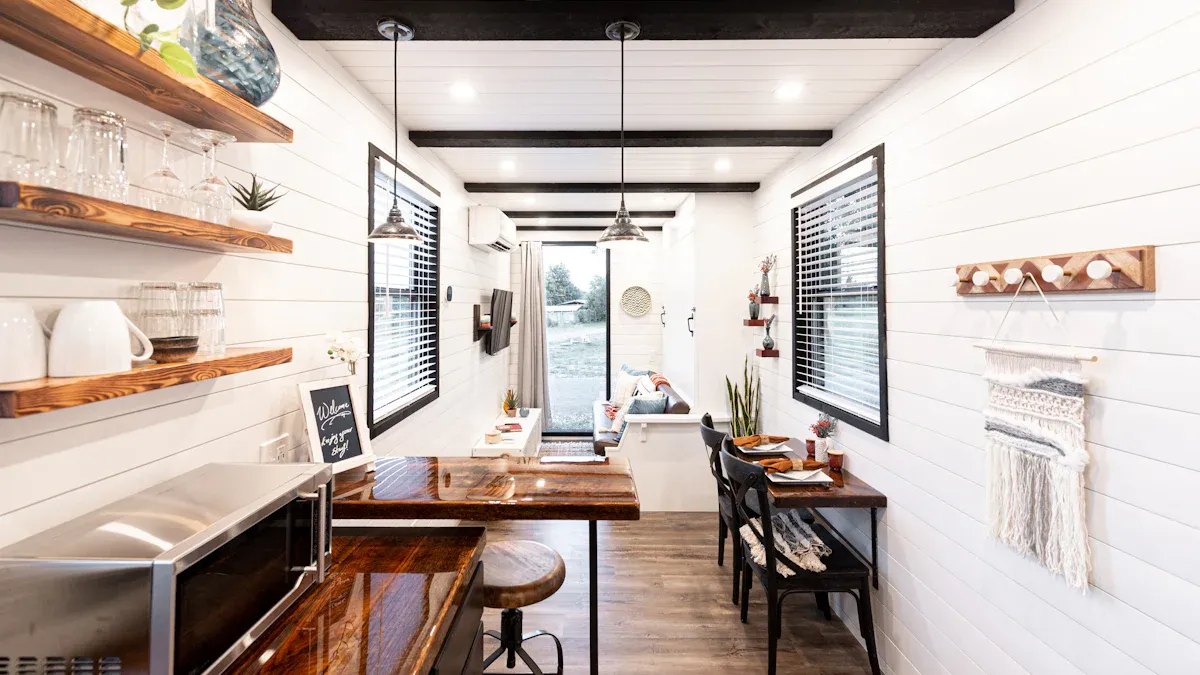
You can make your living space fit your style and needs. In 2025, new trends are popular for container home interiors. Many people use lofts in high cube containers for extra beds or play areas. You can add kitchen cabinets and shelves that go up to the ceiling. This helps you store more things. Some homes use more than one container. You can put containers next to each other for big open rooms. You can also stack them to make tall spaces with rooftop decks. Some plans use U-shaped or L-shaped layouts to make courtyards or private areas. You can pick dark colors like oxblood or bright ones like electric teal. Using different textures like cork and woven things makes the space feel nice. Adding plants, like indoor olive trees and fancy bushes, brings nature inside. Vintage furniture mixes old and new pieces for a cool look. You can also use smart furniture with wireless charging and voice controls to make your home work better.
Tip: Use tall cabinets and lofts to save space and make more room in your living area.
Exterior Finishes
You want your container home to look nice and last a long time. Outside finishes use strong steel frames with special coatings to stop rust. Builders use wall panels made of metal with foam inside to keep your home warm and dry. Extra coatings help protect your home from water, sun, and damage. Waterproofing comes from tight construction and good seals. Galvanization and special paints keep steel parts from rusting. Weather-resistant coverings protect your home from sun, rain, and wind. You can keep the industrial look or pick other finishes for the outside. These choices help your home stay strong and look good for many years.
Finish Type | Benefit |
|---|---|
Anti-corrosive Steel | Stops rust and damage |
Insulated Panels | Keeps home warm and dry |
Protective Coatings | Adds durability and style |
Weather Cladding | Handles tough conditions |
Storage Solutions
You need smart storage to keep your home neat and tidy. Expandable container homes have cabinets in the kitchen area for lots of storage. You can pick smart furniture that saves space and is useful. Some plans let you change storage to fit your life. Tall cabinets and shelves help you use all your space. You can add storage under lofts or in hidden places. These ideas help you keep your living space neat and easy to use.
Note: Smart furniture and tall cabinets help you keep your home clean and use your space well.
Prefabricated vs. Custom-Built Container Homes
Prefabricated Models
Prefabricated models are good if you want a fast home. These homes are built in a factory before coming to you. Workers make most parts ahead of time. The home has strong walls and good insulation. You also get modern finishes. Many people like 40ft expandable container houses for the space. These homes arrive ready to set up.
Prefabricated homes cost more at first. Prices start at $75,000 and can go over $300,000. You pay more for speed and good quality. The factory makes your home in a safe place. This means fewer mistakes and less waste. You can pick from many designs and finishes. You might add smart kitchens or nice bathrooms. You can also choose energy-saving windows. Most 40ft expandable container houses arrive in just a few weeks.
Tip: Prefabricated models let you move in fast and pick from many styles.
Aspect | Prefabricated (Modular) Homes | Custom-Built Container Homes |
|---|---|---|
Cost | Starts around $75,000; can go up to $300,000+ depending on size and finishes. Standardized cost structure due to factory production. | Can start as low as $25,000 for small units; larger or multi-story custom homes can exceed $200,000. Cost varies widely based on size, modifications, and finishes. |
Construction Time | Faster due to factory-based assembly line in controlled environment; consistent quality and minimized waste. | Modified in factory but requires careful engineering for cutting/joining containers, which can increase time and cost. |
Customization | Offers broad customization with a range of interior finishes and amenities similar to traditional homes; customization occurs during manufacturing or installation. | Often involves a custom process especially for multi-container or multi-story designs; tends to be more minimalistic but can include compact kitchens, storage, and outdoor spaces for a unique living experience. |
Custom-Built Options
Custom-built container homes are good if you want something special. Builders help you design every part of your home. You can pick how many bedrooms you want. You can also choose the layout and the outside area. Many people use 40ft expandable container houses for custom ideas. You can stack containers or put them side by side. You can even make cool shapes.
Custom-built homes can cost less at the start. Small homes may start at $25,000. Big or tall homes can cost over $200,000. You spend more time planning and building. The work takes longer because workers must cut and join containers. You get to control every detail. You can add small kitchens, smart storage, or decks outside. Many 40ft expandable container houses use custom features to fit your needs.
Note: Custom-built homes let you make a space that fits your style and needs. You can design a home that feels just right for you.
Think about your budget, your time, and your design ideas. Prefabricated models are fast and high quality. Custom-built homes give you more freedom and style. Many people pick 40ft expandable container houses for both types. They work well for families, offices, and creative spaces.
Container Homes for Sale: Cost & Financing
Price Range
There are many container homes for sale in 2025. These homes are a cheaper choice for families and small businesses. The price changes based on size and features. Basic expandable homes cost between $9,000 and $12,000. Bigger homes with more modules can cost $25,000 or more. If you want better interiors or appliances, the price goes up by 40-60%. Using stronger steel or special materials adds another 10-20%.
Price Category | Price Range (USD) | Notes |
|---|---|---|
Basic standard expandable home | $9,000 – $12,000 | About 37 sqm unfolded, includes basic wiring, flooring, insulation |
Multi-module expandable homes | $15,000 – $25,000+ | Larger layouts with more sections |
Upgraded interiors and appliances | +40-60% increase | Premium kitchen, lighting, water heating |
Advanced materials | +10-20% increase | High-strength steel or premium materials |
Transportation & installation | $2,000 – $5,000 approx | Shipping, lifting, installation |
Site preparation | $1,000 – $3,000 | Land work, piping, and setup |
Container homes for sale give you a cheaper way to own a home.
Installation Costs
You need to plan for extra costs when you buy a container home. These costs include getting the land ready and adding utilities. Site work can cost from $5,000 to $15,000. If you want a basement, it can cost $50,000 or more. Electrical work costs between $2,000 and $8,000. Plumbing can cost $3,000 to $10,000. Adding finishes and insulation makes the price higher. For a simple setup with one or two containers and a basement, you might pay $35,000 to $120,000. Bigger and fancier homes can cost up to $250,000.
Cost Component | Estimated Cost Range (USD) |
|---|---|
Containers | $1,200 to $10,000 each |
Site Preparation | $5,000 to $15,000 |
Basement | $15,000 to $50,000+ |
Structural Work | $5,000 to $20,000 |
Electrical Work | $2,000 to $8,000 |
Plumbing Work | $3,000 to $10,000 |
Interior Finishes | $5,000 to $15,000+ |
Insulation | $1,000 to $5,000 |
Note: The cost for site work and foundation can change a lot depending on your land.
Financing Options
There are different ways to pay for your container home. Many people use regular loans if the home is on their land. These loans need a down payment and good credit. You can also look for government help for affordable homes or green building. Crowdfunding lets you raise money from many people online. Some banks have green loans for homes that help the planet. You can also get microloans or share costs with others.
Regular loans (need down payment and credit check)
Government help for affordable homes
Crowdfunding websites
Green loans and tax-credit programs
Working with builders or investors
Microloans for small projects
Tip: Always ask your bank if your container home can get a normal mortgage.
Choosing a Supplier
Supplier Research
You need a supplier you can trust. Start by checking the company’s background. Companies with more years in business often do better work. See if people say good things about them. Read what other buyers write in reviews. Look for comments about delivery, honesty, and fixing problems. You can also ask the company for people to talk to. Talking to old customers helps you know what to expect.
Here is a table to help you compare suppliers:
Evaluation Criteria | Explanation |
|---|---|
Manufacturer Reputation | Experience and reputation affect product quality and price. More experienced manufacturers tend to offer better cost performance. |
Material Quality | Different materials impact durability and price. Higher quality materials generally increase cost but improve product longevity. |
Product Specifications | Size and design vary according to buyer needs, influencing price and suitability for intended use. |
Cost-effectiveness | Buyers should balance price with quality and features to ensure value for money. |
Tip: Always make sure the supplier follows local building and safety rules.
Product Quality
Always check how good the container homes are. Ask what materials the supplier uses. Good steel and insulation help your home last longer. Look at the size and design to see if they fit you. Some suppliers have better finishes or stronger frames. Compare these things before you choose. A good company will show you pictures or samples of their work.
Ask for details about steel grade and insulation type.
Check if the home has weatherproof coatings.
Look for strong doors, windows, and locks.
Customer Support
Good customer support helps you buy with less trouble. You want a company that answers your questions fast. They should help you with permits and paperwork. If something goes wrong, they should fix it quickly. Read reviews to see how they treat customers after the sale. Some companies help with setup or repairs. Pick a supplier who helps you before and after you buy.
Note: Good customer support saves you time and worry during your project.
Shipping Container Homes: Challenges
Safety
You want your shipping container homes to keep you safe. Strong steel frames and good locks help protect your family. The design and materials make these homes safe. Builders use fire-resistant coatings and strong doors. Windows have tough glass that does not break easily. Good insulation keeps you warm or cool inside. It also helps protect you from outside weather. You should look for sharp edges and check the electrical systems. Make sure everything follows safety rules. Always ask your builder about safety before you buy a shipping container house.
Tip: Put smoke detectors and carbon monoxide alarms in every room. These alarms help keep you safe all the time.
Weather Resistance
Shipping container homes need to handle all types of weather. You might live where it rains, snows, or gets windy. Builders use weatherproof paint and seal every joint. This keeps water out and stops rust from forming. Good insulation keeps your home warm in winter and cool in summer. You can add roof panels or awnings for extra protection. Check your home often for leaks or rust. Many people wonder how long shipping container homes last. With good care, they can last 20 to 30 years or more.
Use weatherproof coatings to stop rust.
Seal windows and doors to keep water out.
Check your home after storms for damage.
Installation Logistics
Building a shipping container home takes careful planning. You must choose where to put your home and how to get it there. Some places have rules about where you can set up these homes. You need a flat and strong base for your home. Cranes or forklifts help move the containers into place. You also need to connect water, power, and sewer lines. Sometimes, you face problems like local rules or not knowing enough about these homes. The table below shows common problems and ways to fix them:
Challenge | Description | Mitigation Strategy |
|---|---|---|
Regulatory Hurdles | Complex compliance with local building codes and zoning regulations for alternative housing. | Be well-informed about local regulations and work with professionals knowledgeable in legal aspects. |
Perceived Limitations | Concerns about limited space and insulation in container homes. | Showcase clever design solutions and customization options to address space and insulation concerns. |
Insufficient Market Knowledge | Many buyers lack familiarity with shipping container homes and hold misconceptions. | Educate buyers by highlighting advantages, dispelling myths, and sharing success stories to build trust. |
Presentation and Appeal | Potential buyers may be hesitant due to appearance or perceived quality. | Invest in professional conversion and staging to enhance visual appeal and demonstrate quality craftsmanship. |
You can avoid many problems by working with experts. They help you follow the rules and set up your shipping container homes the right way.
When you buy an expandable container house in 2025, follow these key steps:
Define your needs. Decide how you will use the house and who will live there.
Pick the right size. Choose from 20ft, 30ft, or 40ft models.
Select the number of bedrooms. Match the layout to your family or group.
Check local rules. Make sure you follow building codes and zoning laws.
Plan for setup. Think about utilities, foundation, and delivery.
Use this guide as your checklist. Talk to experts and research trusted suppliers before you make your final choice.
FAQ
How long does it take to set up an expandable container house?
Most companies can bring and build your home in 4 to 8 weeks. This is much faster than building a regular house. The steps include bringing the house, putting it together, and hooking up water and power.
Can you live in an expandable container house year-round?
Yes, you can live in these homes all year. Good insulation and weatherproofing keep you warm or cool. You can add heaters or air conditioners for more comfort.
Do you need a special foundation for a container house?
You need a strong base for your home. Most people use concrete slabs, piers, or steel beams. The best type depends on your land and local rules.
Are expandable container homes safe during storms?
Expandable container homes have tough steel frames. Builders make them to stand up to wind, rain, and snow. If you live where storms happen, you may need extra anchors.
Can you customize the layout and design?
You can pick your layout, finishes, and features. Many companies let you choose bedrooms, kitchens, and storage. You can also pick colors and materials you like.