

07 Sep Capsule House vs Container House Which Suits Your Lifestyle
Table of Contents
If you want a simple life and to move easily, a capsule house may be good for you. Container houses are better if you need more room and want to change things. Many people now care about saving money, easy access, and living in different ways. Look at these facts:
The prefab container housing market in the USA may be worth $73.07 billion by 2025.
Fast city growth is making more people want foldable container houses.
Priority Area | Support Level |
|---|---|
Affordability | |
Accessibility | >70% |
Multifamily Housing | 50% or more |
Think about what is most important to you before you decide.
Key Takeaways
Capsule houses are great for people who want small, cheap homes. They fit well in cities and give a close community feeling.
Container houses have more room and can be changed to fit your needs. They work well for families or people who want a special look and more choices for layout.
Both types are good for the environment. Container houses help by using old shipping containers, so they are a green choice.
Think about what you need before picking one. Capsule houses are best for people who like simple living and moving often. Container houses are better if you want more space and ways to design your home.
Always look at local rules and get the right permits before you build. Knowing the laws about land use can help you save time and money later.
Capsule House Overview
What Is a Capsule House
You may ask what a capsule house is. This kind of home started in Japan. The first capsule hotel opened in Osaka in 1979. Kisho Kurokawa designed it. Here is some history:
Year | Event Description | Location | Architect |
|---|---|---|---|
1979 | First capsule hotel opened | Osaka, Japan | Kisho Kurokawa |
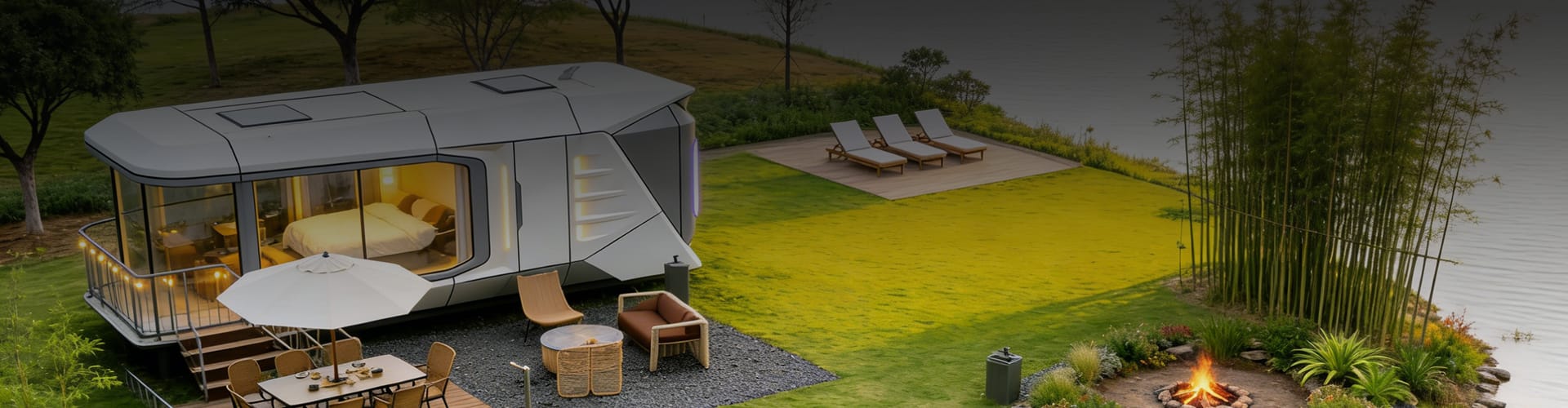
A capsule house uses smart design to fit things in a small space. Most capsule houses are about 5.8 meters long. They are 2.15 meters wide and 2.58 meters high. You get about 13 square meters to live in. The frame uses strong steel to keep you safe. Walls have thick insulation. The outside uses aviation aluminum. Inside, you see bamboo charcoal fiberboard walls. There is central air conditioning. The bathroom has smart features. These homes are pre-fabricated units. Builders put them together somewhere else and move them to your place.
Feature | Description |
|---|---|
Dimensions | 5.8m (L) x 2.15m (W) x 2.58m (H) |
Total Area | 13 sqm |
Main Body Frame | Reinforced seismic steel structure |
Insulation | High density polyurethane panel + foam |
Exterior Material | Fluorocarbon coated aviation aluminum sheet |
Interior Walls | Bamboo charcoal fiberboard |
Amenities | Central air conditioning, smart bath, sanitary ware |
Who Should Choose Capsule Houses
Capsule houses are good if you want something new and cheap. Generation Z likes them for their cool style and low price. Millennials enjoy capsule houses because they care about the planet. They also like to travel easily. Generation X sometimes picks capsule houses for short trips and comfort.
Generation Z: Wants new ideas, saves money, and likes smart design.
Generation Y (Millennials): Likes green living and real travel.
Generation X: Picks comfort and good prices for short stays.
Pros and Cons
Living in a capsule house has many good points. You can join a group and make friends. You save money and help the earth. The design makes small spaces feel cozy.
Advantage | Description |
|---|---|
Community Aspects | You can meet people and feel part of a group. |
Affordability | You spend less than on a regular house. |
Eco-Friendliness | You make less trash and live greener. |
Space Optimization | You use every bit of space for comfort and use. |
There are also some problems. Privacy is hard to get. Selling a capsule house can be tough. You cannot change much inside. Local rules may cause trouble. The small size may feel tight for families.
Disadvantage | Description |
|---|---|
Lack of Privacy | It is hard to get alone time. |
Resale Value | Selling or renting your capsule house may be hard. |
Limited Customization | You cannot change much, so it may feel small. |
Building Codes and Regulations | You may need to change your design for local rules. |
Limited Space | You must get used to living in a small area. |
Container Houses Overview
What Are Container Houses
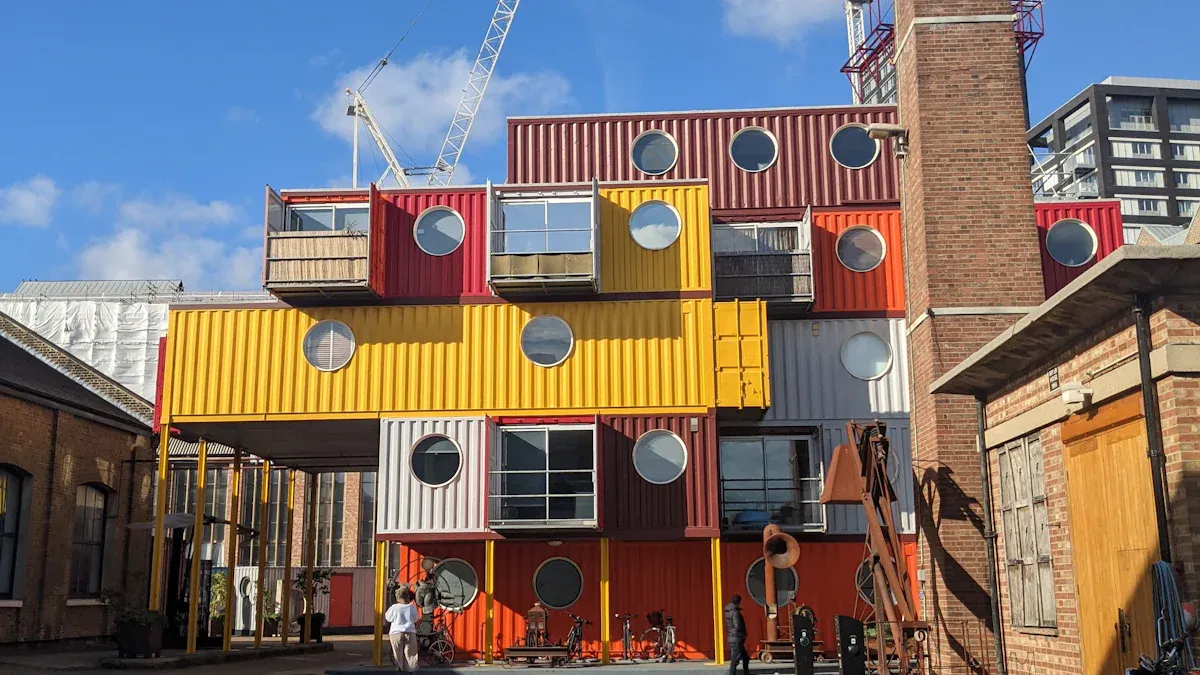
You may have seen large metal boxes on trains or ships. People now use these shipping containers to build homes. Container houses use these strong steel boxes as the main parts. They come in different sizes, like 20 feet or 40 feet long. Some are taller and called high cubes. You can stack or join them to make bigger rooms.
Here’s a short history of container houses:
Year/Period | Development | Description |
|---|---|---|
1930s | Origins | Container housing started in the U.S. with industrialized housing. |
1956 | Standardization | Malcolm McLean made shipping containers all the same size. |
1960s-1970s | Concept Emergence | People began to think about using containers as homes. |
1987 | First Documented Use | Nicholas Lacey turned a shipping container into a living space. |
Container houses are very strong. They can handle bad weather because they were made for the sea. You need good insulation and air flow to make them comfy. People add windows and doors. Some join many containers to get more space.
Who Should Choose Container Houses
You might like container houses if you want a modern and flexible home. Many people use them for vacations, parties, or as their main house. In 2022, about 42% of buyers picked container houses for living. They are popular for social and fun times. If you want a home that looks different or need a fast build, container houses may be right for you.
You may also like container houses if you care about the earth. Using old containers for homes helps cut down on waste. If you want to design your own space, you can stack or arrange containers in many ways.
Pros and Cons
Container houses have many good points:
Durability: Containers are made from Corten steel, so they last long and stand up to bad weather.
Speed of construction: You can move in quickly because builders put most parts together somewhere else.
Cost-effectiveness: Basic container houses can start at about $10,000, which is cheaper than many regular homes.
Sustainability: Using old containers helps the planet by making less waste.
Modularity: You can add more containers or move them if you want to change your home.
Unique look: The industrial style gives your home a cool, modern feel.
But there are some problems too:
Appliances may not fit well inside the narrow container.
Getting building permits can be hard, since not all places allow container houses.
Insulation is very important. Without it, the metal walls get too hot or cold.
You may have trouble finding builders who know how to work with containers.
Used containers might have safety problems from what they carried before.
Tip: Always check what your container was used for and talk to local officials before you start building.
Comparison
 Space
Space
 Space
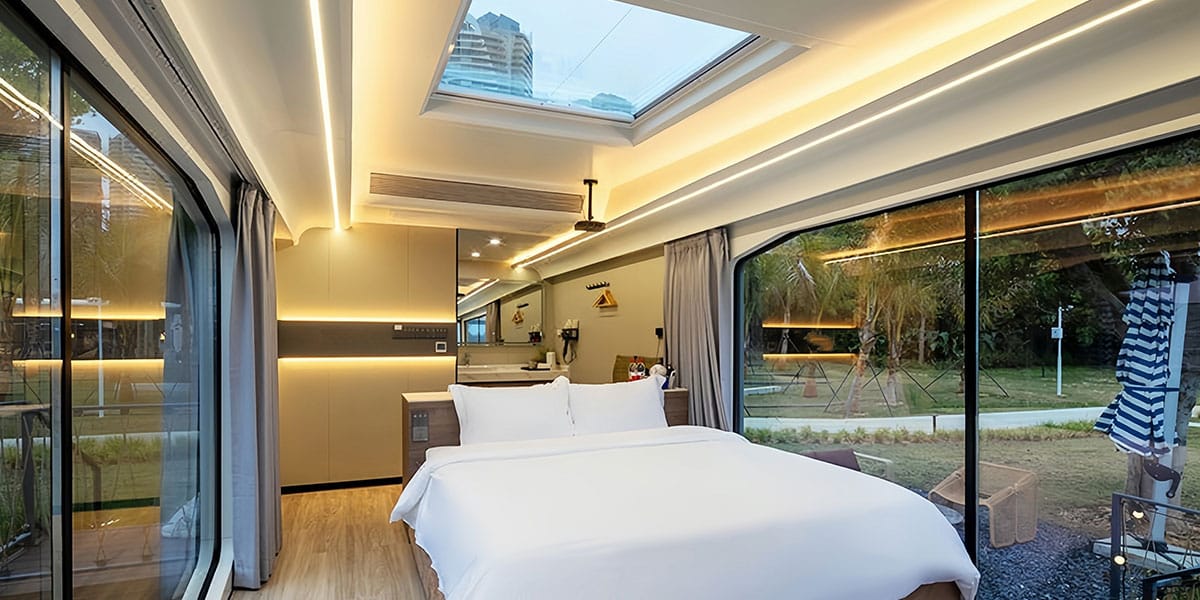
SpaceWhen you think about space, you want to know how much room you get. Capsule houses give you a small, cozy place. They are good if you like things simple and do not need much room. Container houses give you more choices. You can make them bigger or add more rooms if you want.
Capsule House Model | Area (ft²) | |
|---|---|---|
Capsule House Plus A6 | 32.67 | 350 |
Capsule House Mini Size A3 | 18.81 | 202.47 |
Space Capsule House A5 | 28.05 | 301.55 |
Most capsule houses are under 350 square feet. They use smart design to make the small space work well. Container houses are made from shipping containers. They can be much bigger than capsule houses. You can stack or join containers to make a larger home. Some people use one container for a tiny house. Others put many together for more space. If you want more room and ways to change your home, container houses are a better choice.
Tip: Capsule houses are good for city life where space is tight. If you want more room or plan to grow, pick a container house.
Cost
Let’s talk about cost. Capsule houses usually cost less at first. They use fewer materials and are faster to build. But you might pay more later for repairs. The small size means you need special parts to fix things. Your bills for water and power can change a lot, depending on how you use the space.
Capsule houses often do not have a full kitchen or bathroom. You may spend less on big appliances but need to change how you live.
You must keep things neat, which can change what you spend on storage or cleaning.
Container houses can cost more at the start, especially if you want a big house or lots of extras. But you can start small and add more containers later. How much you pay to keep it up depends on the container’s quality and how you protect it from rust or bad weather. Both types can save you money if you use them well, but container houses may save more in the long run if you stay for many years.
Customization
You want your home to feel special. Capsule houses have a modular design, but you cannot change them much. Most come in set sizes and layouts. You can pick some colors or finishes, but you cannot change the main shape.
Container houses are great for making your own design. You can choose open rooms, extra bedrooms, or even a rooftop deck. You can make your container house look modern or like a small cottage. Containers let you build a space that fits your style and needs.
Type of House | Customization Level |
|---|---|
Container Houses | Highly customizable in layout, design, and functionality |
Capsule Houses | Limited customization due to standard sizes and temporary use |
If you want a home that is different, container houses give you more freedom. You can add things like solar panels or smart home systems. New building technology makes it easier to get creative with container homes.
Durability
How long your home lasts is important. Capsule houses use strong steel and special aluminum. They can last over 50 years. They can handle strong winds and even big earthquakes. You can feel safe in tough weather.
Container houses also last a long time. Most last 25 to 30 years, but with good care, they can last up to 50 years. The steel frame stands up to storms and heavy use. If you live where it is wet, you need to watch for rust. Taking care of your container house keeps it strong.
Capsule houses: Over 50 years if made with good materials.
Container houses: 25–30 years, up to 50 years with care.
Both types last a long time. Capsule houses may do better in harsh weather because of their strong build.
Amenities
You want your home to be comfy and easy to use. Capsule houses often have smart features and nice finishes. You can control lights, heat, and locks from your phone. Some have shared spaces like work areas and kitchens. This gives you both privacy and a sense of community.
Container houses give you different comforts. You can add a full kitchen, bathroom, or even a home office. The bigger size means you can fit more things inside. Using light colors and mirrors can make the space feel larger. Adding your own style helps you feel at home.
Capsule houses: Smart features, good use of space, shared areas.
Container houses: Big appliances, custom rooms, more storage.
If you want tech and smart design, capsule houses are good. If you want more space and choices, container houses are better.
Location
Where you put your home matters a lot. Capsule houses are often seen as portable or temporary. Some cities let you have them in special zones. Other places do not allow them. Always check local rules before you buy or move in.
Aspect | Details |
|---|---|
Zoning Classification | Capsule homes may be portable residences or short-term setups. |
Location Restrictions | Some areas restrict capsule homes to certain zones or ban them. |
Local Guidelines | Contact city planning to check zoning permissions. |
Boundary Rules | Follow minimum spacing from property lines or buildings. |
Usage Permits | Some zones need extra permits for non-traditional homes. |
Consequences of Non-compliance | Breaking rules can mean fines or forced moves. |
Container houses have their own rules. In some states, you can only put one container on a small lot. Bigger lots let you use more containers. Always ask local officials how many containers you can use. Both types let you move your home, but you must follow the law to avoid problems.
Note: Both container houses and capsule houses can be moved. But rules and paperwork can slow you down. Always plan ahead.
Decision Guide
Checklist
 Checklist
Are you not sure which home is best for you? This checklist can help you choose. Think about what is most important to you.
Do you want a home that you can move easily?
Is saving money the most important thing for you?
Do you need lots of space for your family or hobbies?
Would you like to design your own rooms?
Are you planning to live in your home for many years?
Do you care about living in a way that helps the planet?
Is it important for you to set up your home quickly?
Are you wondering how much a modular home or a shipping container home costs?
Tip: If you want more space, custom rooms, or to stay for a long time, container houses may be best for you. If you want something simple, easy to move, and cheap, capsule houses could be right for you.
Scenarios
Let’s look at some real stories. These show how people use capsule and container houses in different ways.
Example | Description | Outcome |
|---|---|---|
Swiss ski lodge | Used Apple Cabin C5 (236 sq ft) as luxury staff housing | 20 units set up in 45 days, $2M saved compared to concrete cabins |
Mining camps in Alaska | Used expandable container houses for worker housing | Better living and fast setup in tough places |
Ski resorts in the Rocky Mountains | Used modular homes for staff during winter | Workers were happier and stayed longer |
Picture working at a ski resort. You need a place to live for the season. Capsule houses are quick to set up and save money. In Switzerland, staff moved in fast and the company saved $2 million. If you work far away, a container house can give you comfort and safety. Alaska mining camps use container houses to help workers feel good, even in bad weather.
If you want to compare prices, ask local builders and suppliers. When you build a modular home or a container home, always ask about costs, features, and rules in your area. Your choice depends on what you need, how much you want to spend, and your plans for the future.
You have learned that capsule houses and container houses are different. Here is a simple table to compare them:
Feature | Capsule Houses | Container Houses |
|---|---|---|
Size | Small, efficient units | Larger, customizable spaces |
Structure | Built for tight city living | Strong for tough environments |
Customization | Limited options | Many ways to personalize |
Ideal Use | Urban, expensive areas | City, country, or off-grid spots |
Think about what you need most. Do you want more space, a certain look, or the ability to change things? If you want to move forward, here are some steps:
Look for builders who know how to make them.
Visit show homes or talk with a local expert.
FAQ
Can I move a capsule house or container house to a new location?
Yes, you can move both types. Capsule houses are lighter and easier to transport. Container houses need special trucks or cranes. Always check local rules before you move your home.
Do capsule houses and container houses need special permits?
You usually need permits for both. Some cities have strict rules. Always ask your local building office before you buy or build. Rules can change from place to place.
How long does it take to set up each type of home?
Capsule houses can be ready in a few days. Container houses may take a few weeks, especially if you want custom features. Fast setup is a big reason people choose these homes.
Are these homes safe in bad weather?
Home Type | Safety Level |
|---|---|
Capsule House | Strong in storms |
Container House | Tough in wind |
Both homes use steel frames. You get good protection in storms or heavy rain.
Can I add solar panels or smart tech to these homes?
Absolutely! You can add solar panels, smart locks, or energy-saving lights. Container houses give you more space for tech. Capsule houses often come with smart features already built in.