



08 Dec A Complete Guide to Foldable Container Home Permits and Zoning Laws in the USA
If you’re wondering about foldable container homes permits in USA, it’s important to know that local and state regulations play a major role in your project. Before starting, you should research all requirements for foldable container homes permits in USA to ensure your build is legal. Understanding how to construct a compliant container home is essential. Key factors include zoning laws, obtaining the proper permits, and avoiding legal issues. Most areas require you to meet building codes and follow local ordinances. Common requirements for foldable container homes permits in USA include:
Permits from local government agencies
Zoning laws set by your city or town
Regulations for appearance, accessibility, size, safety, and energy efficiency
With accurate information about foldable container homes permits in USA, you’ll be prepared to navigate the process and create your ideal home.
Key Takeaways
Check your local rules before you start your foldable container home. Every city or county has its own rules you must follow.
Get all the needed permits, like building and zoning permits. This makes sure your container home is safe and legal.
Talk to your local building department early in your project. They can tell you what you need and help you not make expensive mistakes.
Work with licensed architects and engineers who know the local codes. Their skills can make getting permits easier and help you follow the rules.
Keep up with zoning laws in your area. These laws say where you can build and can change your home’s design and size.
Are Foldable Container Homes Legal in the USA?
National Overview of Container Home Legality
You may ask if you can build a foldable container home in the United States. The answer is different depending on where you live. There is no one federal law for all container homes. Instead, you must follow rules from your state, city, or county. These rules are not the same everywhere.
Tip: Always talk to your local building department before you begin.
Most places treat foldable container homes like regular houses. You must follow the same safety and design rules. Here are some things to remember:
Local rules, like zoning laws and building codes, decide if you can build a container home.
You must follow safety rules for structure, plumbing, electrical, and fire safety.
You need permits just like you would for a normal house. These include building, electrical, and plumbing permits.
Shipping container homes must pass the same checks as other homes. You need to plan well and make sure your home meets all local rules.
Key Legal Considerations for Shipping Container Homes
States and cities have different rules for container homes. Some places make it easy to get approval. Others have more strict rules. You need to know both state and local laws before you start.
Here is a table that shows how state and local governments handle container homes:
Aspect | State Regulations | Local Regulations |
|---|---|---|
Zoning Laws | Vary a lot in different places | Often have stricter rules |
Building Codes | Usually less strict | Often more strict |
Permitting Process | Can be simpler | Usually more detailed and strict |
You should look closely at zoning laws. Some places let you build shipping container homes in residential areas. Others do not. Local rules often set limits on the size, height, and look of your home. They may also want your home to look like other houses nearby.
Note: If you skip any part of the permit process, you could get fined or have to remove your home.
Shipping container homes are a special way to build, but you must follow all legal steps. Always talk to your local officials and ask questions if you are not sure. This will help you avoid trouble and keep your project moving.
Understanding Foldable Container Homes Permits in USA
Building Permits and Codes
When you want to build a foldable container home, you need to learn about building permits and codes. These rules help keep your home safe and legal. Every city or county has its own building rules. You have to check these rules before you start.
You need a building permit for almost every part of your project. The permit shows your plans follow the rules. You must get a permit before you build, change, or add to your home. The permit process checks your plans for safety and design. You must prove your foldable container home follows all building rules.
Here are some steps you should follow:
Go to your local building department.
Ask about building codes and permits for foldable container homes.
Give your plans to the office for review.
Wait for them to approve your permit.
Start building after you get your permit.
You must follow USA container home building rules. These rules cover fire safety, plumbing, and electrical systems. You also need to meet rules for energy use and accessibility. Building codes help keep you and your family safe. You must follow USA container home guidelines for every step.
Tip: Always keep copies of your building permit and other permits for container houses. You might need to show them during inspections.
Building rules also cover the size and look of your home. You must check USA container home laws for your area. Some places have strict rules for modular container homes. You must follow the rules to avoid problems later. If you skip any permit, you could get fined or have to stop your project.
You also need to think about container home compliance. This means your home follows all building rules and laws. You must follow USA container home planning rules. These rules help you build a safe and legal home.
Zoning Laws and Restrictions
Zoning laws decide where you can build your foldable container home. You need a zoning permit before you start. Zoning laws for container homes are different in every city or county. You must check local zoning laws to see if you can build a shipping container home on your land.
You need a zoning permit for your project. The permit shows your home fits the area’s rules. Some places let you build shipping container homes in residential zones. Other places only allow them in special zones. You must follow the rules and get the right zoning permit.
Here is a table to help you understand zoning laws:
Zoning Type | Can You Build? | Do You Need a Zoning Permit? |
|---|---|---|
Residential | Sometimes | Yes |
Commercial | Rarely | Yes |
Industrial | Often | Yes |
You must follow building rules and zoning laws for container homes. Zoning laws may limit the size, height, and look of your home. You need a zoning permit for every change you make. If you do not follow the rules, you may have to remove your home.
Note: Always ask your local zoning office about planning permissions for container homes. This helps you avoid mistakes and delays.
You must follow USA container home guidelines and the rules for building. Zoning laws protect your neighborhood and help keep your project safe. You must get all permits before you start building. If you follow the rules and get the right zoning permit, you can enjoy your new shipping container home without worry.
You also need to check requirements for container housing in your area. Every city has different USA container home planning rules. You must follow building codes and get every permit. This helps you meet legal rules for container homes and avoid problems.
If you follow building codes, building rules, and get every permit, you can build a safe and legal home. You must always check the rules and keep your permits up to date.
State-by-State Zoning Laws for Container Homes
Favorable States for Building a Container Home
Some states make building a container home easier. Texas likes new building ideas. You can build container homes in cities and country areas. Florida supports container housing zoning. Many places want more affordable homes. Alaska lets you build container homes if you follow local building codes. These states have clear rules. The permit process is simple.
🏡 Tip: Even in a favorable state, check your city or county rules before you build.
Mixed or Conditional States
Some states have mixed rules for container homes. Missouri does not ban container homes. Each city or county has its own zoning laws. Kansas City and St. Louis allow container homes. You must follow strict building codes and get permits. Wisconsin lets you build container homes. You need detailed permits and must follow local rules. Tennessee lets local leaders decide. Some counties have stricter rules than others.
In these states, talk to your local building department.
You may need extra paperwork or inspections.
Rules can change from one town to another.
Restrictive States and Localities
Some places make building a container home hard. Urban areas in New York and California have strict rules. New York City has tough zoning and density rules. Approvals are difficult. California cities like Los Angeles and San Francisco have more rules than country areas. These places worry about safety and appearance. They care about how container homes fit in neighborhoods.
Urban New York and California: Stricter rules than country areas
New York City: Complicated zoning and density rules
California cities: More restrictions for container homes
⚠️ Note: Always check local zoning laws and talk to professionals before you plan. Rules can change fast. Each city may have its own requirements.
If you want to build a container home, learn about your state and local rules. Ask questions and get help from experts. This helps you avoid problems and build your home the right way.
The Permitting Process for Shipping Container Homes
Who Issues Permits
You will need to talk to many local offices when you want a permit for your container home. Each office checks a different part of your project. Here are some main groups you might need to visit:
Local Enforcement Agencies (LEA)
County or City Planning Department
Building Department
Public Works or Solid Waste Department
Fire Protection District
Air Quality Management Districts (AQMD)
Regional Water Quality Control Boards (RWQCB)
Some states, like California, may have more offices like CalRecycle or the Department of Fish and Game. Always ask your local building department which offices you need to see.
Step-by-Step Guide to Permitting
Here are steps to help you get your permits for a shipping container home:
Call your local building department to learn what you need.
Make sure container homes are allowed in your area.
Get your plans ready, like site and floor plans.
Turn in your application with all the needed papers.
Wait for approval, which can take 6 to 12 weeks.
Set up inspections during important parts of building.
You will need to give several papers. This table shows what you might need:
Documentation Type | Details |
|---|---|
Building Permit Application | Filled-out form, property details, estimated costs |
Construction Documents | Site plan, floor plans, elevations, foundation and structural plans |
Engineering Documentation | Structural calculations, load analysis, foundation design |
Energy Compliance Documentation | Insulation specs, window and door ratings, HVAC efficiency |
Common Challenges and Solutions
You might have some problems when getting your permit. Zoning research is important because some places have rules. You may need a professional engineer to check your plans. Insulation and keeping the home warm or cool can be hard for container homes. Sometimes, you may have trouble with foundation plans or energy codes.
💡 Tip: Use plans from experts and work with a local engineer. This can help you avoid delays and make sure your home follows all rules.
You should talk to local offices early and keep them updated. Learning about local rules before you start will help you avoid problems. If you follow these steps, you can get your container home approved more easily.
Preparing Your Land for a Container Home
Zoning and Land Use Checks
Before you place a foldable container home on your land, you need to check local rules. Zoning laws decide where you can build and what you can use your land for. These rules can change from one city or county to another. You should look at these important points:
Zoning laws tell you if you can use a container for living, storage, or business.
Building codes make sure your home is safe and meets design standards.
You often need permits before you start building. Rules may differ for temporary or permanent homes.
Deed restrictions and HOA rules can limit where you place your home or how it looks.
You can follow these steps to make sure your land is ready:
Review your zoning to see if container homes are allowed.
Decide if you want a standard container or a certified module.
Prepare engineering plans with details about the structure and utilities.
Check energy rules and provide needed calculations.
Get permits for electrical, plumbing, and heating systems.
Work with local agencies for plan approval.
Submit your application with all documents.
Get ready for inspections during the build.
📝 Tip: Talk to a local architect or contractor. They know the latest rules and can help you avoid mistakes.
Site Preparation and Utilities
After you check the rules, you need to get your land ready. Start by picking a spot that is easy to reach and fits zoning laws. Clear away any plants or trash. Make the ground flat and level. You may need to lay a foundation, such as gravel, concrete, or ground anchors, depending on your home’s needs.
For utilities, you must plan for:
Electrical wiring and power connections
Plumbing for water and waste
Heating and cooling systems
Installing lights, cabinets, and appliances
Here is a table showing average costs for land preparation in the USA:
Item | Average Cost Range |
|---|---|
Piers (6 per container) | $3,600–$5,100 |
Concrete Slab (320 sq ft) | $1,920–$6,400 |
New Electrical Service | $12,250 for a 500-foot run |
Upgrading Existing Service | $1,200–$2,000 |
Connecting to Existing Sewer | $1,000–$15,000 |
Septic System Installation | $3,610–$12,412 |
Connecting to Existing Water | $248–$422 per piping run |
Drilling a New Well | $5,500 (range: $1,800–$24,500) |
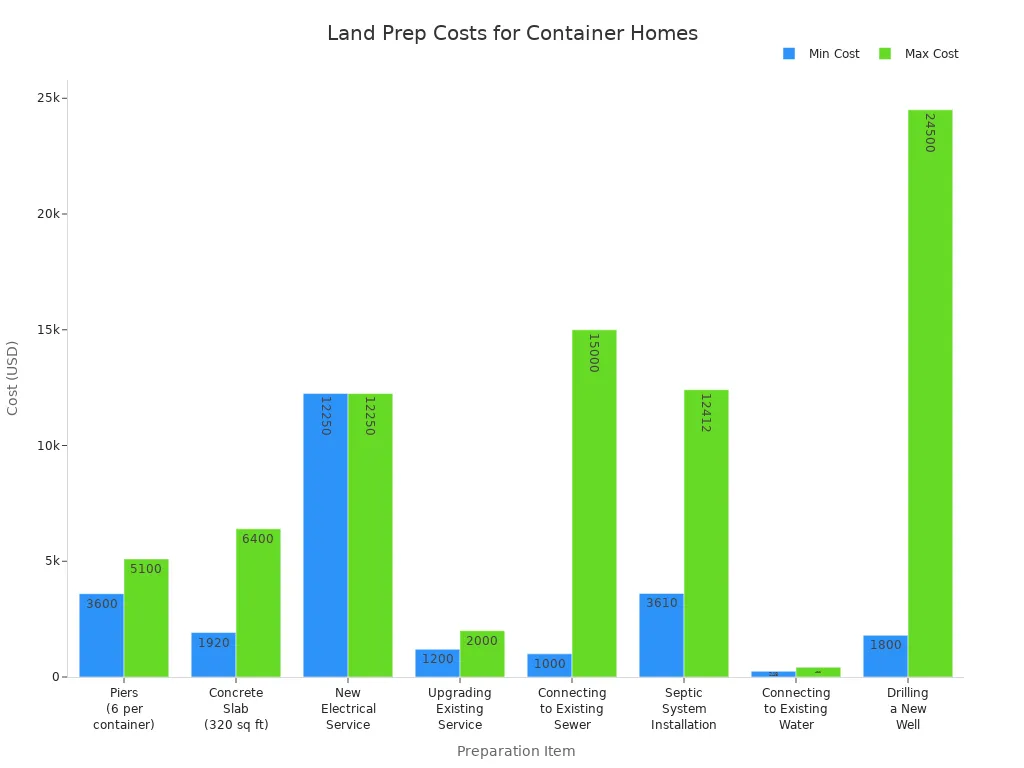
⚡ Note: Costs and timelines can change based on your location and the type of work needed. Always plan your budget before you start.
Working with Local Authorities and Professionals
Navigating Local Government
When you build a foldable container home, you must work with your local government. Local rules can be confusing, but you can handle them if you follow some steps. First, talk to your local building or planning office as soon as you can. This helps you find out what permits and rules you need. Always ask for the rules in writing. Written rules help you if things change later. Make sure your plans look neat and professional before you turn them in. Good plans show you are ready and can help you get approved faster. It is smart to work with people who know about container homes. They can help you understand the rules and keep you from making mistakes. Look at other container homes in your area. This gives you ideas and shows what has worked for others.
Steps for navigating local regulations:
Get the rules in writing.
Make good plans.
Work with skilled professionals.
Check out other local projects.
Hiring Licensed Architects and Engineers
You need to hire licensed architects and engineers for your container home. These experts help you follow building codes and keep your home safe. Pick people who know how to work with local rules. Choose a company that can make the drawings you need for your permits. Your engineer should know how to design safe container homes. It is important to use people who know your area’s rules. Local experts can help you avoid problems.
Qualification Type | Description |
|---|---|
Architectural Design | Hired a licensed firm to make the drawings needed for permits. |
Structural Engineering | Got a structural engineer to check for safety and code rules. |
Local Expertise | Used firms that know the local rules for your project. |
Avoiding Legal Pitfalls
You can stay out of legal trouble by planning ahead. Many people have problems with permits, inspections, taxes, or insurance. Learn about the permit process in your area and plan for all costs. Set up inspections early so your project does not get delayed. Call your local tax office to ask about property taxes for container homes. Ask your insurance company about special coverage for your new home.
Legal Pitfall | Avoidance Strategy |
|---|---|
Permitting Processes | Learn about local permits and plan for the costs. |
Inspection Requirements | Book inspections early to keep your project on track. |
Property Taxes | Call the tax office to find out what forms you need. |
Insurance | Talk to your insurance company about coverage for container homes. |
🛠️ Tip: Getting help from experts makes following local rules easier and keeps your project safe.
Building a foldable container home in the USA needs good planning. You should start by checking with your local planning office. It is smart to talk to people who know container home rules. Be ready for problems with getting permits.
Key Practice | Description |
|---|---|
Adhere to Building Codes | Make sure your home follows all local building codes. |
Document Compliance | Keep proof of inspections and tests on your materials. |
Learn about your area’s zoning laws before you begin building. |
Keep learning and ask experts if you need help. If you follow these steps, you can build your dream home without worry! 🏠
FAQ
Can you build a foldable container home anywhere in the USA?
You cannot put a foldable container home just anywhere. Local zoning laws say where you can build your home. Always ask your city or county before you begin your project.
What permits do you need for a foldable container home?
You need building permits and zoning permits. Sometimes you also need special permits for plumbing or electricity. Your local building department will tell you which permits you must get.
How long does it take to get permits for a container home?
Getting permits usually takes between 6 and 12 weeks. The time depends on your local government and if your application is complete. You can make things faster by getting all your papers ready early.
Do foldable container homes meet safety codes?
Foldable container homes must follow the same safety codes as other homes. You have to follow rules for fire safety, plumbing, and electricity. Inspections help make sure your home is safe to live in.
Who can help you with container home permits and planning?
You can hire licensed architects, engineers, or contractors. These experts know the local rules and can help with your plans, permits, and inspections. They make the whole process easier for you.