


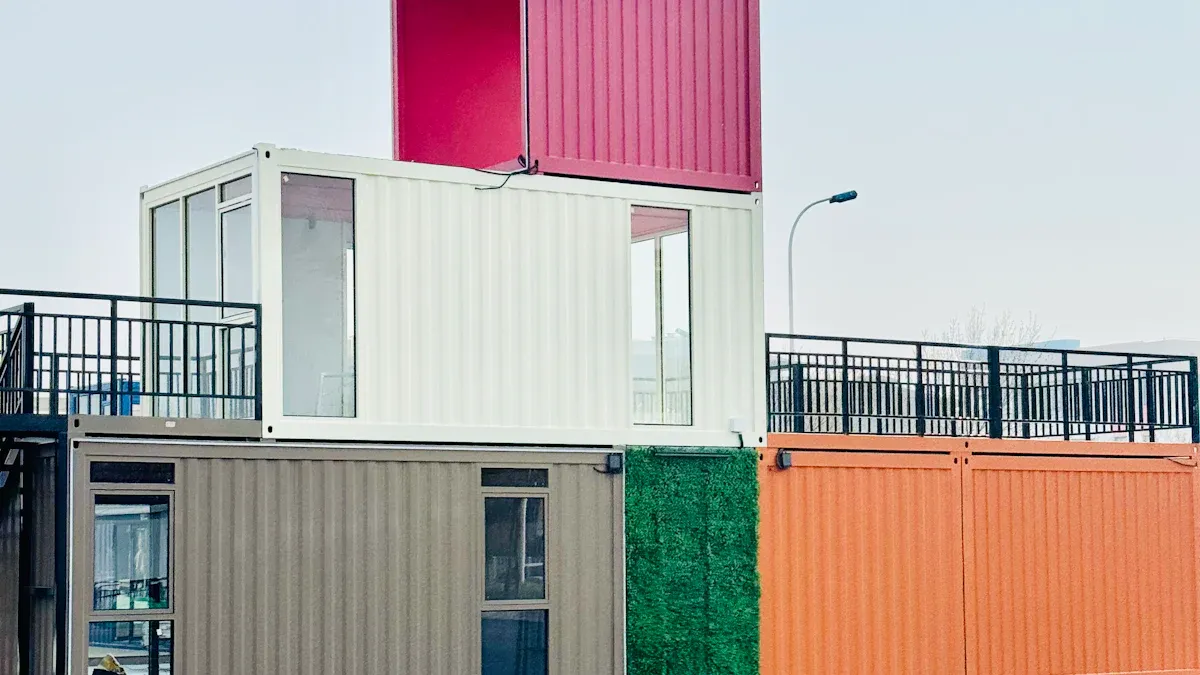
24 Aug Foldable container house brings comfort anywhere you go
Table of Contents
- 1 Key Takeaways
- 2 Foldable container house basics
- 3 Comfort features
- 4 Portability
- 5 Applications
- 6 Comparison
- 7 FAQ
- 7.1 How long does it take to set up a foldable container house?
- 7.2 Can you live in a foldable container house year-round?
- 7.3 What utilities come with a foldable container house?
- 7.4 Are foldable container houses safe in storms or earthquakes?
- 7.5 Do you need a permit to place a foldable container house?
Imagine you get to a mountain site before sunset. You open your foldable container house fast. In one hour, you have a warm room. There is a real bed, a kitchen that works, and a hot shower. You feel comfortable and have privacy, even far from cities. More people pick these homes because they are flexible. They have modern features anywhere you travel. The need for them grows all over the world. The chart below shows this growth.
Key Takeaways
Foldable container houses are tough and simple to move. You can set them up fast almost anywhere. They give comfort with good insulation and smart space use. Utilities are ready so you can live in them quickly. These homes are easy to move and can fit many places. They work well in different weather and on many types of land. People use foldable container houses for trips, emergencies, and working far away. They also use them for other needs. These homes help save money and lower harm to the environment. They give a flexible and modern way to live.
Foldable container house basics
What it is
A foldable container house is a special type of home that you can move and set up almost anywhere. Builders make these houses from strong steel frames and panels. They design them to fold flat for easy transport. When you reach your site, you unfold the house and create a comfortable living space in a short time. You can find models in different sizes, but a common size is about 5.8 meters long, 2.4 meters wide, and 2.5 meters high. Some models allow you to stack up to three floors, so you can build bigger spaces if you need them.
Tip: You can use a foldable container house for many things. People use them as homes, schools, hotels, offices, and emergency shelters.
Here is a table showing typical dimensions:
Dimension State | Length (mm) | Width (mm) | Height (mm) | Weight (kg) |
|---|---|---|---|---|
External | 5800 | 2440 | 2500 | 1500 per unit |
Internal | 5650 | 2370 | 2300 | N/A |
Folded | 5800 | 2440 | 400 | N/A |
How it works
You can set up a foldable container house quickly because of its smart design. The house uses interlocking panels, strong hinges, and modular parts. These features let you fold the house flat for transport and unfold it on-site. You do not need special tools. Most people can set up the house in less than an hour.
The main structure uses steel for strength and safety.
Insulation materials like spray foam or rock wool keep the inside warm or cool.
The folding system uses aluminum frames and stainless steel hinges for long-lasting use.
The house resists wind, rain, and fire, so you stay safe in different weather.
Foldable container houses last for decades if you take care of them. Builders use rust-resistant paint and strong roofing to protect the house. You get a home that is as durable as many traditional houses.
Comfort features
Insulation
You want your foldable container house to be comfy in any weather. Insulation helps keep it warm in winter and cool in summer. Builders pick different materials for different climates. Here is a table with common insulation choices:
Insulation Material | Key Properties | Climate Suitability |
|---|---|---|
Glass Wool | Good thermal resistance, naturally fire-retardant | Moderate climates, roofs and walls |
Polyurethane | High R-value, better thermal insulation | Hot and cold climates, premium option |
Rock Wool | High-end insulation, good thermal resistance | Various climates, premium designs |
In hot places, builders use thick glass wool for the roof. They put polyurethane panels in the walls. This mix keeps heat out and helps protect against fire and water. In cold areas, high-density polyurethane panels trap heat inside. Double-glazed windows also help keep warmth in. You stay cozy even when it is very cold. Always check how well the house is built before buying. Good insulation lowers energy bills and makes life more comfortable.
Note: Good insulation saves you money and keeps you comfy all year.
Space and design
You might think a container home is small. Smart design makes it feel bigger. Designers use clever ideas to use every bit of space. Here are some ways to make your home feel larger:
Put shelves on walls and use overhead storage.
Pick furniture that does more than one job, like fold-down tables and beds with storage.
Use sliding doors to save space and connect rooms.
Add built-in shelves and closets that fit your home’s shape.
Choose bright lights and natural touches to make rooms look bigger.
Modern foldable container houses have full bathrooms, kitchens, and living rooms. You get the comfort of a regular home with a smart layout. Designers want the space to feel open and friendly. You can change the inside to match your style and needs.
Tip: Furniture that does more than one thing saves space and adds comfort.
Utilities
You want your home to work right away. Most foldable container houses come with utilities ready to use. Builders put in wiring, plumbing, and drainage before you get the house. You can connect to power and water quickly. Here is a table showing what you get:
Utility Type | Pre-installed or Easily Connected Features |
|---|---|
Electricity | Outlets, switches, LED lights, power for kitchen and air conditioning, waterproof connector |
Water | Hot and cold water inlets for kitchen, bathroom, toilet, and shower; certified fittings |
Sewage | Separate pipes for waste and grey water |
Setup takes only 30 to 60 minutes. You do not wait days for utilities like in regular homes. Most work is done before the house arrives. You just connect to local systems and start living.
Utility systems run under the floor or above the ceiling to save space.
Prefabrication makes setup faster and avoids delays.
You get water, electricity, and sewage from day one.
Callout: Fast setup means you spend less time waiting and more time enjoying your new home.
Portability
Transport
You can take a foldable container house almost anywhere. Its folded shape makes moving it easy and cheap. Big trucks or flatbed trailers bring these homes to faraway places. Cranes lift and open the house when it gets there. You use bolts to keep the house safe and steady. This way works well for emergencies or disaster help.
Folded homes need less space, so shipping costs less.
Trucks and trailers can deliver to hard-to-reach spots.
Cranes help lift and open the house at the site.
You can set up your home in about 10 minutes.
Tip: A foldable container house works where normal homes are hard to build.
Moving these homes can be tricky. Size and weight rules change how you move them. Sometimes, you need special papers or help for big loads. Trains do not always go to faraway places. Extra tools and buildings make things harder. The house can get damaged while moving, so you must plan well.
Setup
You do not need a big team or special skills to set up a foldable container house. Most homes need only simple carpentry and a few power tools. One or two people can help make the job easier. You build the floor, add insulation, and make sure it is flat. The design lets you put it together fast, so you have more time to relax.
Quick setup with a small group
Utilities are easy to connect
Adaptability
Foldable container houses work in many places. Builders use strong steel, aluminum, and composite panels. These homes have heating, cooling, and insulation built in. You stay comfy in deserts, mountains, or by the sea. Adjustable bases help you set up on bumpy ground. Some homes have parts that expand or walls that move to give you more space.
Terrain/Condition | Adaptability Features | Example/Application |
|---|---|---|
Flat terrains | Modular design, easy to put together and take apart | Worker homes, temporary offices |
Uneven/hilly terrains | Bases that adjust, little change to the land | Homes in hilly places |
Desert environments | Good insulation, air conditioning | Living in hot deserts |
Seaside environments | Materials that do not rust, raised homes | Coastal homes, flood safety |
Remote/Off-grid areas | Foldable parts, fast setup | Off-grid living, emergency shelters |
Climate-specific needs | Custom insulation, heating, cooling, and air flow | Made for cold or hot places |
Note: You can change your foldable container house for schools, clinics, or shelters by adding windows, doors, insulation, and utilities.
Applications
 Travel
 Travel
You can use a foldable container house for trips and fun. Many people pick these homes for camping and eco-tourism. You get a safe place to sleep and cook. Some models open up for more space. Others fold small for easy moving. You can set up your shelter in the woods, near a lake, or on a mountain.
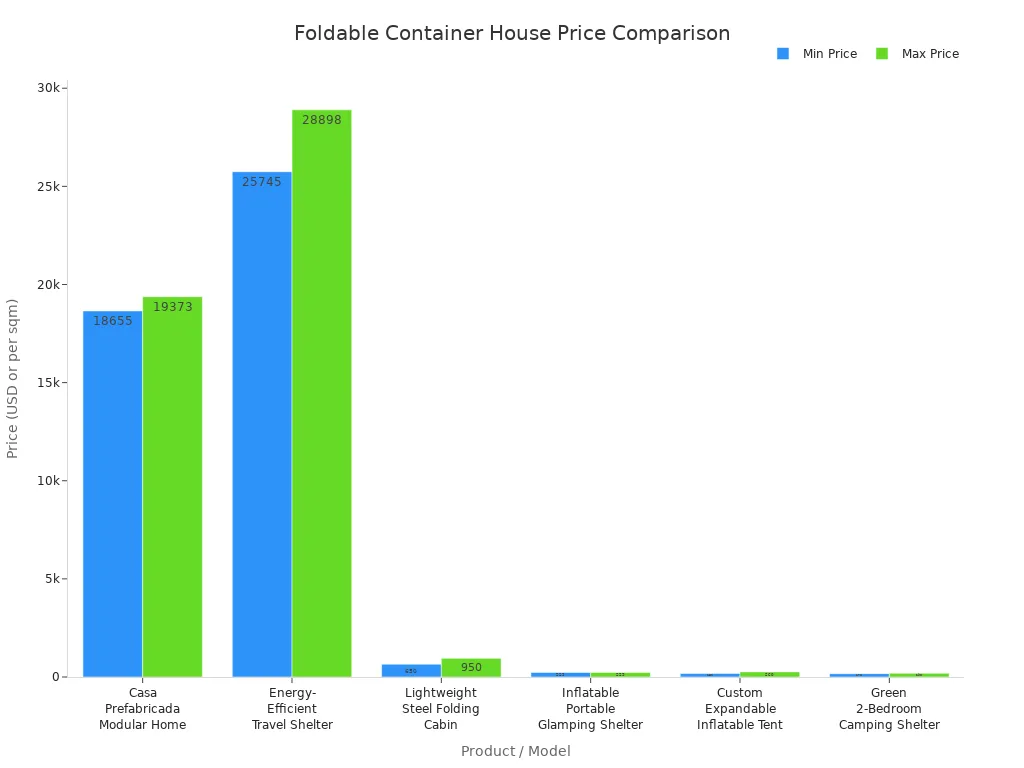
Here is a table with popular travel models:
Product / Model | Price Range (USD) | Intended Use | Key Features |
|---|---|---|---|
Casa Prefabricada Modular Home | $18,655 – $19,373 | Camping & Hotel Use | Expandable, modular design |
Energy-Efficient Foldable Travel Shelter | $25,745 – $28,898 | Office, House, Villa | Eco-friendly, energy-efficient |
Lightweight Steel Folding Cabin | $650 – $950 | Emergency/Disaster Relief | Mobile, budget-friendly |
Inflatable Portable Glamping Shelter | $229 | Family Camping | Easy setup, waterproof |
Custom Expandable Inflatable Tent Shelter | $180 – $260 per sqm | Eco-Tourism Resorts | Lightweight, flexible layout |
Green 2-Bedroom Camping Shelter | $170 – $190 per sqm | Camping | Foldable, portable |
Tip: Pick a model that matches your budget and travel needs. Most travel shelters are easy to set up and move. They also help the environment.
Emergency use
You can trust a foldable container house in emergencies. These homes help after floods, earthquakes, or storms. You get shelter fast because the house arrives folded. It sets up quickly. Many groups use these homes for refugees and disaster relief.
You get quick and flexible shelter.
The house uses strong materials.
You can add solar panels and rainwater systems.
Governments and charities use these homes in many countries like Saudi Arabia, Brazil, India, and the U.S.
The house has air conditioning, heating, showers, toilets, and laundry.
Foldable container houses protect better than tents. You get walls, doors, windows, and insulation. You stay safe and dry in bad weather. You can use the house for many years. You only need a flat spot and simple tools to set it up.
Remote work
You can use a foldable container house as a remote office. Many companies use these homes on job sites or faraway places. You get a workspace with desks and meeting rooms. You can move your office when your project changes. Startups and workers also use these homes for flexible work.
You set up your office fast and move it easily.
You save money on moving and setup.
You can change the inside for your team.
You work in places without regular offices.
You can add solar panels and rainwater systems.
With a foldable container house, you make a comfy and neat workspace. You use shelves and smart design to save space. You help the planet by reusing materials.
Comparison
Comfort
You want your home to be cozy and safe. Comfort comes from many things. The table below shows how these homes compare:
Factor | Container Homes | Traditional Homes |
|---|---|---|
Structural Limits | Steel modular design, some limits | Flexible design, more options |
Insulation | Needs extra work for comfort | Usually better insulation |
Space Constraints | Smaller, modular spaces | Larger, open layouts |
Material Quality | Industrial steel, may need upgrades | Many materials, often chosen for comfort |
Climate Adaptation | Needs more changes for weather | Built for local climate |
Design Flexibility | Modular, but limited by size | High flexibility, custom designs |
Aesthetic | Industrial look, may feel less homey | Many styles, often feel more like home |
Utilities & Amenities | May need extra work to add | Usually built-in and ready |
Portability | Easy to move | Hard to move |
Construction Speed | Fast setup | Slower build time |
Container homes set up fast and move easily. You might need to add insulation and utilities for comfort. Traditional homes have more space and better climate control. They take longer to build.
Cost
Container homes help you save money. Buying and installing a basic unit costs $20,000 to $50,000. Custom models can cost up to $250,000. Traditional homes cost about $400,000. You also pay for land, permits, and utility hookups. Insurance for container homes is $50 to $150 each month. Maintenance means checking for rust, leaks, and keeping systems working. You spend less on labor and materials with container homes.
Home Type | Cost Range (USD) | Notes |
|---|---|---|
Prefabricated Container Home | $20,000 – $50,000 | Basic models, fast setup |
Custom-built Container Home | $25,000 – $250,000 | More features, higher cost |
Traditional Home | Around $400,000 | Average price, longer build time |
Tip: Check for rust and leaks often. This keeps your home safe and saves money.
Sustainability
Container homes help the planet in many ways. You use recycled shipping containers, which saves resources. Insulation, solar panels, and efficient heating and cooling lower energy use. The foldable design means less waste and less damage to the land. You can set up your home fast, which cuts down on pollution from building. You also use fewer new materials when you expand or change your home.
Energy-saving features lower bills and help nature.
Quick setup means less harm to the environment.
Modular design lets you add space without big changes.
Note: Always check local laws before you build. Rules about size, style, and safety can change by location. You may need permits or have to follow special codes. Talking to local experts helps you avoid problems.
You can enjoy comfort and flexibility wherever you go. These homes set up fast and give you a safe place to live or work. You can use them for travel, emergencies, or remote jobs. Many people now choose this option for a modern lifestyle. Would you try a portable home for your next adventure or project? The future of housing may be more mobile than ever.
FAQ
How long does it take to set up a foldable container house?
Most foldable container houses set up in under one hour. You only need a few people and simple tools. The setup is fast and not hard.
Can you live in a foldable container house year-round?
You can live in a foldable container house all year. Good insulation and climate control help in hot or cold weather. Always look at how well the house is built before you buy.
What utilities come with a foldable container house?
Most homes have wiring, plumbing, and drainage already inside. You connect to local power and water. Some models have solar panels or rainwater systems for off-grid use.
Tip: Ask your seller about utility choices before you buy.
Are foldable container houses safe in storms or earthquakes?
Foldable container houses use strong steel frames and tight panels. They stand up to wind, rain, and fire. Some models are made for earthquakes. Always check safety ratings for your area.
Do you need a permit to place a foldable container house?
You often need a permit to place a foldable container house. Local rules change by city or state. Always talk to your local building office before you set up your home.