


24 Nov What Are the Key Features of Foldable Prefab Houses
Table of Contents
When you want a foldable house, you look for smart ideas. The biggest foldable prefab house key feature is saving space. You also get easy to move, fast to build, modular layouts, and built-in utilities. These features help you use space well and make moving or building simple.
Key Takeaways
Foldable prefab houses take up less space. They can shrink their size by up to 70%. This makes them simple to move and store.
These homes are fast to build. They are usually ready in 4 to 6 weeks. People can move in much sooner than with normal houses.
The modular design lets you change or add to the house easily. These houses can fit different needs and places.
Foldable Prefab House Key Features
Space-Saving Design
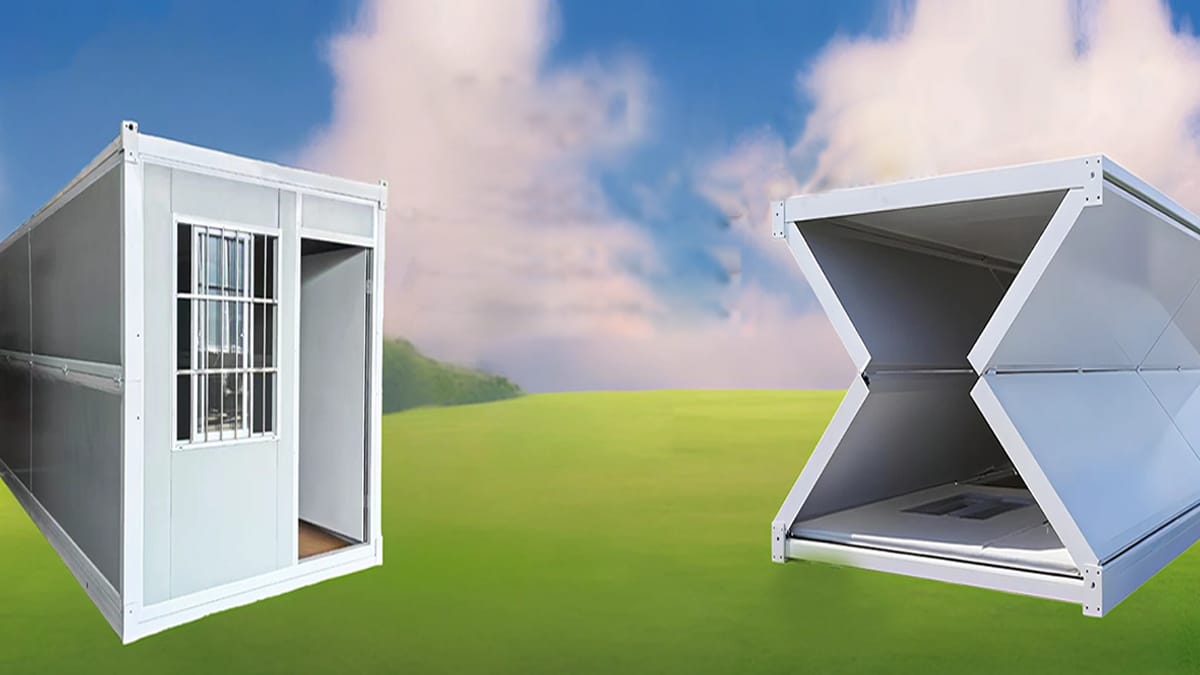
A foldable house uses smart ways to save space. These homes fold into a small size. This makes them easy to store and move. X and Z folding styles are common. They help shrink the house by up to 70%. You can fit more houses in one shipment. This saves space and money.
Mechanism Type | Description |
|---|---|
X and Z Folding Styles | Popular designs that allow for efficient space-saving during transport. |
Volume Reduction | Ability to reduce volume by up to 70%, facilitating easier transportation. |
Efficient Installation | Designed for quick setup, enhancing usability in various locations. |
The compactness starts at the factory. Panels connect with joints, sliders, and hinges. This makes a tight package. Your folding house arrives folded. It takes up less room. You unfold the panels. The walls swing open. This forms a full living space.
Process Step | Description |
|---|---|
Factory Assembly | Built as panels connected by joints, sliders, and hinges for compactness. |
Shipping | Shipped in a folded state to minimize space during transport. |
Unfolding | Panels slide out and walls swing open to create the full structure. |
This design gives you flexibility and efficiency. You can use a folding house in small cities or faraway places. The modular building style lets you add or remove sections. This helps you change the design and adapt.
Tip: To get the most space, pick a foldable prefab house with designs you can change. You can adjust the layout to fit your needs.
Portability and Easy Transport
Portability is another foldable prefab house key feature. You can move a folding house almost anywhere. The house is light and folds small. This makes moving it easy. For example, a portable prefab house can fold to about 5800 mm x 2480 mm x 380 mm. It weighs around 1000 kg. Bigger models, like 10 to 40 feet, can pack into 590 cm x 220 cm x 248 cm. These weigh about 3500 kg.
Model Size | Package Size (cm) | Gross Weight (kg) | Weight (kg) |
|---|---|---|---|
10/20/30/40 Feet | 590.00 * 220.00 * 248.00 | 3500.000 | 3200 |
Model Description | Folded Size (mm) | Total Mass (kg) |
|---|---|---|
Portable Prefabricated House | 5800 * 2480 * 380 | 1000 |
It costs less to move a foldable house than a container house. The foldable design does not need special permits. This lowers shipping costs.
Type of House | Transportation Cost per Unit Area |
|---|---|
Container House | Higher |
Prefabricated House | Lower |
Portability gives you many benefits. You can move your prefab home for work or travel. The modular style helps you move or grow your living space easily. Many remote workers and travelers pick foldable prefab houses. They like the flexibility and adaptability.
Foldable prefab houses are affordable and flexible for remote workers and travelers.
Their design makes moving easy for people who travel for work or fun.
These homes can be guest houses or offices. They fit many needs for living spaces.
Quick Setup and Assembly
A foldable prefab house key feature is fast setup. You can get your house ready in just a few weeks. Delivery takes 1–3 days. Assembly takes 1–2 weeks. Installing utilities takes 2–4 weeks. Your folding house is ready in about 4–6 weeks.
Stage of Setup | Time Required |
|---|---|
Delivery | 1–3 days |
Assembly | 1–2 weeks |
Final Install (plumbing, etc.) | 2–4 weeks |
Total Time | 4–6 weeks |
You do not need special skills to build a folding house. Knowing basic tools helps. Always use safety steps. Ask a professional if you are unsure.
Knowing construction tools helps you build foldable prefab houses.
Safety is important when you put the house together.
Ask experts for help if you are not sure about assembly.
Quick installation gives you many benefits. You save time and money. You can move in faster than with other prefab buildings. Fast setup is great for emergency housing, offices, or quick homes.
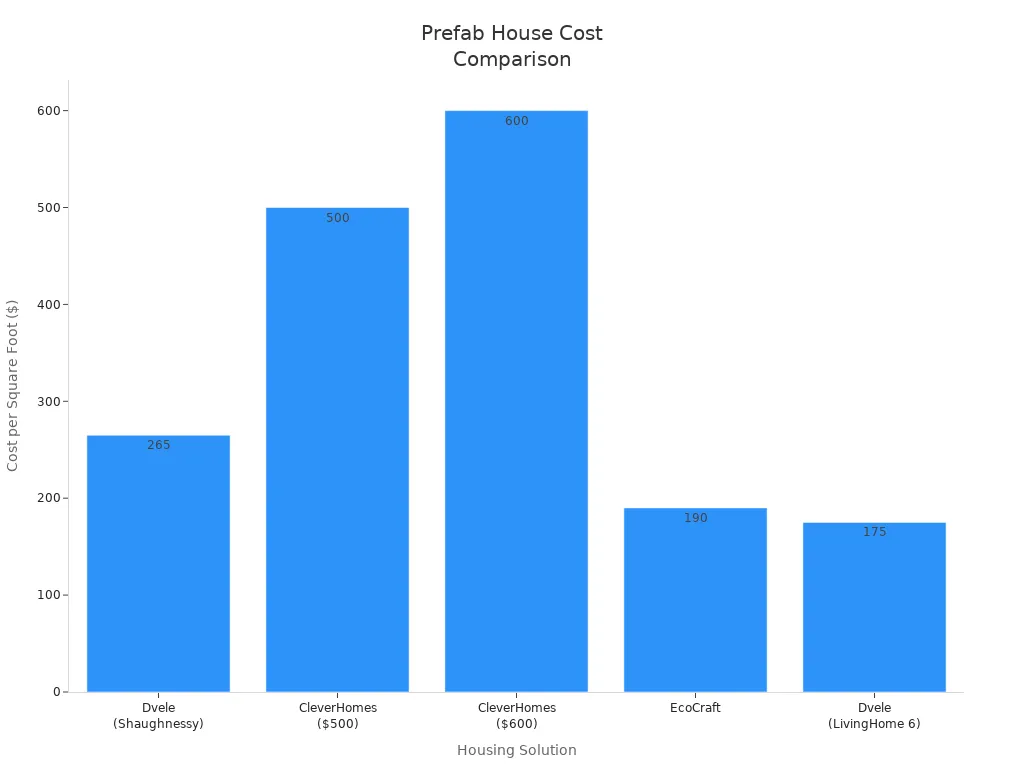
Foldable prefab houses cost less than other prefab options. The chart above shows the price per square foot for different prefab homes.
Note: Some people think folding houses are cramped. Modern prefab homes use open layouts, big windows, and smart designs. This makes them comfortable and useful.
Foldable prefab house key features like space-saving design, portability, and quick setup make these homes special. You get flexibility, adaptability, and design flexibility. The modular style, focus on sustainability, and customizable designs help you build eco-friendly homes that fit your life.
Durability, Modularity, and Real-World Uses
Strong and Durable Materials
Foldable prefab houses are made to last a long time. Builders use strong materials so your house can handle bad weather and travel. The steel framework gives the house a sturdy base. Galvanized or corten steel helps stop rust and stands up to tough weather. Aluminum composite panels cover the outside. These keep the house light and safe. Inside, glass wool and rock wool help keep the house warm in winter and cool in summer. Marine-grade plywood makes the floors strong and keeps out water. Drywall or insulated panels finish the inside. This makes your house comfortable and nice to look at. Corrugated metal sheets cover the roof. They help water run off and keep the house safe.
Material Type | Description |
|---|---|
Steel Framework | Made from galvanized or corten steel, providing rust resistance and weather durability. |
Aluminum Composite Panels | Lightweight, rust-resistant panels used for external cladding, enhancing aesthetics and protection. |
Glass Wool | Insulation material that offers thermal resistance and fire-retardant properties. |
Polyurethane and Rock Wool | Higher-end insulation options with superior thermal insulation properties. |
Marine-grade Plywood | Flooring material known for strength and moisture resistance. |
Drywall or Insulated Panels | Used for interior finishing, providing comfort and customization options. |
Corrugated Metal Sheets | Lightweight roofing material that ensures structural integrity and efficient water drainage. |
Insulation Layer | Typically glass wool, placed beneath roofing for temperature regulation. |
These houses use insulation and smart utility systems to save energy. You can get solar-ready roofs and water-saving systems. Energy-efficient windows help you save money and protect nature. You can add solar panels or rainwater systems to your house. Smart energy tools help you watch your energy use. Builders use recycled steel and safe insulation to help the planet. Foldable prefab houses work better than tents or other portable homes. The steel frame and insulated panels keep you safe from wind, rain, and heat or cold. Plumbing and electricity are built in, so your house feels like a real home.
Modular and Flexible Layouts
You can pick a layout that fits your life. Foldable prefab houses come in many styles. Small studios are good for one or two people. Bigger homes give you more bedrooms and space. Open floor plans make the house feel larger and brighter. Modular systems let you add or take away rooms. You can change your house as your needs change.
Compact studios for one or two people
Large family homes with extra bedrooms
Open floor plans for more space
Modular systems for easy changes
Your house can change with you. You can move, add, or remove parts of your house. Modular buildings can join together to make bigger homes. You can even stack them for more floors. This makes foldable prefab houses great for apartments, hotels, or offices.
Feature | Description |
|---|---|
Reconfiguration | Structures can be reconfigured, relocated, or scaled up and down to meet evolving needs. |
Scalability | Modular buildings can be combined into larger configurations, such as double or triple wides, and even stacked for multi-level complexes. |
Adaptability | The design allows for easy expansion or reconfiguration to meet changing needs, suitable for various applications like apartments and hotels. |
Tip: You can make your house bigger as your family grows. This saves you time and money.
Applications of Foldable Houses
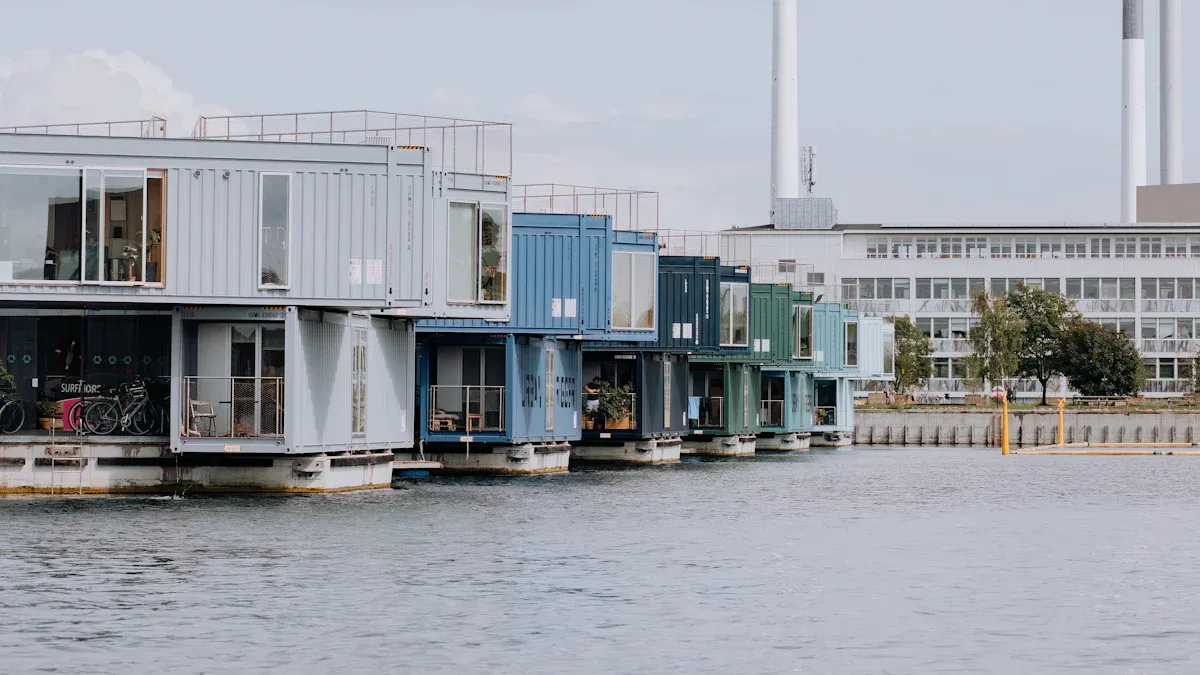
Foldable prefab houses help people in many ways. They are used for disaster relief, travel, hotels, and offices. In places with disasters, these houses give quick shelter. You can have a safe place to live in just a few days. Hospitals use them as extra space during health emergencies. Workers in faraway places live in these houses because they are easy to build and move. Cities use them to help with housing shortages. You get homes that are cheap and quick to set up.
Application Area | Description |
|---|---|
Used in coastal regions prone to natural disasters, providing quick assembly for safe housing in days. | |
Healthcare Facilities | Deployed as temporary hospitals during health crises, such as Japan’s response to COVID-19, for managing patient overflow. |
Disaster Relief | Offers immediate shelter in disaster-stricken areas, ensuring safety and comfort for displaced individuals. |
Worker Accommodation | Provides quick-to-assemble housing for workers in remote locations, addressing logistical challenges in industries like mining and construction. |
Urban Housing Solutions | Addresses housing shortages in urban areas by offering affordable, scalable living spaces that can be rapidly deployed. |
These houses work well in bad weather. The steel frame can handle strong winds up to 180 mph. Good insulation keeps the house comfy and saves energy. Weatherproofing protects against floods and storms. The small size makes shipping cheaper and faster. You save money compared to regular houses. Foldable prefab houses last longer than tents and need less fixing. You can use them again, which is good for the earth.
Foldable prefab houses give safe shelter in disasters.
You get good insulation and weatherproofing.
Fast setup and lower costs help people recover.
You can use these houses as clinics or storage.
Modular design lets you change the house for your community.
Foldable prefab houses use insulated wall panels, solar panels, and rainwater systems. You pay less for energy and help the planet. Building these houses uses fewer materials and less equipment. You help the earth by picking a foldable prefab house. You also save money and get convenience. Prefab panels and steel frames keep costs low. Fast setup means you can move in sooner. You can move your house if you need to. Lower repair and utility costs save you money over time.
Note: Foldable prefab houses give you comfort, safety, and flexibility. You can use them for homes, offices, or emergency shelters.
Foldable prefab houses have smart features. They are quick to set up. They use strong materials. The layouts are flexible. You save money with these homes. They are good for the environment.
These homes cost less and you can change them.
Energy-saving designs help you pay less for bills.
You do not have to wait long to build.
More people want these homes because they work for many needs.
FAQ
How long does it take to set up a foldable prefab house?
Most foldable prefab houses are ready in 4 to 6 weeks. Delivery is fast. Assembly does not take long. Utility installation is quick too.
Can you move a foldable prefab house to a new location?
Yes, you can move your house without trouble. The foldable design makes moving easy. You do not need special tools.
What utilities come built into foldable prefab houses?
Most foldable prefab houses have plumbing, electrical wiring, and insulation. Some models also have solar panels or water-saving systems.