


22 Aug How Much Does a Folding Container Home Cost in the US in 2025
Table of Contents
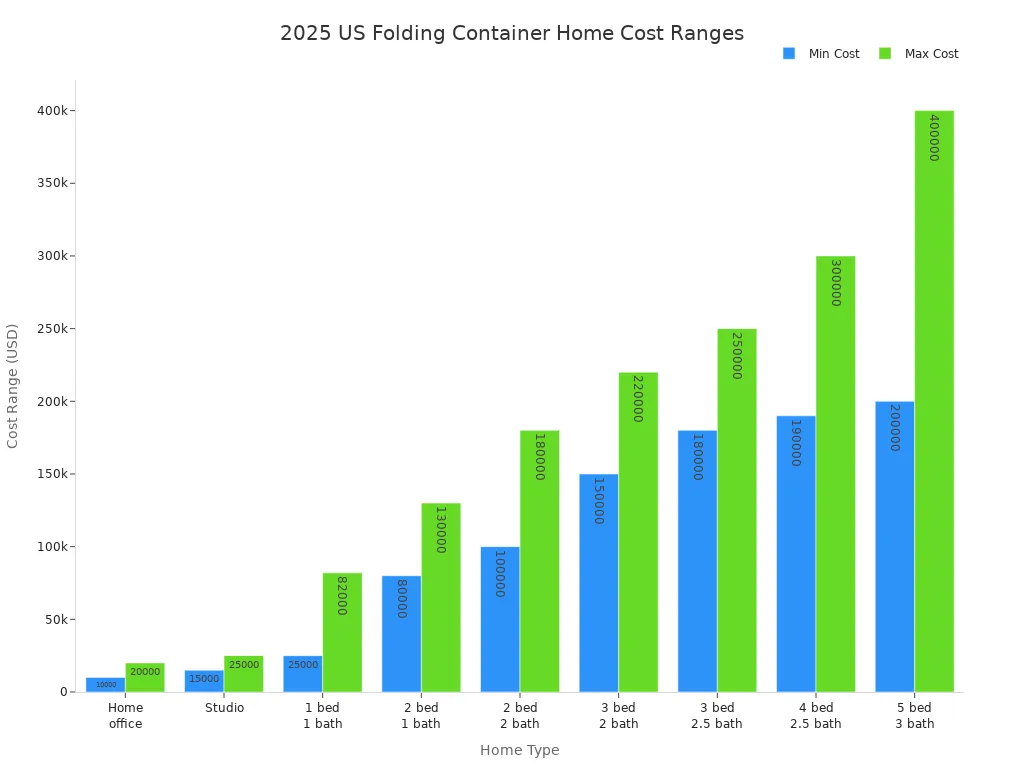
You might pay $10,000 for a small home office. A big, expandable container house can cost $400,000 or more in 2025. The price of a folding container home depends on its size. It also depends on how many containers you use, the finishes, and where you build it. Expandable container homes usually cost less than regular houses. But if you want custom interiors or smart systems, the price goes up. You also need money for site prep, permits, delivery, and utility hookups.
Home Type | Size (sq ft) | Containers | Cost Range (USD) |
|---|---|---|---|
Home office | 80 – 100 | 1 | $10,000 – $20,000 |
Studio | 160 | 1 | $15,000 – $25,000 |
1 bed 1 bath | 320 | 1 – 2 | $25,000 – $82,000 |
2 bed 1 bath | 640 | 2 – 3 | $80,000 – $130,000 |
2 bed 2 bath | 960 | 3 – 4 | $100,000 – $180,000 |
3 bed 2 bath | 1280 | 4 | $150,000 – $220,000+ |
3 bed 2.5 bath | 1600 | 5 | $180,000 – $250,000+ |
4 bed 2.5 bath | 1920 | 6 | $190,000 – $300,000+ |
5 bed 3 bath | 2560 | 8 | $200,000 – $400,000+ |
Many things change the price. These include design style, how well it is built, finishing touches, utility hookups, and delivery. Picking prefab or used containers and not adding extras helps you save money.
Key Takeaways
Folding container homes can cost from $10,000 to $400,000. The price changes with size, features, and where you build.
Expandable container homes let you begin with a small space. You can add more rooms later. This can save money over buying a regular house.
Getting the land ready, setting up the home, and connecting utilities cost extra. You should plan for these costs before you start.
Folding container homes are built faster than regular homes. They also cost less. But they might not have much space. You may not be able to change them a lot.
You can pay for your home with a mortgage, personal loan, or construction loan. Always ask for clear prices. Check the rules for permits in your area.
Folding Container Home Cost Range
Base Price Overview
Folding container homes have many prices in 2025. The price depends on the container type, features, and how much you change it. You can look at this table to see basic, mid-range, and high-end choices:
Category | Price Range (USD) | Description |
|---|---|---|
Basic | $1,000 – $3,000 | Single container, no fancy extras |
Mid-range | Starting around $1,500 | Has steel frame, fireproof panels, regular doors and windows; good for homes or offices |
High-end/Custom | Exceeding $5,000 | Many containers, better insulation, plumbing, electric, and custom inside |
Expandable Models | $5,000 – $13,000 | Price changes by size (20ft to 40ft expandable container homes) |
Expandable container homes cost more if you pick bigger models or add features. Some companies sell basic models for only $680, but most people in the US pay at least $5,000 for a simple folding container home. If you want a fancy expandable container house, the price can be over $150,000.
Here is a chart that shows how different companies set their starting prices:
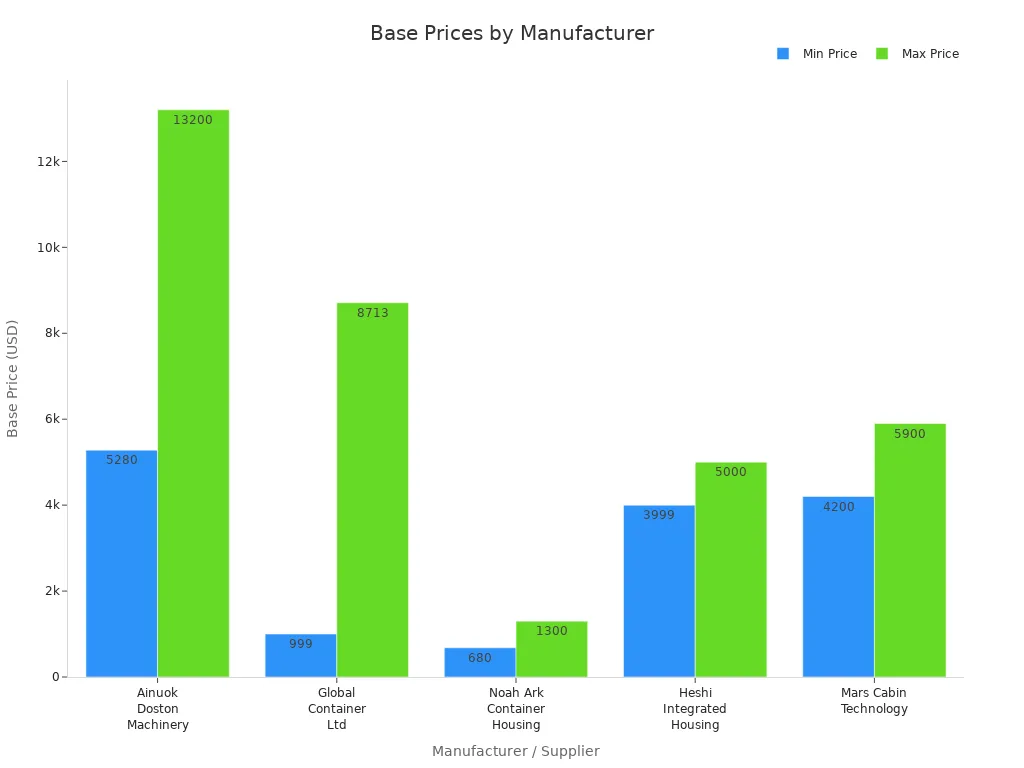
Most US sellers are in Colorado. This can change the total cost, especially if you live far away. Some people buy containers from other countries to save money, but shipping and import fees make the final price higher.
Per Square Foot Cost
The cost per square foot helps you compare folding container homes to other houses. In 2025, these are the prices you might see:
Type of Container Home | Average Cost per Square Foot (2025) |
|---|---|
Overall Average | $150 – $350 |
Prefabricated | $150 – $300 |
Custom | $250 – $400+ |
Most expandable container homes are prefabricated or custom. If you use a shipping container home cost calculator, you will see that folding container homes usually cost less per square foot than regular houses. For example, a new house in the US can cost about $400,000, which is much more than a container home of the same size.
Here is a table to help you compare costs per square foot:
Home Type | |
|---|---|
Prefabricated Container Homes | $120 – $300 |
Custom Container Homes | $250 – $400 |
Average Shipping Container Home | $150 – $350 |
You can use a shipping container home cost calculator to guess your own project cost. The final price depends on what finishes, insulation, and layout you pick. Expandable container homes with more features cost more per square foot.
Multi-Container Home Cost
If you want a bigger home, you need more containers. Multi-container homes use two or more containers for extra space. The price goes up with each container and with harder designs.
Expandable container houses can join several containers for a larger living space. For example, a two-bedroom expandable container home may use three containers and cost $80,000 to $130,000. A five-bedroom expandable container house with eight containers can cost $400,000 or more.
Many things change the price for multi-unit container homes:
How many containers you use
The expandable system you pick
The finishes and inside features you choose
The cost to deliver and set up
Prices also change by region. Here are some things that affect cost in your area:
Local building and worker costs can make US-made container homes cost more.
Buying containers from other countries can lower the price, but you pay for shipping and taxes.
Homes near cities or busy places usually cost more because more people want them and services are easier to get.
Rural places may have lower prices, but you might not have many sellers.
If you live where the weather is tough, you may need stronger, pricier containers.
Tip: Always use a shipping container home cost calculator to help you know your total cost. This tool helps you plan every part of your expandable container home project.
Expandable container homes let you change and grow your house. They can save you money compared to regular homes. You can start small and add more containers later. The shipping container home cost calculator shows how each choice changes your budget.
Cost to buy a Folding Container Home
Site Preparation
You must get your land ready before you set up your folding container home. Getting the site ready is a big part of the total price. You need to clear and level the land. The cost changes based on where you live and what your land is like. If your land has trees, rocks, or is very steep, you will pay more for digging and leveling.
Your container home needs a strong base. Most people use a concrete slab, piers, or a crawl space. The kind of base you need depends on your soil and local rules. Here is a table that shows usual foundation costs:
Foundation Type | Cost per Square Foot |
|---|---|
Concrete foundation |
A basic folding container home foundation usually costs $5,000 to $10,000. If your land is hard to reach, you might pay more for delivery and crane work. Think about how easy it is for trucks to get to your land.
Other things can change your site prep costs:
The type of soil and slope of your land
Extra work like fixing slopes or grading
Local rules for building foundations
If you need a structural engineer
Tip: Always ask builders for clear price estimates. This helps you plan your money and avoid surprises.
Installation Fees
After your land is ready, you need to set up your folding container home. Most folding container homes are made in a factory and brought to your land. This way saves time and money compared to building a regular house.
Setting up your home on-site takes one or two weeks. The main steps are:
Putting down the foundation
Opening up the expandable container
Making sure the home is secure
Hooking up utilities
Installation fees change based on your project. Simple homes cost less, but custom or bigger homes need more work and tools. If your land is hard to get to, you may pay more for cranes or special trucks. Always get price quotes from builders before you begin.
Extra costs can show up during installation. You might need permits, checks, or extra work to follow local rules. Some builders include these costs, but some do not. Ask for a full list of costs before you sign anything.
Note: The total price for a container home includes site prep and installation. Make sure you save money for both parts.
Utility Connections
Your folding container home needs water, power, and sewage. Hooking up these services is a big part of the cost. The price depends on how close your land is to city lines and what system you pick.
Here is a table with usual utility hookup costs:
Utility Connection | Typical Cost Range (Labor and Materials) |
|---|---|
Electrical grid connection | |
Running new power lines | $2,000 to $5,000 |
Septic system | $3,300 to $5,000 |
Sewer line | $50 to $200 per linear foot |
Water line | $32 to $53 per linear foot |
Water meter | $2,000 to $3,000 |
If your land is far from city services, you may need a septic system or a well. These choices can make your container home cost more. If you want to live off-grid, you might add solar panels or water tanks. These also raise the total price.
It is important to get price quotes for utility hookups from builders. Some builders include basic hookups, but others charge more for each service.
Hidden or Additional Expenses
When you buy a folding container home, you should plan for extra costs besides the main build. Here are some common extra costs:
Permits and checks
Insulation, plumbing, and wiring
Inside finishes and custom features
Furniture and appliances for small spaces
Insurance for your container home
Property taxes and upkeep
If you do not own land, you need to add the price of buying a lot. Land can cost $5,000 to $30,000 or more, depending on where it is. Local rules may also change your project, so check with your city or county before you buy.
Always ask builders for clear price quotes. This helps you know the full cost and avoid surprises.
Folding Container Home Cost Comparison
Folding vs. Standard Container Homes
When you look at folding container homes and standard container homes, you see some big differences in how they are built and what they cost. Folding container homes use lightweight, flexible materials. You can set up or take down your home quickly. This makes them a good choice if you want to move your home or need something portable. The cost stays lower because you use fewer materials and the design is simple. However, folding homes are not as strong or customizable as standard container homes.
Standard container homes use heavy metal shipping containers as the main structure. These homes last longer and give you more ways to change the inside. You need to add insulation, wiring, plumbing, and other finishes to make the home comfortable. This adds to the cost, but you get a sturdy and safe place to live. Here is a table to help you compare the main construction costs:
Construction/Material Aspect | Cost Range |
|---|---|
Foundation | |
Electrical Wiring | $600 – $2,300 |
Plumbing | $1,500 – $15,000 |
HVAC Systems | $5,000 – $12,500 |
Insulation | $4 – $15.56 per sq ft |
Roofing | $5,000 – $45,000 |
You might choose a folding container home if you want an affordable housing solution that you can move. If you want a home that lasts longer and can be changed more, a standard container home may fit you better.
Container Home vs. Traditional Home
Container homes, including expandable models, offer a different path compared to traditional homes. You can build a container home faster and for less cost. The price for a container home is usually much lower than a regular house. You also get flexibility. You can add more containers or move your home if you need to.
Traditional homes use wood or brick. They take longer to build and cost more. These homes last a long time and people know what to expect when they buy one. The value of a traditional home often goes up over time. Container homes may not keep their value as well, especially if you live in an area where people do not know much about them.
Here are some things to think about:
Container homes have lower upfront cost and faster build times.
You can expand or move your home more easily with containers.
Traditional homes last longer and usually have higher resale value.
Getting permits for a container home can be harder in some places.
Tip: If you want a flexible, affordable housing solution, a container home could be right for you. If you want a long-term investment, a traditional home may be a better choice.
Financing and Permits
Financing Options
There are many ways to pay for a folding container home in 2025. Most people use regular mortgages. Banks treat these homes like modular homes. You can also get personal loans or special container home loans. Some lenders give construction loans. These loans turn into regular mortgages after your home is built. Personal loans are fast to get. But they often have higher interest rates.
Here is a table that shows loan types, interest rates, and terms:
Loan Type | Interest Rates (%) | Loan Terms | Down Payment / Requirements |
|---|---|---|---|
Construction Loans | 6.75–7.5% (during build) | Short-term, converts to permanent | Licensed contractors, staged fund release |
Personal Loans | 7–15% (based on credit) | Up to 7 years | Minimal documentation, faster approval |
Traditional Mortgages | 5.5–6.25% (well-qualified) | Up to 30 years | 20–30% down payment, credit score 640–680 |
Manufacturer Financing | N/A | 5–20 years | Down payments 10–25%, tied to specific builders |
Home Equity Loans | 5.25–7.5% | Flexible | Use existing property as collateral |
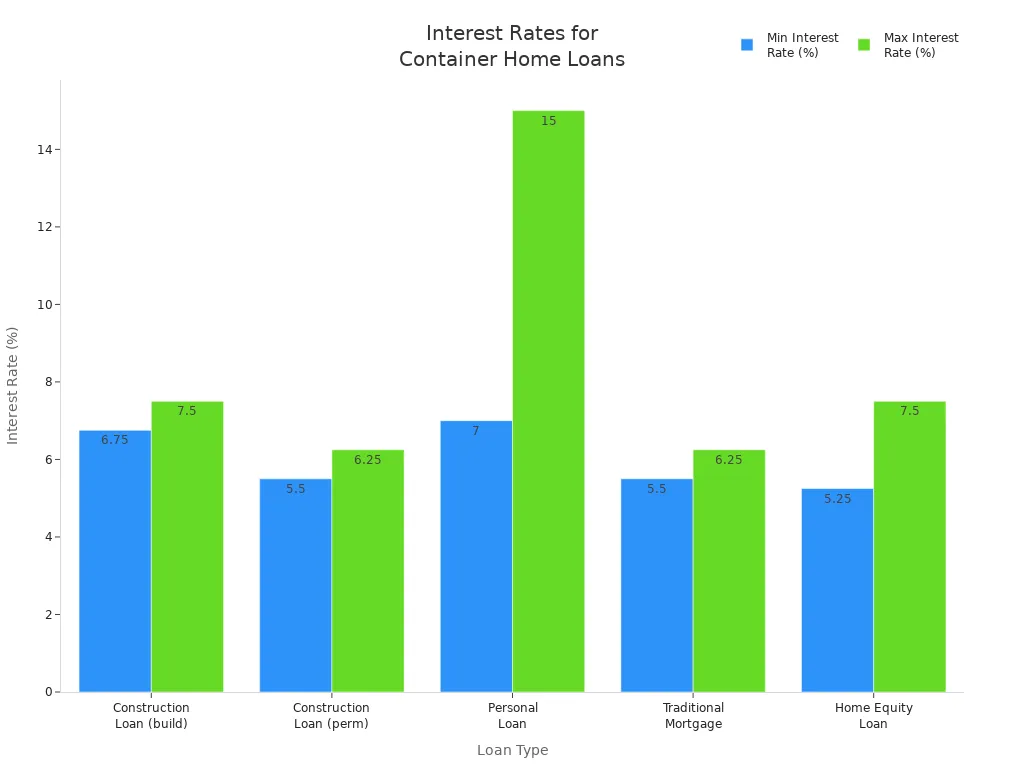
Most loans need a credit score of 620 or higher. You must own the land and have a strong foundation with utility hookups. Down payments are usually 3% for first-time buyers. Repeat buyers pay at least 5%. Some people use government grants or green loans for eco-friendly homes. Crowdfunding and builder partnerships give you more choices. Always get quotes from lenders. Use a shipping container home cost calculator to compare your options.
Tip: Work with licensed builders who know what lenders want. They help you get your papers ready and improve your chance to get a loan.
Permit Requirements
You need permits before you set up a folding container home. The main permits are building, zoning, and foundation permits. Building permits check if your home is safe. Zoning permits make sure your home fits local land rules. Foundation permits check if your base is strong.
Here are common permit steps:
Give detailed building plans for review.
Show site plans with setbacks and utility access.
Pay fees that change by location.
Pass checks for electrical, plumbing, and insulation.
Follow HOA rules and deed restrictions if needed.
Permit rules are different in each state and town. Rural places often have fewer rules. Cities may have strict codes. Some areas let you set up container homes with fewer permits. Others need full approval. Always check local laws and get permit cost estimates.
Getting permits can be hard for buyers. You may need to pass many checks while building. HOAs or officials might not like container homes. Some people in the community may not know about this kind of house. Research local rules and talk to experts to avoid fines or delays.
Note: If you ignore permits or zoning laws, you can get fined or lose your home. Always get clear cost estimates and stay updated on local rules.
You can buy a folding container home for $10,000. If you want a big custom home, it can cost $400,000. The price changes by size, finishes, and where you build. You also pay for site prep. Many people pick a folding container home to save money. These homes are quick to build and flexible. You can use your home as your main house. It can be a guest house or a tiny home for travel.
Benefits of a folding container home include:
You can set it up fast and move it easily.
You can change the design to fit your needs.
You save energy and do less upkeep.
You can add more parts later if you want.
Drawbacks to consider:
Limitation | Explanation |
|---|---|
Some families may think the home is small. | |
You need to put in insulation to stay comfortable. | |
Some places make it hard to put your home there. | |
Maintenance | You must take care of your home to stop rust and damage. |
First, decide how much money you want to spend. Look at different home types and check your local rules. Talk to trusted suppliers like Quick Smart House or WELLCAMP. You can make your own design and compare prices. Plan each step of your project. With good planning, you can have a flexible and affordable home that works for you.
FAQ
How long does it take to set up a folding container home?
You can set up a folding container home in one to two weeks. Most builders deliver the home ready to install. You save time compared to building a regular house.
Can you customize the inside of a folding container home?
You can choose your own finishes, colors, and layouts. Many builders offer options for kitchens, bathrooms, and smart features. Custom choices may raise the total price.
What maintenance does a folding container home need?
You need to check for rust, leaks, and damage every year. Clean the outside and fix small problems quickly. Good care helps your home last longer.
Tip: Use weatherproof paint to protect your container home from rain and sun.
Are folding container homes safe in bad weather?
Folding container homes use strong steel frames. Most models can handle wind, rain, and snow. You should ask your builder about extra safety features for your area.
Weather Type | Safety Feature |
|---|---|
Wind | Reinforced anchors |
Rain | Waterproof coatings |
Snow | Insulated roof panels |