



02 Oct How to Build a House with Shipping Containers in 2025
Table of Contents
You want to build a house with shipping containers in 2025? Start by planning your needs, pick a spot, check local laws, set your budget, choose containers, prepare the site, build, and then move in. Here’s why people love this choice:
You save money. Shipping container homes usually cost $150 to $350 per square foot. Traditional homes cost $200 to $400 per square foot.
The average build is around $80,000, which is much cheaper than most regular houses.
You get a modern look and lots of design options.
You can handle the process step by step. It feels rewarding to see your home come together.
Key Takeaways
Begin by thinking about what you need and how much money you have. Pick your three most important things to help you plan and spend.
Look at local zoning laws and building codes before you pick a place. Every area has its own rules for shipping container homes.
Pick the best type of shipping container for your plan. You can choose dry containers, open top containers, or other types.
Get your site ready the right way. Make the ground flat and make sure water drains well. This helps make a safe base for your home.
Think about insulation early when you build. Good insulation keeps your home cozy and saves energy all year.
Planning
Needs
You want your home to work for you. Think about what you need most. People pick shipping containers for many reasons. Here are some needs that change the design:
Sustainability: Many people care about the earth. Over 60% of millennials want eco-friendly homes. You might add solar panels or use recycled things.
Affordability: Saving money is important. Shipping container homes cost less than regular houses.
Adaptability: Maybe you want a space that can change. About 35% of buyers want layouts that fit their family or job as things change.
Energy Efficiency: You can add green roofs or windows that save energy.
Multifunctional Spaces: You might want a room for both work and guests.
Tip: Write your top three needs before you design. This keeps you focused and helps you not spend too much.
Location
Choosing the right place for your home is important. You need to think about more than just the view. Here is a simple guide to help you look at different places:
Factor | Description |
|---|---|
Zoning Laws | Check if you can build a container home there. Rules are different in each area. |
Building Codes | Make sure your home is safe. Follow the International Residential Code (IRC). |
Climate Considerations | Think about how to keep your home warm or cool. Weather changes how you build. |
Site Preparation | Make the ground flat and ready. This keeps your home safe and steady. |
Utility Connections | You need water, power, and maybe internet. Make sure you can get these services. |
If you live in Atlanta, you need more insulation and good airflow. Summers are hot and sticky there. In cold places, you want to keep heat inside. Always check the rules before you buy land.
Regulations
You do not want problems when you start building. Each state has its own rules for shipping containers. Here is what you should know about two big states:
State | Zoning Laws and Building Codes |
|---|---|
Texas | Rural places have fewer rules. Cities like Houston or Dallas have more strict codes. |
California | You must follow the California Building Standards Code (Title 24). Earthquake safety needs extra steps. |
Some places make it easy to build with shipping containers. Other places have more rules. Always ask your local building office about permits and checks.
Note: Climate is important too. In hot places, you need good airflow. Rooftop turbine vents, louver vents, and exhaust fans help air move. Pine wood pallet roofs keep things cooler than metal ones. Insulation like rockwool or expanded polystyrene keeps your home comfy. Open-cell spray foam can cut heat loss by 80% in humid places and save you money.
Budget & Permits
 Costs
Costs
 Costs
CostsYou probably want to know how much a house made from shipping containers will cost. Prices can change a lot depending on size and design. Here’s a simple table to help you compare:
Type of Home | Square Feet | |
|---|---|---|
Office | 80 | $10,000–$20,000 |
Studio | 160 | $15,000–$25,000 |
1 bedroom, 1 bathroom | 320 | $25,000–$82,000 |
2 bedroom, 1 bathroom | 640 | $80,000–$130,000 |
2 bedroom, 2 bathroom | 960 | $100,000–$180,000 |
3 bedroom, 2 bathroom | 1,280 | $150,000–$220,000 |
3 bedroom, 2.5 bathroom | 1,600 | $180,000–$250,000 |
4 bedroom, 2.5 bathroom | 1,920 | $190,000–$400,000 |
Small homes can start at $20,000. Bigger homes can reach $175,000 or more. You pay for materials, labor, and sometimes extra features like solar panels or fancy windows.
Financing
You have lots of choices when it comes to paying for your container home. Some people use savings, but most need a loan. Here are the most common ways to get money:
Construction Loans
Personal Loans
Home Equity Options
Seller Financing
Conventional Mortgages
Specialized Container Home Loans
Local Incentives
If you live in California, you might use a construction loan that turns into a regular mortgage. Some programs, like CalHFA, help people who want alternative housing. You can also use personal loans for smaller projects or home equity if you already own a house. Seller financing lets you pay the land owner directly.
Tip: Talk to your bank or a local lender before you start building. They can help you pick the best loan for your project.
Permits
Getting permits is a big step. You need approval from your city or county before you build with shipping containers. Here are some things that can make it tricky:
Zoning conflicts: Some land only allows regular houses.
Missing details in drawings: Plans must be complete and clear.
No licensed professionals involved: You often need an architect or engineer to stamp your plans.
Building in special zones: Extra checks happen in places near water, in flood zones, or historic areas.
You should always check with your local building office. They will tell you what you need and help you avoid problems. If you get stuck, ask a professional for help.
Choosing Shipping Containers
Types
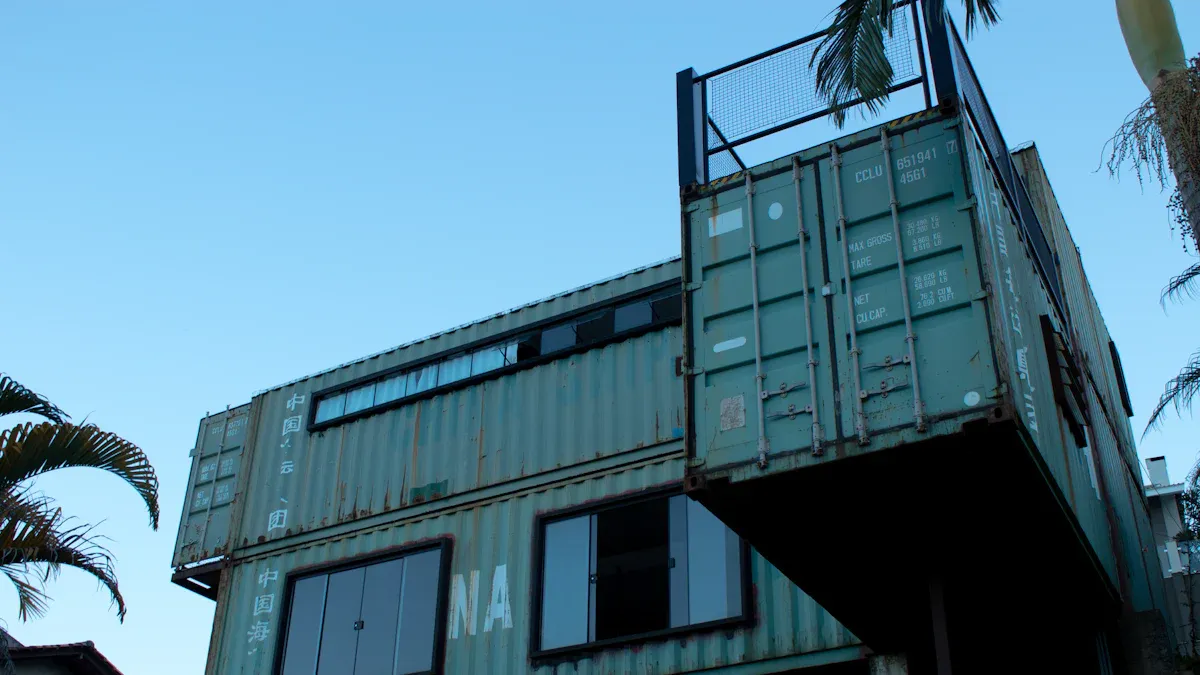
You have many options when it comes to picking shipping containers for your home. Each type has its own benefits. Here are some of the most popular choices:
Dry Container: This is the most common type. It is strong, easy to find, and works well for most homes.
Flat Rack Container: This one has no walls. It gives you a flat base, but it can be harder to turn into a house.
Open Top Container: The roof comes off, so you can create tall spaces or add skylights.
Tunnel Container: Doors on both ends make it easy to move things in and out. You can also design flexible rooms.
Open Side Container: The side opens up wide. This brings in more light and fresh air.
Double Doors Container: You get big openings at both ends. This makes your space feel larger and more open.
Tip: Think about your design and how much light or space you want before you choose your container.
Inspection
Before you buy, you should always check the condition of your shipping containers. Used containers can save you money, but you want to avoid hidden problems. Look for these things:
Structural Frame: Make sure the steel beams are not bent or rusty.
Roof: Check for patches or spots where water might collect.
End Doors: Open and close the doors. The rubber seal should be in good shape.
Interior: Look for leaks, dents, or damage inside.
Flooring: Check for stains or signs of chemical spills.
If you see big problems, it is better to walk away and find another container.
Delivery
Getting your shipping containers to your land is a big step. Delivery costs can change based on distance and how easy it is to reach your site. Here are some things to keep in mind:
The average cost to deliver a container is about $3,000. Prices usually range from $2,000 to $5,000.
Moving an empty container less than 200 miles costs between $600 and $1,200.
If your site is hard to reach, you might need a crane or special truck. This can add to the cost.
You may need permits for transport and delivery. Always check local rules before you schedule delivery.
Note: Moving containers a long way can get expensive fast. Try to buy from a supplier close to your building site.
Site Prep & Foundation
Groundwork
Getting your land ready is the first big step. You want your site to be safe and easy to build on. Here’s a simple checklist to follow:
Mark the corners where your home will sit.
Clear away rocks, trash, and plants from the area.
Level the ground so your foundation will be steady.
Build a road or path for trucks and workers. Gravel or concrete works well.
Stop soil from washing away by planting trees or making small ponds.
Add fences, lights, or cameras to keep your site safe.
Tip: Pick a spot that drains well and is not too windy. Good drainage keeps your home dry and strong.
Foundation
The foundation holds everything up. You have a few choices, and each one fits different needs. Here’s a quick look at the most common types:
Foundation Type | Cost | Benefits |
|---|---|---|
Concrete Slab | High | Very stable, spreads weight evenly, helps keep your home warm or cool. |
Pier | Moderate | Saves money, works on many soils, lifts your home for airflow and easy utility work. |
Pile | High | Great for wet or tricky ground, handles tough soil like clay. |
Strip | Moderate | Uses less concrete, supports long walls, good for sloped land. |
Riser and Block | Low | Cheap, fast to build, easy to move if needed. |
Hybrid | Variable | Mixes types for the best fit and price. |
Think about your land and your budget before you choose. The right foundation keeps your shipping containers safe for years.
Utilities
You need water, power, and a way to handle waste. Start by checking if you can connect to local services. Call your water company to see if they serve your area. For electricity, look for nearby power poles and ask about the cost to hook up. Sometimes you need to dig trenches for wires or pipes. Always follow the rules from your utility companies.
Note: Planning your utilities early saves time and money. It also helps you avoid surprises later.
Build & Finish

Modifications
You start by making changes to your containers so they work as a home. Here’s what you usually do:
Plan your layout. Decide where you want rooms, doors, and windows.
Cut openings for doors, windows, and vents. Use a plasma cutter or saw for clean edges.
Reinforce the structure. When you cut steel, you weaken the container. Weld steel beams around openings to keep everything strong.
Add insulation and weatherproofing. This keeps your home comfortable and dry.
Finish the inside. Install drywall, flooring, and all your utilities like plumbing and electricity.
Do a final check. Make sure everything is safe and works well.
Tip: Always wear safety gear when cutting steel. Sharp edges and sparks can hurt you.
Placement
You need to put your containers in the right spot. If you use more than one, stacking them takes careful work. Here’s how you do it:
Use cranes or forklifts to lift containers. Attach the crane to the corner castings for safe lifting.
Stack containers vertically if they are the same size. Line them up so the corners match.
Secure each container with twist locks. Insert the locks into the corners and turn the handle to keep them in place.
Add lashing rods for extra stability, especially if you live in a windy area or expect harsh weather.
Double-check the alignment. Misaligned containers can cause problems later.
Note: Stacking containers saves space and lets you build up instead of out. You can create cool designs by mixing horizontal and vertical placement.
Insulation
Metal containers get hot in summer and cold in winter. Good insulation makes your home comfortable all year. You have several choices:
Spray foam insulation gives you a tight seal. It fills gaps and stops moisture. This works well in both hot and cold climates.
Foam board insulation resists moisture and keeps heat in or out. You can use it on walls and floors.
Reflective barriers bounce heat away. These work best in hot places.
Fiberglass insulation costs less but needs careful sealing to stop moisture problems.
Closed-cell spray foam is a top pick. It keeps heat from moving through the walls and stops water from getting in. You can also use EPS foam sheets on the floor for extra comfort. Shade or cladding on the outside helps keep the metal cool.
Tip: Insulate early in the build. It’s hard to add insulation after you finish the walls.
Interior
Now you get to make your home look and feel great. People love open layouts and flexible spaces. You can use sliding walls or movable furniture to change the room for work, play, or sleep. Skylights and big windows bring in natural light and save energy.
Here are some popular trends for 2025:
Open-concept layouts make small spaces feel bigger.
Smart openings and skylights let in more light.
Stylish cladding blends indoor and outdoor spaces.
Modern tech like smart thermostats and lights make life easier.
Bold colors and eco-friendly materials add personality.
If you want to live off-grid, you can add solar panels, rainwater tanks, and composting toilets. Off-grid living saves money and helps the planet. But you need good insulation and weatherproofing to stay comfortable.
Advantages | Disadvantages |
|---|---|
Low cost | May need extra permits and inspections |
Durable and strong | Temperature control can be tricky |
Limited space and headroom | |
Customizable design | Industrial look isn’t for everyone |
Note: The whole process from site prep to move-in takes at least six months. You face challenges like insulation, keeping the structure strong, and following local rules. Creative design helps you get past the industrial look and make your home unique.
Building a shipping container home is easier than you might think. You plan, budget, choose your containers, prep the site, build, and move in. You save money, enjoy a modern look, and help the planet by reusing strong steel. Maintenance is simple—just check for rust and touch up paint. Want to start? Visit a local supplier or check your city’s rules.
Shipping container homes use fewer resources, reduce waste, and let you create a space that fits your style. You get a home that’s affordable, sustainable, and truly yours.
FAQ
How long does it take to build a shipping container house?
Most people finish their container home in 6 to 12 months. The timeline depends on your design, permits, and weather. You can speed things up by planning ahead and hiring experienced builders.
Can you build a shipping container house yourself?
Yes, you can! Many people do it themselves. You need basic tools and some building skills. For tricky parts like welding or electrical work, you might want to hire a pro.
Are shipping container homes safe in storms?
Shipping containers are strong and can handle tough weather. You should anchor your home to the foundation. Add extra support if you live in a hurricane or tornado zone.
Do shipping container homes rust?
They can rust if you don’t protect them. Use good paint and check for scratches. Fix any damage right away. This keeps your home looking great and lasting longer.
Can you get a mortgage for a shipping container home?
Some banks offer mortgages for container homes. You may need to show detailed plans and permits. Talk to local lenders early. They can tell you what paperwork you need.