


10 Dec How to Secure Permits for Container Homes in Australia
Table of Contents
- 1 Key Takeaways
- 2 Container Homes Permits in Australia
- 3 Meeting Building Codes & Compliance
- 4 Applying for Necessary Permits
- 5 Inspections, Approvals & Overcoming Challenges
- 6 Utilities, Site Prep & Sustainability
- 7 FAQ
- 7.1 Can you build a container home anywhere in Australia?
- 7.2 What documents do you need for a permit application?
- 7.3 How long does it take to get approval for a container home?
- 7.4 Do container homes need to meet the same building codes as regular houses?
- 7.5 Can you live in a container home full-time?
Container homes are permitted in Australia if you comply with local laws and obtain council approval. You need to prepare the necessary documents and consult with local authorities to secure container homes permits in Australia. Councils often reject applications for the following reasons:
Reason | Explanation |
|---|---|
Incomplete or Incorrect Documentation | Missing documents or errors can hinder approval. |
Non-Compliance with Building Codes | Failing to adhere to regulations can result in rejection. |
Zoning and Land Use Issues | Projects located outside designated zones are not approved. |
Regulations vary by state and council, so it is essential to verify the requirements before you start.
Key Takeaways
Look at your local council rules before you begin your container home project. Every place has its own zoning laws that change what gets approved.
Get all the needed documents, like site plans and engineering certificates. If you forget paperwork, it can slow things down or get your project rejected.
Talk to local authorities and experts to follow building codes. Doing this helps you avoid expensive errors.
Know the difference between planning permits and building permits. You need both to build container homes legally.
Keep your papers neat and answer council requests fast. Talking well with the council can make approval happen sooner.
Container Homes Permits in Australia
Council Approval and Zoning Laws
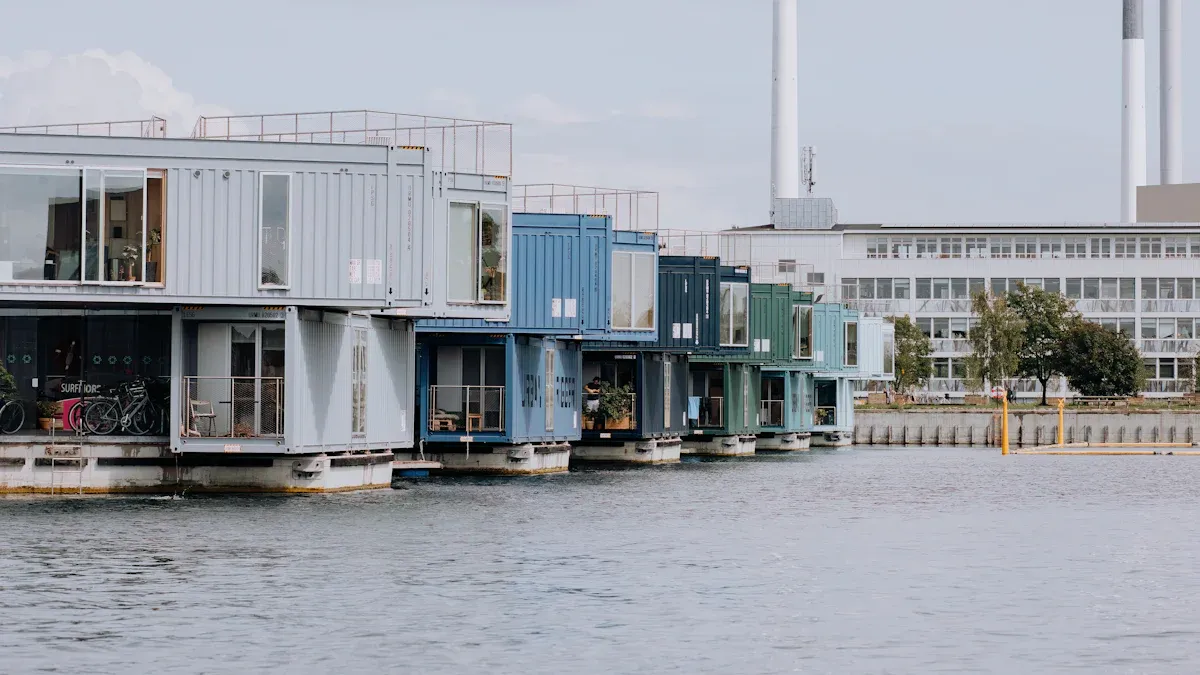
You need to know how council approval works. Local councils decide where you can build. They also decide what kind of building you can use. These rules are different in each area. Urban councils have stricter rules for container homes. Rural councils are usually more flexible. They may approve different housing types more easily. Many councils now support modular and shipping container houses. These homes help make housing more affordable.
Local zoning laws set limits for your container home. They control the size, height, and location. You should check your local council’s website. Look for zoning maps and land use rules. These maps show if your land is for homes, farms, businesses, or factories. Each zone has its own rules. If your land is not in the right zone, you may not get approval.
When you apply for container homes permits in Australia, you must follow legal rules:
Follow local building codes.
Meet state and territory rules for container home construction.
Provide minimum floor space, strong structure, plumbing, electrical, and insulation.
Install good ventilation systems.
Show proof that the shipping container is strong.
Explain how plumbing and electrical systems will connect.
Tip: Always talk to your local council first. This step helps you avoid mistakes and delays.
Planning vs. Building Permits
You should know the difference between planning permits and building permits. Most councils treat container homes like other permanent buildings. You must follow the same steps as for a regular house.
A planning permit is needed for any permanent or semi-permanent building. This permit checks if your project fits local zoning laws. You need a planning permit to use a shipping container as a home. You do not need it for a shed or garage.
A building permit makes sure your container home is safe. It checks engineering plans, inspections, and structure. You must get this permit before you build. If you skip this step, you may get fined or lose your home.
Here is a simple breakdown:
Permit Type | Purpose | When Needed |
|---|---|---|
Planning Permit | Checks zoning and land use rules | For any permanent or semi-permanent structure |
Building Permit | Ensures safety and construction standards | Before starting any construction work |
You must submit detailed plans to get these permits. Your plans should show floor layouts and proof of strength. You should also show how you will connect plumbing and electricity. Councils may ask for extra documents.
Note: Always check with your local council for the latest rules. Rules can change, and each council may have its own process.
If you follow these steps and meet all legal rules, you will have a better chance of getting container homes permits in Australia.
Meeting Building Codes & Compliance

National Construction Code (NCC)
You have to follow strict building codes for container homes in Australia. The National Construction Code (NCC) has the main rules for all buildings, including container homes. The NCC covers things like safety, health, energy, and structure. You should check which NCC rules fit your project. For container homes, the NCC uses rules from the International Residential Code and the International Building Code. Section 3115 of the IBC has special rules for shipping containers used as homes.
Code Type | Description |
|---|---|
International Residential Code | Used for one or two family homes and townhouses, not taller than three stories. |
International Building Code | Used for other buildings not in the IRC, like warehouses and schools. |
Has rules for turning shipping containers into buildings. |
You need to show engineering drawings and proof your container meets ISO 6346 standards. These steps help councils see if your home is safe and strong.
State and Local Variations
Building codes are different in each state. Every state in Australia has its own rules for container homes. For example, Victoria treats container homes like regular houses and needs a building permit. Queensland needs planning and building approval, plus soil tests. Western Australia wants you to send in planning and building applications. You also have to follow the Building Code of Australia for any changes.
State | |
|---|---|
Victoria | Treated as a normal house; needs a building permit and maybe more council reports. |
Queensland | Needs planning and building approval; soil tests and zoning for homes are needed. |
Western Australia | Must send planning and building applications; changes must follow the Building Code of Australia. |
Local councils have their own building codes too. Some councils in Queensland want a Complying Development Certificate. In New South Wales and South Australia, you almost always need a Development Application. In Victoria and Western Australia, you usually need a building permit or a CDC. Always check with your local council before you start.
Key Compliance Areas
You must meet some important rules to pass building codes for container homes:
Follow the National Construction Code for structure, fire safety, health, and energy.
Give test reports and engineering certificates to show your home is safe.
Meet state rules and keep up with new code updates.
Make sure your home can handle wind and earthquakes.
Do a bushfire check if you live in a risky area.
Use fire-safe materials for walls and ceilings.
Get a 7-star energy rating for your home.
Stop moisture and condensation inside the container.
Use coatings and fixings that stop rust and corrosion.
Tip: If you do not follow building codes, you could get fined or your home might be torn down. Always plan ahead and get the right approvals.
Common problems are bad insulation, poor ventilation, and picking the wrong container size. You can avoid these problems by following building codes and using the right materials and systems.
Applying for Necessary Permits
Development Application Process
You must follow steps to get approval for your container home. Each council has its own way, but most are similar. Here is a simple guide to help you:
Research Local Regulations: Check your local council’s website or call them. Find out the rules for container homes in your area.
Hire Professionals: Work with an architect or builder who knows container homes. They help design your home and prepare your paperwork.
Submit Applications: Get your planning and building permit applications ready. Make sure you include all needed documents.
Plan for Inspections: Your council will inspect your site during building. These checks make sure you follow the rules.
Complete and Certify: After building, get a final certificate from your council or a private certifier.
Tip: Keep a checklist for each step in the process. This helps you stay organized and not miss anything important.
Required Documents and Forms
You need to collect several documents before you apply for necessary permits. Missing paperwork can cause delays or rejection. Here are the most important documents you need:
Site Plan: Shows your property lines and where your container home will go.
Floor Plans: Shows each room and what it is for.
Exterior Elevations: Drawings of all sides of your home. They show materials and placements.
Structural Plans: Includes foundation and framing details. These often need a professional engineer’s stamp.
MEP Plans: Layouts for mechanical, electrical, and plumbing systems.
Energy Compliance Report: Shows your home meets insulation and HVAC rules.
Some councils may want extra forms. In Queensland, you might need a soil test and a Form 15 for engineering certification. In Victoria, you may need a permit to store shipping containers or similar structures. Here is a quick look at a typical permit requirement in Victoria:
Requirement | Description |
|---|---|
Permit Type | Permit to Store Shipping Containers or Similar Structures |
Location | City of Whittlesea, Victoria |
Contact Phone | |
Contact Email | |
Approval Time | Minimum of seven working days |
Note: Always check with your local council for a full list of needed documents. Each area may have different rules.
Submitting to Local Council
When you send your application, follow your council’s rules closely. Each council has its own way to review container home permits. Here are some tips to help you:
Learn your council’s rules before you start. This helps you avoid mistakes.
Decide if your container home will be temporary or permanent. This changes what permits you need.
Check if you need both planning and building approvals. Some projects need both types of necessary permits.
Always confirm your application process with the council. This helps you avoid fines or removal orders.
Keep copies of all your documents. Stay in touch with your council during the review. If they ask for more information, answer quickly. Good communication can help you get approved faster.
Alert: Councils often reject applications because of missing or wrong documents. Double-check everything before you send it.
If you follow these steps and prepare your paperwork well, you will have a better chance of getting your container home approved.
Inspections, Approvals & Overcoming Challenges
Council Inspections Process
You must finish a few steps before your container home gets approved. Councils want to make sure your home is safe and follows all rules. Here is how council inspections usually work in Australia:
Step | Description |
|---|---|
Site Evaluation And Selection | You work with experts to pick the right land. They check the site with surveys and soil tests. |
Document Creation And Planning Approval | You make detailed documents with help from planners and project managers. These can be over 80 pages. |
Construction And Commissioning | Accredited trades build your home to meet codes. Councils check the finished work to make sure it is safe. |
You will have inspections at different times. Inspectors look at your plans, your land, and your finished home. They check for safety, structure, and if you follow the rules.
Common Issues and Solutions
Many people have the same problems when getting approval. You can avoid delays if you know what to look for:
Ceilings that are too low in living areas
Not enough insulation for your area
Missing engineering papers for joints or walls
No proof of Class 1a compliance for imported containers
Listing your home as temporary when you want to live there full-time
You can fix these problems by planning early. Always check ceiling heights and use the right insulation. Make sure you have all engineering papers. If you import a container, get proof it meets Australian standards. List your home as permanent if you want to live there.
Solution | Description |
|---|---|
Consult Local Planning | Ask your council if container homes are allowed before you buy land. Get written proof. |
Hire a Zoning Attorney | Spend $500–$1,000 for legal help to avoid mistakes. |
Budget for Engineering | Save $2,500–$5,000 for engineering to meet local rules. |
Use Permit-Ready Plans | Buy professional plans to make approval faster. |
Tips for Approval Success
You can get approval faster if you follow these tips:
Get all permissions from your local council before you start.
Check if you need special land or building permits for your area.
Remember, each council has different rules for container homes.
Some councils let you use mobile homes with fewer permits, which saves time.
Work with a local Professional Engineer for your final plans. This helps you meet all local rules and site needs.
Tip: Detailed plans and engineering reports that match local codes will help you pass inspections and get your permit approved faster.
Utilities, Site Prep & Sustainability
Utility Connections
You need to plan for utility connections before you build. Councils want you to get planning permission for all utility work. You must follow the Building Code of Australia. First, you need engineering plans and inspections. These steps help you avoid problems later.
When you connect utilities, think about water, electricity, and waste. Many container homes use solar panels and rainwater tanks. Big windows let in sunlight and lower your energy bills. You can also use off-grid systems like wind or hydropower. These make your home more energy-efficient.
Here are the main requirements for utility connections:
Get planning permission from your local council.
Follow the Building Code of Australia for all utility work.
Complete engineering plans and inspections before construction.
Use well-insulated containers to save energy and reduce heat loss.
Think about renewable energy sources for electricity.
Tip: Insulating your container home is easier and cheaper than with regular homes. Good insulation keeps your home comfy and saves money.
Environmental Standards
You must meet strict environmental standards when building a container home in Australia. Many container homes try for net-zero emissions. Builders use recycled materials and cold-formed steel frames. These choices can cut carbon by up to half compared to regular houses.
Sustainability is important. Look for features like roof solar panels and rainwater systems. These help you meet the Sustainable Buildings SEPP in New South Wales. Using recycled shipping containers lowers your carbon footprint. Your home will waste less energy because the sealed design helps control the climate.
Key environmental standards include:
Use recycled materials and steel frames to lower carbon emissions.
Install solar panels and rainwater systems to reduce impact.
Design your home for energy efficiency with good insulation and natural light.
Check your home’s impact using indicators like Construction Energy Demand, Global Warming Potential, Acidification Potential, and Eutrophication Potential.
Note: Picking sustainable materials and energy-saving designs helps you protect the environment and save money over time.
You can secure permits for your container home by following these steps:
Check local council rules before you start.
Prepare all required documents.
Work with experts when needed.
Stay organized and respond quickly to council requests.
Remember, rules can change in each area. Keep learning and ask for help if you need it. Staying proactive helps you avoid delays and build your dream home.
FAQ
Can you build a container home anywhere in Australia?
You cannot build a container home anywhere. Councils set zoning laws for each area. You must check your local council’s rules before you start. Some places allow container homes more easily than others.
What documents do you need for a permit application?
You need site plans, floor plans, engineering certificates, and energy reports. Councils may ask for soil tests or plumbing approvals. Always check your council’s website for a full list of required documents.
How long does it take to get approval for a container home?
Approval times vary. Some councils process permits in a few weeks. Others may take several months. You speed up the process by submitting complete documents and responding quickly to council requests.
Do container homes need to meet the same building codes as regular houses?
Yes, you must meet the same building codes. The National Construction Code sets safety, energy, and health standards. Councils check your plans to make sure your container home follows these rules.
Can you live in a container home full-time?
You can live in a container home full-time if you get all permits and meet building codes. Councils treat permanent container homes like regular houses. You must follow all local rules for safety and comfort.