


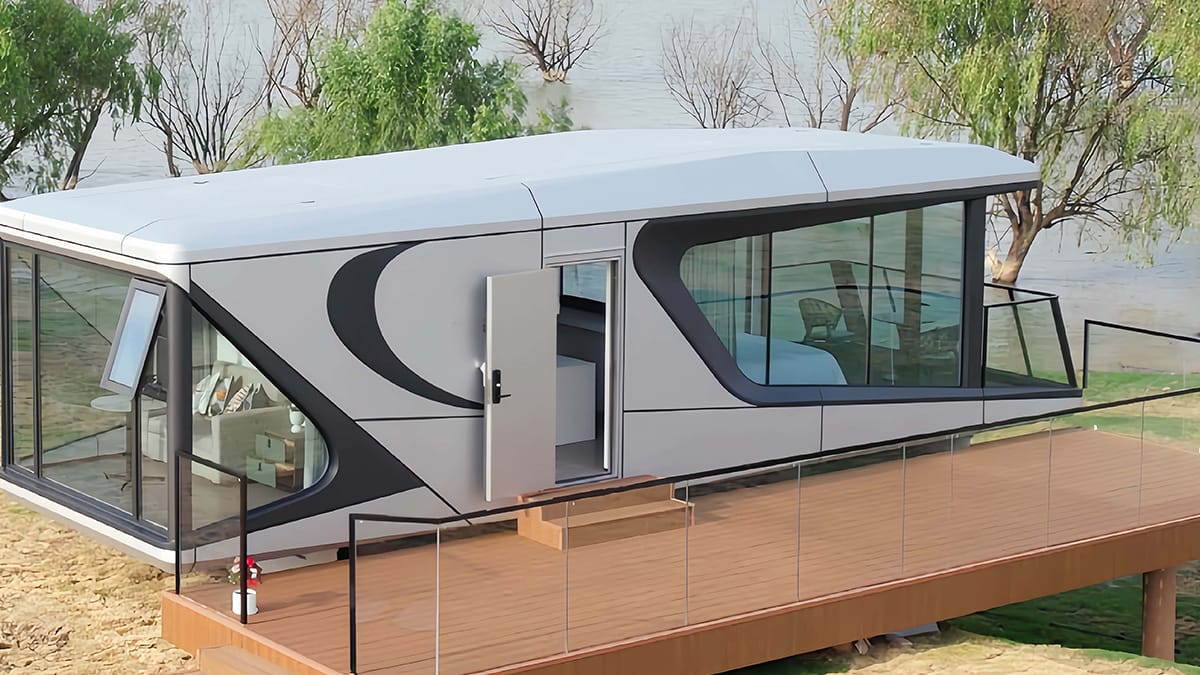
15 Nov Trailer Home On Wheels vs Tiny House vs RV vs Mobile Homes Which Is Best
Table of Contents
You want the best home for your life, but the answer depends on your needs. If you crave travel, comfort, and freedom, you might lean toward a Trailer Home On Wheels or an RV. When you dream of a cozy space, easy upkeep, and a smaller footprint, a tiny home could fit you better. Mobile homes offer stability and more room for families.
Each home type has different sizes, levels of mobility, rules, and how well they keep value. Tiny homes, for example, cost much less than a new house, with prices between $30,000 and $80,000. Many people, including 40% of those over 55, consider downsizing to a tiny home. The tiny home market keeps growing, and people living in them have a 45% smaller ecological footprint.
Tiny home market size reached $5.95 billion in 2024 and might hit $8.20 billion by 2033.
Nearly 40% of builders made smaller homes last year.
Tiny homes appeal to millennials, retirees, and anyone wanting a simple home.
Before you choose, think about your priorities. Do you want to move your home often? Do you need space for a family? Is saving money your top concern? Your answer will guide you toward the home that fits your lifestyle.
Key Takeaways
Think about what you need in a home. Decide if you want to move a lot or stay in one place.
Tiny homes are small and easy to make your own. They cost less but can have rules about where you put them. They are good for people who like simple living.
RVs let you move and see new places. You can travel whenever you want. But they lose value fast and need a lot of care.
Mobile homes give families more room and comfort. They have special rules to follow and can lose value as time goes on.
Trailer homes on wheels let you move and feel at home. They are good for people who want to travel but still feel comfortable.
Tiny Homes Overview
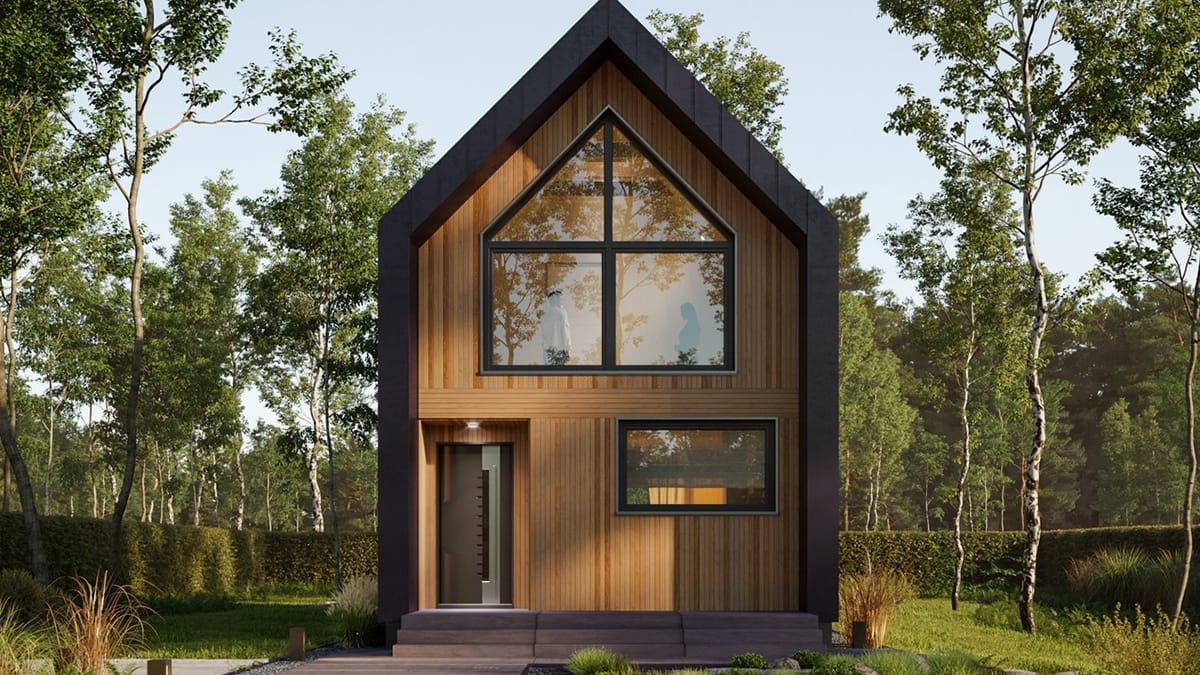
What Are Tiny Homes?
The tiny home movement is getting popular. Tiny homes are small houses that use space well. People pick tiny homes to have less stuff and more freedom. Some tiny homes have wheels, while others stay in one spot. More people want tiny homes because they cost less and let you live how you want.
Size & Space
Tiny homes are between 100 and 400 square feet. Most have one place to sleep and a small bathroom. The open floor plan makes the space feel bigger. Loft beds and fold-out furniture help save space. Beds can be used for storage too. Tiny homes are almost never over 500 square feet, so you must think about how much room you need.
Sleeping area: 1
Bathroom: 1 compact
Comfort & Customization
You can change your tiny house to fit your style. Many people add things like hardwood floors or energy-saving windows. You might want a small kitchen or a loft bed. Fold-out tables make the space work better. Owners say tiny homes feel warm and special.
Tip: Pick furniture that does more than one job to make your tiny house comfy and fit your needs.
Mobility & Placement
Tiny homes on wheels are easy to move. You can take your tiny house to new places. This lets you see different towns and meet new people. Before you park or build, check the local rules. Some places do not allow tiny homes because of zoning laws.
Cost & Value
Tiny homes cost less than regular houses. You might pay $20,000 to $60,000 for a simple tiny home. Fancy tiny homes can cost over $180,000. Building your own tiny home can save money. Tiny homes on a foundation keep their value better than ones with wheels. Tiny homes do not always keep their value like normal houses.
Regulations
Rules for tiny homes are different in each state. Some places call tiny homes on wheels RVs, so you cannot park anywhere. Many towns want houses to be a certain size, so building a tiny home can be hard. Here is a table about zoning problems:
State | Zoning Classification | Building Code Challenges | Additional Notes |
|---|---|---|---|
California | Often allows ADUs | Strict rules | Local rules change |
Georgia | Changes by county | Tough zoning laws | Some places easier |
Oregon | Good for tiny homes | Easier to follow rules | Cities are stricter |
Colorado | Mixed rules | Depends on the town | Appendix Q may help |
Pros & Cons
Here are some good and bad things about tiny homes:
Pros
Less stuff means less stress
You can make it fit your needs
You can travel with your home
You use less water
Tiny homes feel cozy and calm
Cons
Not much space for big families or lots of things
You might pay more for heat, cool, or land
Rules can make building hard
Not good for people with disabilities
Tiny homes lose value over time
You might feel lonely in a small space
Think about these points before you choose a tiny home. Tiny homes give you comfort, travel, and ways to make it your own. But you should think about cost, rules, and what you need for your life.
RVs Overview
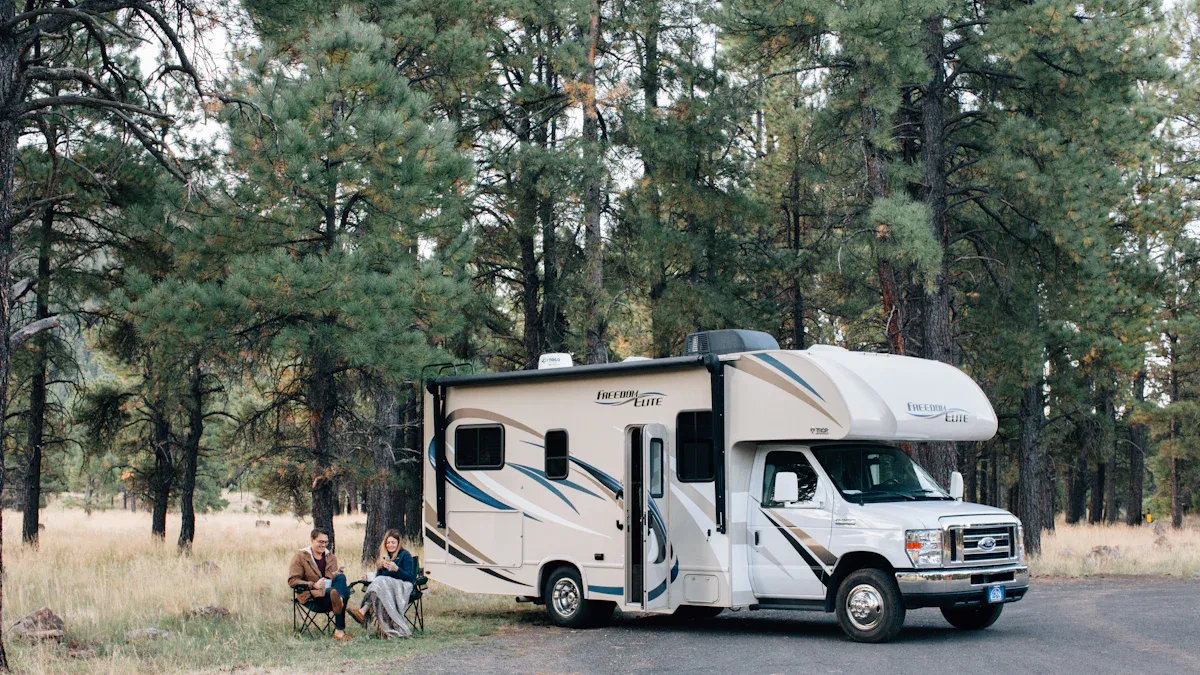
What Is an RV?
You might see an rv on the road and wonder about it. An rv is a home you can drive or pull behind a car. People use rvs for camping, trips, or living full-time. You can sleep, cook, and relax in your rv anywhere you go.
Types & Sizes
There are many kinds of rvs. Each one works for different people. Here are some common types:
Travel Trailers: Easy to pull and come in many sizes.
Toy Haulers: Carry bikes or ATVs for fun trips.
Pop-Up Campers: Light and simple, good for new campers.
Teardrop Trailers: Small and cool, nice for one person.
Truck Campers: Go in pickup beds and handle rough roads.
Class A Motorhomes: Big and fancy, like a moving house.
Class B Motorhomes: Small and easy to drive, good for two people.
Class C Motorhomes: Medium size, nice for families.
Fifth Wheel Trailers: Large and comfy, great for long trips.
Mobility & Travel
You can take your rv to many places. Many people travel far in their rvs each year. Here are some facts about rv owners:
Statistic | Description |
|---|---|
Average Age of RV Owners | 48 years old |
Average Income of RV Owners | $68,000 each year |
Percentage of Private RV Use | Over 70% |
Number of Americans Camping in RVs Annually | |
Percentage of RV Owners Traveling More During Pandemic | 72% |
Comfort & Features
Modern rvs feel like real homes inside. You get space to relax, cook, and use the bathroom. Some rvs have heated floors and soft seats. Many have smart tech for fun and safety. You can find rvs with special designs and smart storage. Many people think their rv is cozy and fun.
Tip: Pick an rv with features that fit your trips, like more storage or a better kitchen.
Cost & Depreciation
Rvs cost a lot when you buy them. Over time, rvs lose value like cars do. Tiny homes and trailer homes on wheels also lose value if moved a lot. Rvs do not usually go up in price. Selling an old rv can be hard if it has many miles.
Regulations
Rules for rvs change by where you are. Cities have strict rules for parking and staying in rvs. In the country, you have more freedom but may still need permits.
Regulation Type | Urban Areas | Rural Areas |
|---|---|---|
Temporary Parking | Allowed for a few days with a permit | More relaxed, but may need a permit |
Long-term Parking | Stricter rules, often not allowed without a permit | More options, but local laws matter |
Zoning Laws | Say where rvs can park, often strict | May allow more places to park |
Local Ordinances | Control things like street parking and noise | Fewer rules for parking on private land |
Permits | Needed for long stays or special spots | May need a permit for visitors |
Utility Connections | Must follow safety rules for living full-time | Same rules, but checks may be different |
Pros & Cons
Here is what rv owners say about rv life:
Pros | Cons |
|---|---|
You can move your home | Buying an rv costs a lot |
Can save money over time | You pay for repairs and gas |
Feels like home while in nature | Rvs need lots of care |
You can travel when you want | Not much space for big families or long trips |
Think about what is most important to you. Rvs give you freedom, comfort, and fun, but you must plan for costs and rules.
Mobile Homes Overview
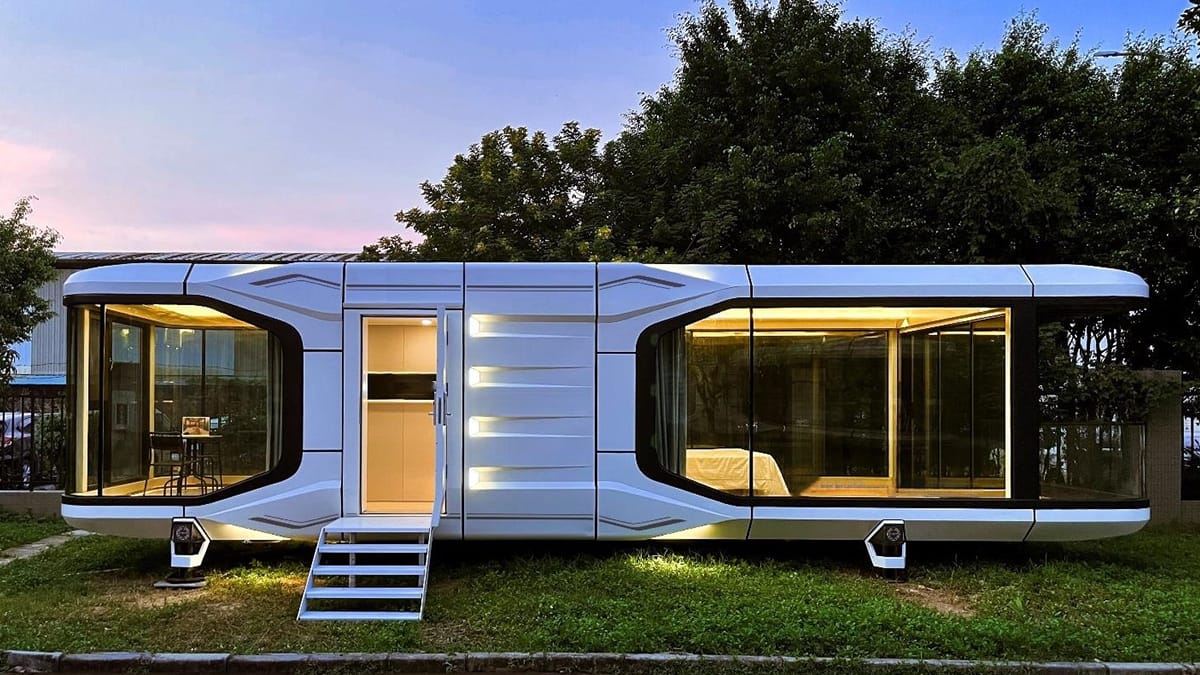
What Are Mobile Homes?
People talk about mobile homes when they want a cheaper place to live. Mobile homes are built in factories and can be moved if needed. Many families choose mobile homes because regular houses cost too much. Mobile homes help people who want simple living and more freedom. You get your own home without spending a lot of money.
Size & Layout
Mobile homes come in many sizes. You can pick a single wide or double wide. Single wides are about 15 feet wide and 72 feet long. They have about 1,000 square feet of space. Double wides are bigger, up to 2,300 square feet. Here’s a quick chart:
Type of Home | Average Width | Average Length | Average Square Footage |
|---|---|---|---|
Single Wide Mobile | 15 feet | 72 feet | ~1,000 square feet |
Double Wide Mobile | 26 feet | 90 feet | 1,000 to 2,300 square feet |
Traditional Home | Varies | Varies | Typically larger than 1,000 square feet |
Mobile homes give you more room than tiny homes or RVs. Most have bedrooms, a kitchen, and a living room. Some even have decks or high ceilings.
Comfort & Living Standards
Mobile homes can be comfortable and look nice. Some have hardwood floors and energy-saving appliances. You can find mobile homes with more than one floor. Many use materials that save energy, so you pay less for bills. Most come with a one-year warranty. Here are some things you might like:
Feature | Description |
|---|---|
Modern Design | Choices like decks, high ceilings, and open rooms. |
Energy Efficiency | |
Complete Amenities | Kitchens, bathrooms, and living rooms like regular homes. |
Environmentally Friendly | Uses less energy because of smart building. |
Warranty Protection | One-year warranty for the home and features. |
Investment Potential | Well-kept mobile homes can go up in value. |
Tip: Mobile homes are a good choice if you want comfort and low costs.
Mobility & Placement
You can move mobile homes, but it is not easy. You need special trucks and workers to help. How old, big, or far you move the home matters. Check the home before you move it. Moving costs include permits and setting up the home. You must follow local rules and get the site ready.
Mobile homes need special movers.
Age, size, and distance matter for moving.
Check the home before moving it.
Moving costs include permits and setup.
Local rules and site work are needed.
Cost & Value
Mobile homes cost less per square foot than regular houses. You pay less to fix things because they are simple. Taxes and insurance are usually cheaper. Mobile homes often lose value over time, like cars do. Regular houses usually go up in value, but some mobile homes can too if cared for.
Lower price per square foot
Cheaper to fix
Lower taxes and insurance
Value drops over time
Regulations
Rules for mobile homes are different in each state. You need the right base and permits. Here is a chart with some state rules:
State | Foundation Requirements |
|---|---|
California | Frost-protected shallow foundations are allowed by the IRC. |
Oregon | Needs footing, piers, and shims; outside parts must be treated. |
Washington | Concrete pads on strong ground; certain pier sizes. |
New Mexico | Permits, site work, anchoring, and drainage are needed. |
Arizona | Support systems must stop the home from tipping or moving, checked by a pro. |
Pros & Cons
Mobile homes have good and bad points. Here is a quick chart:
Pros | Cons |
|---|---|
Costs less | Some people look down on mobile homes |
Less work to keep up | Problems with roads and pipes |
Always needed for cheap housing | Rules about how many can be in one place |
People stay longer | Can be hurt by storms or floods |
Mobile homes let you own a home without spending too much. You get comfort, space, and can move if you need. Think about local rules, moving costs, and if your home will keep its value.
Trailer Home On Wheels Overview
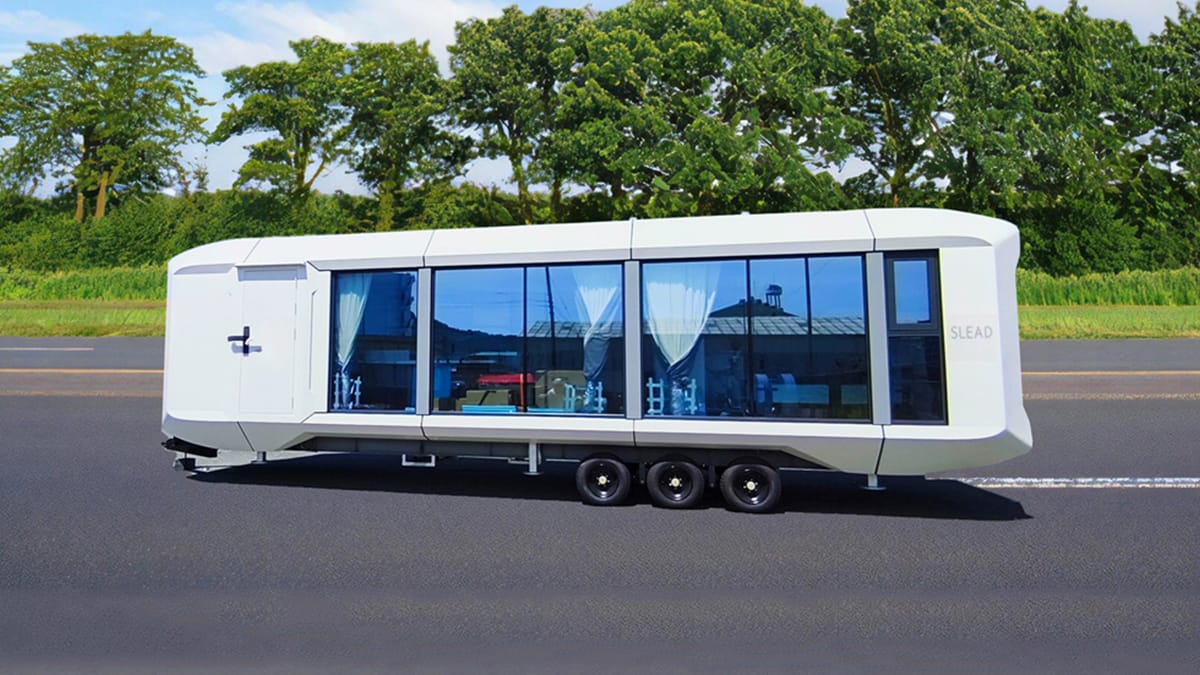
What Is a Trailer Home On Wheels?
You might see a trailer home on wheels and wonder why it is special. This home sits on a trailer frame, so you can move it anywhere. You get a living space that goes with you. Many people pick a trailer home on wheels for freedom and adventure. You can park it at a campground, a friend’s land, or your own property.
Size & Design
When you look at a trailer home on wheels, you see smart use of space. Most models are under 400 square feet. Standard trailers are about 8.5 feet wide, 13.5 feet tall, and up to 40 feet long. Some smaller trailers need permits if they are less than 5 feet wide or 10 feet tall. Here is a table to show the size:
Feature | Specification |
|---|---|
400 square feet | |
Standard Trailer Width | 8.5 feet |
Standard Trailer Height | 13.5 feet |
Standard Trailer Length | 40 feet |
Minimum Width for Permits | 5 feet |
Minimum Height for Permits | 10 feet |
Mobility & Towing
You can tow a trailer home on wheels with the right car or truck. The weight is very important. If you choose a light model, you can travel more easily. Your car or truck must be strong enough to pull the trailer. You want a good engine and a safe ride. Look for strong frames and good wheels. These help you drive on rough roads and long trips.
Your car must match the trailer’s weight.
Good engines and safe towing keep you safe.
Strong frames and wheels handle rough roads.
Comfort & Usability
Living in a trailer home on wheels feels cozy if you pick good features. Builders make layouts that use space well. You get strong materials that last through travel. Most homes have kitchens, bathrooms, and smart storage. Flexible layouts use furniture that does more than one job and use vertical space. Many models have climate control, off-grid options, and smart technology.
Feature | Description |
|---|---|
Layouts use space for comfort and function. | |
Durable Materials | Strong build for moving around. |
Essential Amenities | Kitchen, bathroom, and storage. |
Flexible Layouts | Furniture does more than one job and uses vertical space. |
Quality Craftsmanship | Well-built construction. |
Effective Climate Control | HVAC systems for all seasons. |
Off-Grid Capabilities | Can live without hookups while traveling. |
Smart Technology Integration | App-controlled systems for easy living. |
Tip: Pick a trailer home on wheels with features that fit your life. You will have more comfort and less trouble.
Cost & Upkeep
Owning a trailer home on wheels costs less than a regular house. You pay for releveling and inspections every few years, which cost $450 to $900. Yearly support checks cost about $100 to $300. Roof replacements cost $1,500 to $16,000 every 15 to 30 years. Plumbing repairs and HVAC tune-ups add to your upkeep. These costs are lower than most regular homes.
Item | Cost Range | Frequency |
|---|---|---|
Releveling and Inspections | $450–$900 | Every 3–5 years |
Support and Foundation Checks | $100–$300 | Yearly |
Roof Replacement | $1,500–$16,000 | Every 15–30 years |
Plumbing Repairs | $175–$450 | As needed |
HVAC Tune-up | $250 | Yearly |
HVAC Repairs | $100–$3,000 | As needed |
Regulations
Rules for trailer homes on wheels change by state. Most places set the maximum height at 8.5 feet so you do not need special permits. States like California, Texas, Florida, Oregon, New York, Michigan, and Massachusetts allow trailer homes on wheels as homes. Always check local zoning before you move or park your home.
Height, weight, and zoning rules are different.
Some states allow trailer homes on wheels for living.
Pros & Cons
You get many good things with a trailer home on wheels. They cost less, have strong builds, and let you change your space. Luxury features cost less. Still, you may have problems with land, lenders, and some people may judge you. Value can go down over time.
Pros:
Affordability
Structural strength
Customization options
Lower prices for luxury
Cons:
Land availability issues
Stigma
Lender requirements
Possible depreciation
A trailer home on wheels gives you freedom, comfort, and savings. Think about your needs and local rules before you pick this way to live.
Comparisons
Tiny Homes vs RVs
When you look at tiny homes and RVs, you see two very different ways to live. Tiny homes give you a stable place to call your own. You can design the space with customized layouts that fit your style. RVs, on the other hand, let you chase adventure and enjoy location freedom. You can wake up in a new place whenever you want.
Here’s a quick look at how they compare:
Tiny homes usually cost between $30,000 and $70,000, depending on how fancy you want them.
RVs, like destination trailers, can cost from $35,000 to over $100,000.
Tiny homes let you settle down and make your space unique.
RVs offer more freedom to travel and explore.
Cost Factor | RV (Travel Trailer) | Tiny Home (on Owned Land) |
|---|---|---|
Initial Investment | $75,000 (New trailer + truck) | $75,000 (Home + land site prep) |
Estimated Value in 5 Yrs | $30,000 (60% depreciation) | $80,000 (Land appreciation) |
Total Monthly Costs (avg.) | $1,200 (Park fees, fuel, maintenance) | $300 (Utilities, taxes, insurance) |
5-Year Net Cost/Loss | $97,000 | $43,000 |
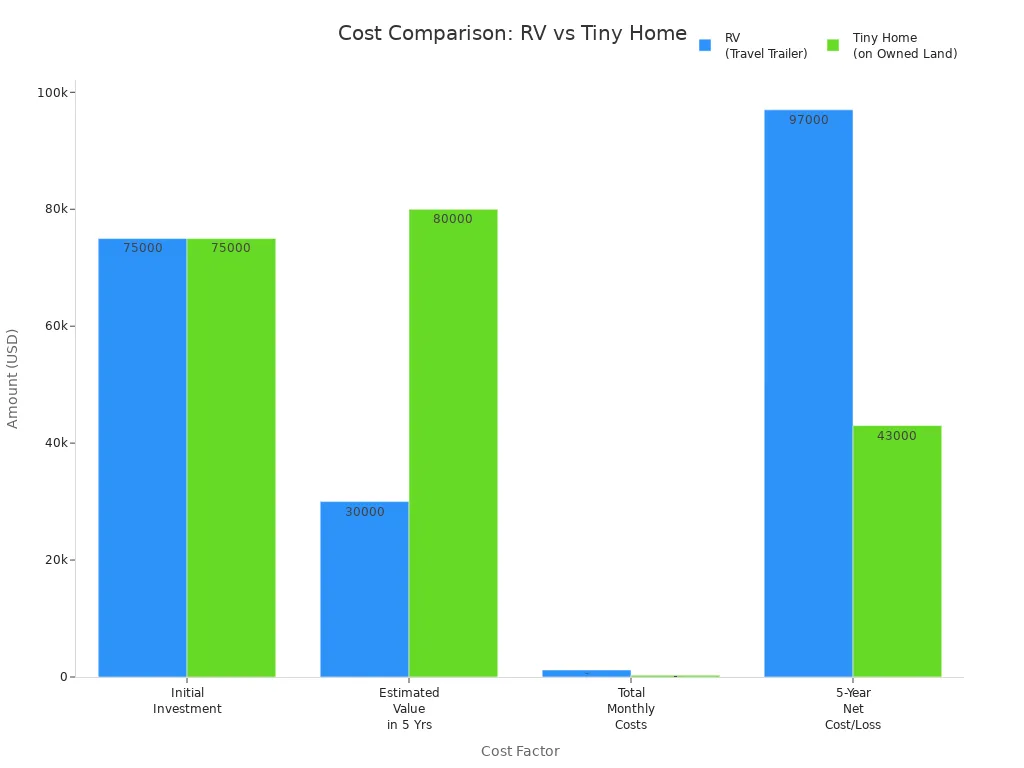
You will notice that RVs lose value faster and cost more to keep on the road. Tiny homes can go up in value if you own the land. RVs win when you want to move often. Tiny homes win if you want to stay put and build a cozy life.
Note: Tiny homes often face tough zoning laws, so you may have trouble finding a place to park. RVs usually have fewer rules about where you can stay.
Tiny Homes vs Mobile Homes
Tiny homes and mobile homes both offer a way to save money, but they feel very different. Tiny homes are much smaller, usually between 100 and 400 square feet. Mobile homes give you more space, from 600 to 1,300 square feet.
Home Type | Size Range (sq ft) |
|---|---|
Tiny Homes | 100 – 400 |
Mobile Homes | 600 – 1300 |
Tiny homes cost less overall, even though they cost more per square foot. You can often skip some strict rules because of their small size. Mobile homes must follow government and state rules, which can make things harder if you want to move or change your home.
Mobile homes must meet HUD standards and state rules.
Tiny homes may need to follow local building codes if built on a foundation.
Tiny homes on trailers might be called RVs and have different safety rules.
If you want a simple life and don’t need much space, living tiny in a tiny home could be the right choice. If you want more room and a home that feels more like a regular house, a mobile home might suit you better.
Tiny Homes vs Trailer Home On Wheels
Tiny homes and trailer homes on wheels look similar, but they have some key differences. Both give you a small, moveable space. Tiny homes often focus on style and comfort. You can pick every detail and make it feel special. Trailer homes on wheels are built for easy towing and strong travel.
Tiny homes let you design every inch, but they can be heavy and harder to move.
Trailer homes on wheels are lighter and easier to tow, but may have fewer fancy features.
Both can face zoning problems, so always check local rules before you buy.
If you want a home you can move often, a trailer home on wheels is easier to take on the road. If you want a home that feels unique and cozy, a tiny home gives you more options for design.
RVs vs Mobile Homes
RVs and mobile homes both offer a way to live outside a regular house, but they serve different needs. RVs are made for travel. You can drive or tow them to new places. Mobile homes are meant to stay in one spot most of the time.
RVs | Mobile Homes | |
|---|---|---|
Travel Flexibility | Designed for mobility, allowing travel to various locations easily. | Typically stationary, moved only once to a final location. |
Comfort | Equipped with essential comforts and amenities for travel. | Offers extensive amenities similar to traditional houses. |
Long-term Investment | Generally lower initial costs and ongoing expenses. | Requires significant upfront investment and ongoing property costs. |
RVs give you the benefits of travel and adventure. Mobile homes give you more comfort and space, like a regular house. If you want to move often, pick an RV. If you want to settle down, a mobile home is a better fit.
RVs vs Trailer Home On Wheels
RVs and trailer homes on wheels both let you travel, but they feel different. RVs are ready to go, with everything built in. You just hop in and drive. Trailer homes on wheels need a truck to tow them, but they often feel more like a real home inside.
RVs are great for road trips and quick moves.
Trailer homes on wheels give you a homier feel and better insulation.
RVs may cost more to maintain and lose value faster.
If you want to travel all the time and need quick setup, an RV is best. If you want a homey space you can still move, try a trailer home on wheels.
Mobile Homes vs Trailer Home On Wheels
Mobile homes and trailer homes on wheels both offer affordable living, but they work best for different people. Mobile homes give you more space and comfort, but you can’t move them easily. Trailer homes on wheels are smaller and easier to move, but you give up some space.
Mobile homes are best if you want to stay in one place and need more room.
Trailer homes on wheels are best if you want to move sometimes and don’t need much space.
Tip: Think about how often you want to move and how much space you need. This will help you pick the right home for your lifestyle.
No matter which option you choose, you get the chance to shape your life in a new way. Each type of home has its own benefits, so think about what matters most to you—space, comfort, cost, or the freedom to go wherever you want.
Practical Tips
Lifestyle Fit
Choosing your home starts with your lifestyle. Do you want to travel often or stay in one place? Maybe you dream of living off-grid or need space for a family. Each home type fits a different way of life. Take a look at this table to see what matters most for each option:
Type of Home | Key Considerations |
|---|---|
Tiny Houses on Wheels | Tow capacity, off-grid potential, parking challenges |
Travel Trailers | Size and weight, tow vehicle, amenities, storage |
RVs | Size, maintenance, fuel efficiency, campground access |
Skoolies | Skills, budget, parking, legal rules, space plan |
Sprinter Vans | Size, customization, maintenance, fuel, space |
Tip: Think about how much you want to move, how much space you need, and what comforts matter most to you.
Budget & Financing
Money plays a big role in your decision. Tiny homes, RVs, and trailer homes on wheels usually cost less than regular houses. You might save on construction and upkeep. Still, you may need a personal loan or a special lender because banks often won’t offer a regular mortgage for these homes.
Lower costs for building and repairs help you save.
Some homes use eco-friendly systems, which can cut bills.
Mobile homes let you move if your needs change.
You may need to look for lenders who know about alternative homes.
Note: Always check your budget and talk to lenders before you buy.
Maintenance
Every home needs care. Tiny homes and trailer homes on wheels need regular checks for leaks and wear. RVs require engine and system maintenance. Mobile homes need repairs for plumbing, heating, and the roof. Unique upkeep for each type can change your long-term costs.
Tiny homes: Inspect for leaks, clean gutters, check wheels.
RVs: Service engine, check tires, maintain appliances.
Mobile homes: Repair plumbing, inspect roof, check foundation.
Trailer homes on wheels: Check towing gear, maintain climate systems.
Legal & Zoning
Rules can make or break your plans. Zoning laws decide where you can park or build. Some places welcome tiny homes and trailer homes on wheels. Others have strict rules. RVs and mobile homes face their own limits. Always check local laws before you buy or move.
Tip: Visit city offices or talk to local experts to learn about zoning and permits.
You have lots of choices. If you want to travel, pick an RV or a trailer home on wheels. Tiny homes work well for simple living and easy upkeep. Mobile homes give you more space and comfort for families.
Remember, your best home depends on your needs and dreams. Visit models, ask questions, and do your homework before you decide. You deserve a home that fits your life.
FAQ
What’s the main difference between a tiny home and a mobile home?
Tiny homes are much smaller and focus on smart design. Mobile homes give you more space and feel like a regular house. You can move both, but mobile homes need special trucks.
Can you live in an RV full-time?
Yes, you can live in an RV all year. You need to plan for parking, utilities, and regular maintenance. Many people love the freedom and travel that RV life brings.
Do trailer homes on wheels need special permits?
You might need permits for parking or moving your trailer home. Rules change by state and city. Always check local laws before you buy or move your home.
Which option is best for families?
Mobile homes work best for families. You get more bedrooms, bigger kitchens, and extra space. Tiny homes and RVs fit singles or couples better.
Tip: Visit different models with your family before you decide. You’ll see what feels right for your needs.