

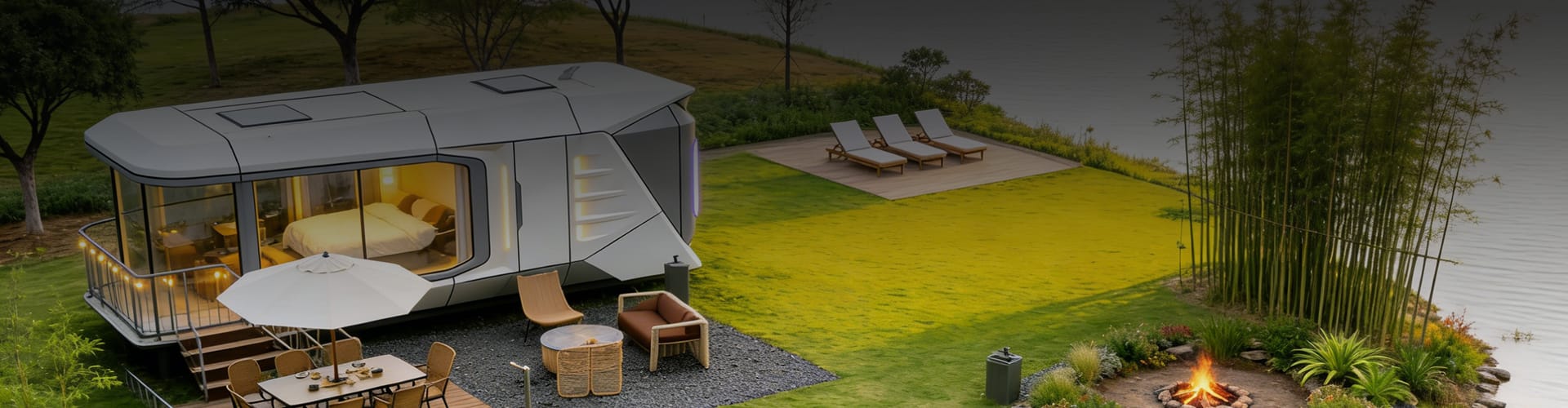
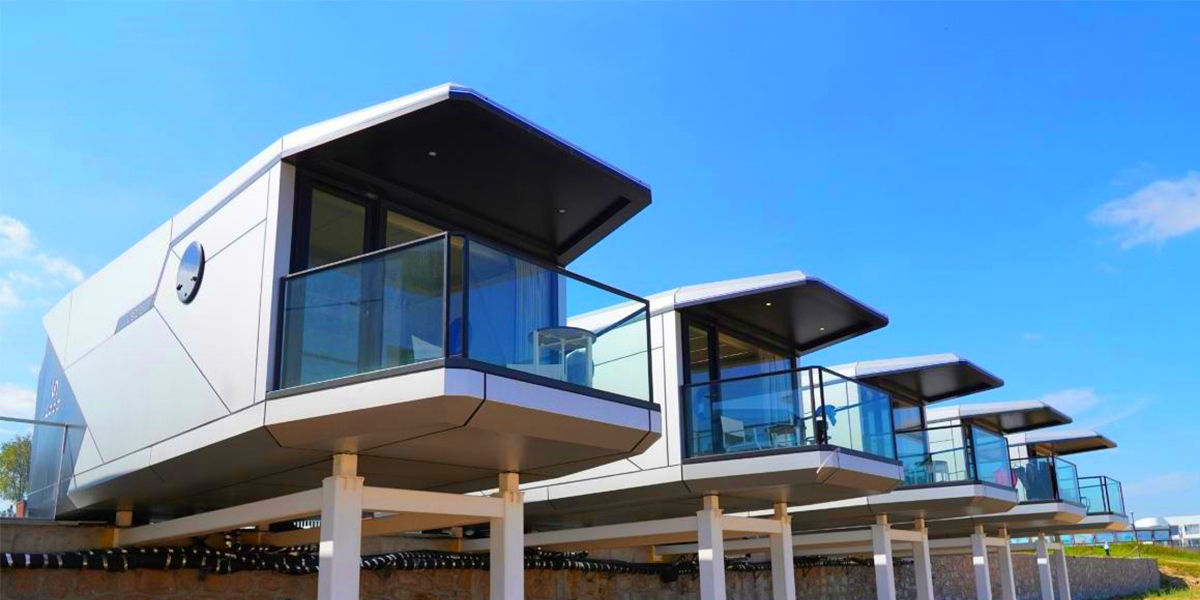
07 Aug The Pros and Cons of Capsule Houses
Ever thought about living in a small pod that saves money and space? Capsule houses are a new way to live. They have big benefits like being cheap and saving energy. But there are some problems too. The space is small and you get less privacy. You might like capsule houses if you travel alone. They are good for city life or if you want a simple, modular way to live. Look at how fast capsule houses are becoming popular in many countries:
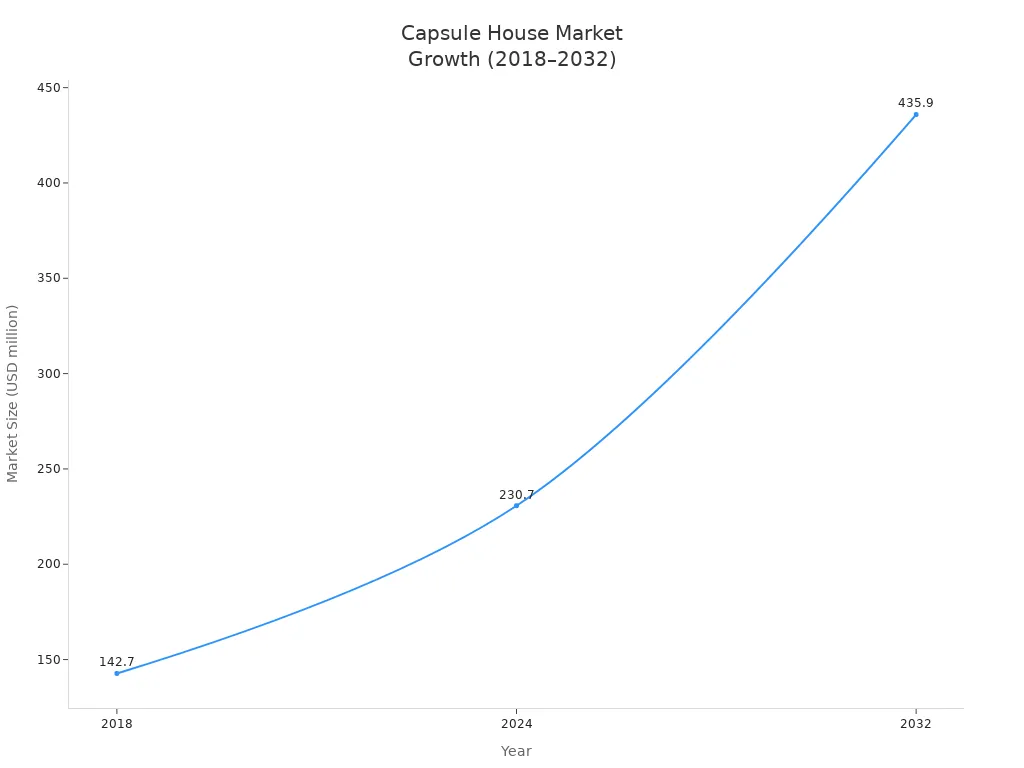
Modular construction is the main idea behind these homes. A space capsule house could help you live in a smart and flexible way. When you think about the Pros and Cons of Capsule Houses, ask yourself if modular design works for your daily life.
Key Takeaways
Capsule houses are cheap, quick to build, and use less energy. They help save money and space. – These homes are good for people who want simple lives. They fit young workers, people who travel alone, and those who care about the environment. – Modular design lets you add or take away parts. This helps your home change as your needs change. – The small size and little privacy can be hard. Think about how much space and comfort you need. – Look at local laws and permits before you buy or build a capsule house. This helps you stay out of legal trouble.
Who Capsule Houses Are For
Best Fit
You might ask if capsule houses are good for you. Many people like these homes, but some groups like them more:
Young professionals and students want cheap city homes.
Millennials and Generation Z like saving money and having flexible lives.
Solo travelers and digital nomads need private, portable modular spaces.
Retirees want to downsize and have easy-to-care-for modular homes.
Eco-conscious people care about saving energy and being green.
Families in rural places want to add more modular space as they grow.
Capsule houses are also liked by people who love technology. Many young buyers, especially tech-savvy ones, enjoy smart home features and modular designs. If you want a home that can change as your life changes, a modular capsule house could be a good choice.
Tip: If you want a home that can get bigger or smaller as you need, modular capsule houses give you that choice.
Lifestyle Match
Capsule houses are best for people who like simple living. If you want less stuff and want to focus on what matters, you may like this modular living. These homes are good for people who want to live in cities, where space is small and every bit matters. You can use a modular capsule house as a short-term rental, a creative studio, or a vacation spot in a pretty place.
People who work from home, like freelancers or creators, often use modular capsule houses as private offices or studios. If you want a living space that is easy to move, set up, or make bigger, modular design helps you do that. Some people use modular capsule houses for emergency homes or in small groups.
A modular capsule house is great if you want a smart, useful, and flexible space that fits your changing life.
Pros and Cons of Capsule Houses
Advantages
If you look at the pros and cons of capsule houses, you will notice many people like the benefits. Here are some of the main advantages:
Affordability: Capsule houses cost a lot less than regular homes. You can buy a basic space capsule house for about $10,000. Bigger or custom modular homes usually cost under $100,000. Most regular homes start at $150,000 or more. You save money on the price, repairs, and bills. Smaller homes cost less to heat and cool.
Modular Construction: Modular construction helps capsule houses get built fast. Factories make most parts before they reach your land. Workers put the pieces together at your place. This takes weeks, not months or years. You need fewer workers, so you pay less for labor. Modular construction lets you add or remove parts as your needs change.
Space Efficiency: Every part of a modular capsule house is useful. Designers use smart storage and built-in furniture. Your home feels bigger than it looks. If you want less clutter, modular design helps you stay neat.
Sustainability: Modular capsule houses use strong and light materials like steel, aluminum, and composite panels. These last a long time and are easy to recycle. Many modular homes have energy-saving features, like good insulation and special windows. You help the planet by using fewer resources.
Low Maintenance: Modular construction uses materials that do not need much care. You spend less time and money fixing things. Smaller homes are easier to clean and repair.
Fast Construction: You do not have to wait long to move in. Modular capsule houses can be ready in just a few weeks. Factories build the main parts while workers get your land ready. This saves you time and stress.
Note: Modular construction lets you change your home as your life changes. You can add more modules if you need more space or take them away if you want a smaller home.
Here is a quick comparison between capsule houses and traditional homes:
Aspect | Capsule Houses | Traditional Homes |
|---|---|---|
Initial Cost Range | $30,000 – $100,000 | Usually over $150,000 |
Maintenance Frequency | Less often and cheaper | More often and more expensive |
Construction Materials | Strong, easy-care materials | Mixed materials, more upkeep |
Build Time | Often finished in weeks | Longer building times |
Additional Costs | Might need off-site storage | Usually no extra storage needed |
Disadvantages
You should also think about the downsides when you look at the pros and cons of capsule houses. Some problems can make modular living hard for some people.
Limited Space and Comfort: Capsule houses are small. You might feel crowded, especially with a family or lots of stuff. Thin walls and open spaces make it hard to have privacy. Noise travels easily, so you may hear others a lot. Some people find it hard to relax or focus in a small space. It can be tough if you like to spread out or need room for hobbies.
Modular Adaptability: Modular construction gives you some flexibility, but not always. Many modular capsule houses have fixed layouts. You cannot always change the design or add your own style. If you want a unique home, you might feel stuck with what you get.
Legal and Zoning Issues: Not every city or state allows capsule houses. You may face strict rules about where you can put your modular home. Some places need special plans, permits, or size limits. You might have to connect to city water or sewer, even if you want to live off-grid. These rules can slow you down or cost more money.
Tip: Always check local laws before you buy land or start building a modular capsule house.
Resale Value: Many buyers still want regular homes. If you want to sell your modular capsule house later, it may be hard to find buyers. Renting it out can also be tough.
Suitability for Families: Modular capsule houses work best for singles or couples. If you have kids or need more space, modular living may feel too tight. The lack of comfort and privacy can be a big problem for bigger families.
Durability and Lifespan: Most modular capsule houses use strong materials like aviation-grade aluminum and galvanized steel. These homes can last over 50 years, which is longer than many tiny homes. Still, regular houses can last even longer if you take care of them.
Callout: Modular construction has many good points, but you must balance them with the limits on comfort, privacy, and flexibility. Think about your daily needs before you pick a modular home.
When you look at the pros and cons of capsule houses, you see that modular construction gives you speed, savings, and flexibility. But you also face real problems with comfort, space, and legal rules. The best choice depends on your lifestyle and what matters most to you.
Key Features of Capsule Houses
 Space Efficiency
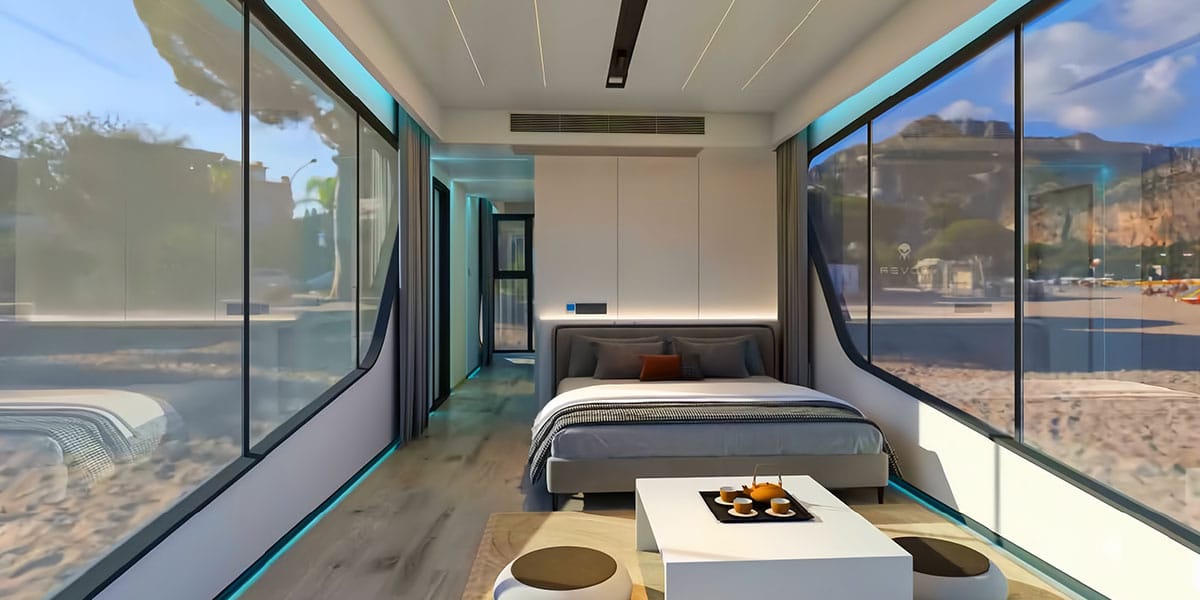 Space Efficiency
Capsule houses use every bit of space well. Designers make the rooms small but smart. They use modular construction to help you fit more in less space. You get furniture that folds up or hides away. Beds can go into the wall. Tables can be tucked out of sight. Loft beds and shelves on the wall let you use space up high. This way, no corner is wasted. Open rooms let sunlight come in and make the space feel bigger. Mirrors and light paint colors help the room look open. You can put your kitchen, dining, and work area all together. This makes the space work better and keeps things simple.
Storage you can change to fit your needs
Open rooms for more light and fresh air
Tip: Modular capsule houses help you keep things tidy and stop clutter.
Sustainability
Capsule houses are good for the planet. Modular construction uses green materials like recycled steel and aluminum. Factories build most parts somewhere else. This means less trash and less harm to nature. These homes use less water and energy when being built. Many have solar panels and ways to collect rainwater. This helps you live in a green way. The small size means you use fewer things every day. This is better for the earth.
Green materials and designs that save energy
Smaller homes use less and help nature
Durability
Capsule houses are made to last a long time. Modular construction uses strong stuff like aviation-grade aluminum and galvanized steel. These do not rust and keep out bugs and bad weather. Insulated panels keep you warm and safe. Capsule houses can stand up to strong winds and even earthquakes. Fire-resistant walls and tight building make them safer. You get a home that stays strong for many years and does not need much fixing.
Material/Feature | Benefit |
|---|---|
Strong, takes shocks, lasts long | |
Insulated Panels | Keeps out heat, sound, and water |
Aviation-Grade Aluminum | Stays strong in bad weather, lasts long |
Energy Efficiency
Capsule houses are great at saving energy. Modular construction uses good insulation and windows that keep air in. The appliances use less power. You will pay less for heating and cooling. The house keeps the temperature steady. Many capsule houses have solar panels and LED lights. These help you use even less energy. These designs save you money and help the earth.
Note: Living in a modular capsule house means you use less energy and help the planet every day.
Cost-Effective Living
Price Range
If you want to save money on a home, you want to know the price. Capsule houses give you lots of options. You can get a basic modular capsule for about $510. Bigger or fancier ones can cost up to $35,000. Some luxury modular homes cost even more, but most people find one that fits their budget. The modular design lets you pick the size and features you want. You do not have to buy extra things you do not need.
Here is a quick look at the price range for different modular capsule houses:
Capsule House Type / Description | Price Range (USD) | Notes / MOQ / Size |
|---|---|---|
Basic Modular Capsule House / Office Prefab Container Home | $510 – $650 | MOQ varies, ~18-21 sqm |
Luxury Portable Modular Home (4 Bedroom) | $23,500 – $31,500 | 1 Piece MOQ |
Aluminum Material Modern Outdoor Capsule Hotel Cabin | $560 – $650 | 21 sqm, MOQ |
Portable Space Capsule Hotel Accommodation | $28,000 – $30,500 | 1 Piece MOQ |
Modern Integrated Space Capsule Residential | ~$9,999 | 1 Piece MOQ |
Luxury Sleeping Mobile High-End Prefab Capsule Hotel | $14,000 – $30,000 | 1 Piece MOQ |
Luxury Outdoor UFO Capsule Hotel | $6,200 – $6,800 | 1 Piece MOQ |
Prefab House Sleeping Space Capsule Mobile Tiny House | $18,000 – $19,599 | MOQ 9 Pieces |
Luxury Container Prefab Space Capsule Hotel with Bathroom | $16,500 – $24,000 | 1 Piece MOQ |
Luxury Prefab Capsule Hotel Cabin Collection | $4,200 – $4,700 | 1 Piece MOQ |
Apple Cabin Prefab Capsule Hotel | $10,000 – $15,000 | 1 Piece MOQ |
Earthquake Resistant Modular Prefab Mobile Container Capsule House | $7,999 – $25,999 | 1 Set MOQ |
Capsule Hotel Container Living Houses | $1,600 – $2,150 | MOQ 8 Pieces |
China Manufacturer Customized Steel Structure 2 Bedroom Capsule | $27,000 – $35,000 | 1 Set MOQ |
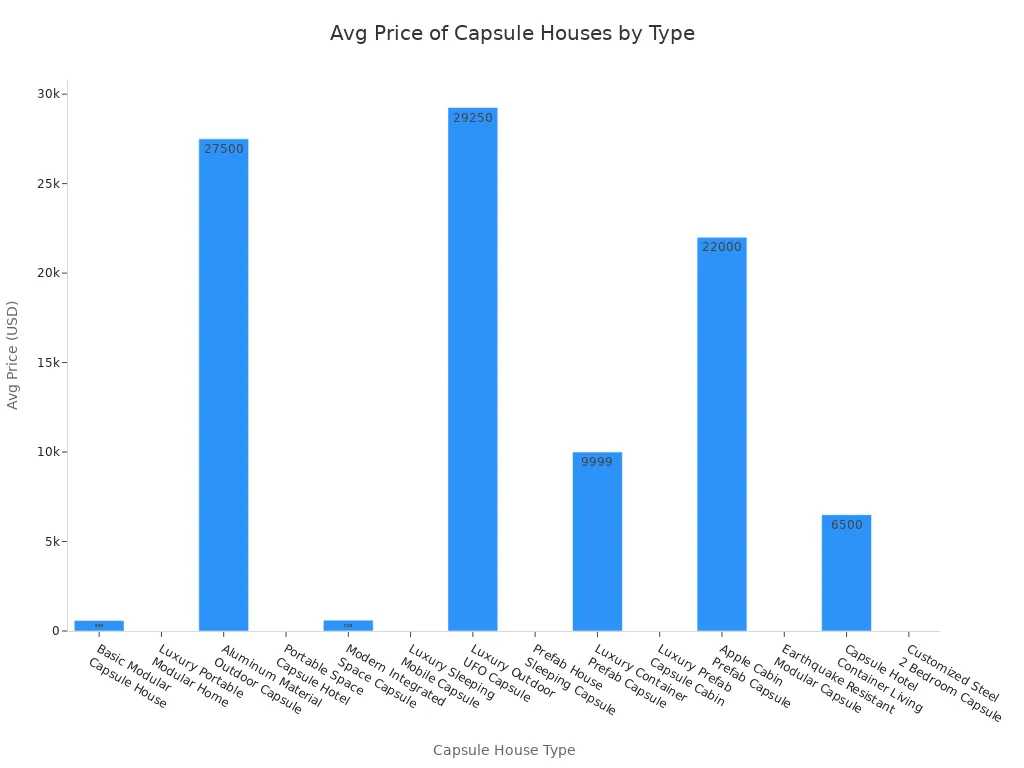
You can see that modular capsule houses have many price choices. This helps you find one that matches your money and needs. Modular construction means you only pay for what you use. That makes it a smart way to save money.
Maintenance Savings
Capsule houses help you save money after you move in. Modular homes use strong materials and smart design. You spend less time and money fixing things. Most modular capsule houses need only easy cleaning and small repairs. You do not have to worry about big problems like old homes have.
Here is how maintenance compares:
Aspect | Capsule Houses (e.g., E9 Space Capsule House) | Traditional Homes |
|---|---|---|
Maintenance Cost Basis | Low ongoing costs due to compact design and durable prefab materials | Typically ~1% of purchase price annually; can be 2-3% for older or climate-affected homes |
Maintenance Activities | Routine cleaning, occasional inspections, minor repairs (e.g., roof leaks, repainting) | Roof repairs, HVAC servicing, exterior maintenance, more frequent and costly upkeep |
Cost Variability | More predictable and generally lower | Variable depending on age, materials, location |
Energy Efficiency Impact | High energy efficiency reduces utility costs | Often less efficient, leading to higher utility bills |
Construction Quality | Factory-controlled quality reduces unexpected expenses | Varies widely, affecting maintenance needs |
You can choose to use city utilities or live off-grid.
Solar panels and rainwater systems can lower your bills.
Modular homes keep costs steady and easy to plan.
If you want to save money, modular capsule houses make it simple to stick to your budget. You get a home that is easy to care for and saves you money every month.
Tips for Capsule Home Living
Maximizing Space
You can use your modular capsule home better by planning storage. Pick furniture that does more than one thing, like sofa beds or tables that fold down. Storage ottomans are good for saving space and keeping things useful. Capsule beds often have storage built in, so you can keep your stuff tidy and easy to reach. Put shelves or pegboards on the walls, or try a garden that goes up the wall. Use drawers or bins under the bed for clothes and sheets. Foldable and stackable things help you clear the floor when you need space. Try to use every small spot, like under stairs or behind curtains, for extra storage. Modular layouts let you move things around as your needs change.
Tip: If you keep your space neat, you will have less mess and feel calm.
Addressing Challenges
Living in modular capsule houses can feel small at first. You might worry about not having enough privacy or comfort. Choose modular layouts that give you both open space and cozy spots. Use furniture that can do more than one job to keep things flexible. Try to live with only what you need and love. This makes your space feel bigger and more peaceful. Good lights, fresh air, and comfy furniture help you feel better. Smart home tech can help control the air and lights to make your modular home nice. If noise is a problem, put down soft rugs or hang curtains to help block sound. Remember, modular living means making every part of your home useful.
What to Consider
Before moving into a modular capsule house, ask yourself some important questions. Can you live with less stuff and use modular layouts? Do you need more space for family or hobbies? Check if modular capsule houses are allowed where you want to live. Make sure you get all the right permits for building and utilities. Always pay safely and keep your papers safe. Think about how much you can change the modular home—can you move things or add smart features? Ask about the materials, energy use, and how long the house will last. Talk to experts and local leaders to make sure your modular home fits your needs and follows the rules.
Question Area | Why It Matters |
|---|---|
Can you change layouts or add features for better use? | |
Legal Permissions | Are modular capsule houses allowed in your area? |
Energy Efficiency | Will you save money and help the planet with your modular home? |
Durability | How long will your modular house last? |
Resale Value | Will your modular home keep its value if you want to sell? |
Expert Advice | Have you talked to designers or local officials about your modular plans? |
Note: Modular capsule houses are best for people who like simple, modular living and want a home that can change with them.
Capsule houses give you quick builds, low costs, and smart use of space. You also get eco-friendly living and more freedom. Still, you might face small spaces, legal steps, and setup challenges. Before you decide, think about your needs and what matters most to you.
Visit a model home or talk to people who live in capsule houses.
Check out groups like Homes 4 The Homeless or the Tiny Home Industry Association for more info.
Many people find capsule living brings peace, flexibility, and a fresh start—maybe you will too!
FAQ
What is a capsule house?
A capsule house is a small, modular home. You get a compact space that uses smart design. Most capsule houses come ready to use. You can live in one, work in one, or use it for travel.
Can you live in a capsule house year-round?
Yes, you can live in a capsule house all year. Good insulation and heating keep you warm in winter. Air conditioning helps in summer. You stay comfortable if you pick the right features.
How do you get water and electricity in a capsule house?
You connect your capsule house to city utilities, or you use off-grid systems. Many people add solar panels or rainwater tanks. You choose what works best for your needs.
Are capsule houses safe in bad weather?
Capsule houses use strong materials like steel and aluminum. They stand up to wind and rain. Some models even resist earthquakes. Always check the safety features before you buy.
Do you need special permits for a capsule house?
Always check local rules before you buy land or build. Some places need special permits for capsule houses. Ask your city or county office to make sure you follow the law.