

04 Sep Prefab Container House Design Trends Shaping 2025
Table of Contents
You may see prefab container house projects everywhere now. People want homes that cost less, help the earth, and look cool. Look at these numbers—by 2033, the prefab container house market could reach $95.7 billion. It will grow by 5.06% each year:
Trend Description | Region | Projected Market Size | Growth Rate |
|---|---|---|---|
Rising demand for affordable housing | Global | USD 95.7 billion by 2033 | 5.06% CAGR from 2025 to 2033 |
Popularity of container homes | Asia-Pacific | N/A | N/A |
Use to combat homelessness | Latin America | N/A | N/A |
Temporary housing solutions | Middle East and Africa | N/A | N/A |
Emphasis on durable designs | Global | N/A | N/A |
Many shipping container homes use green materials and smart design. These homes meet what you need. The trend keeps growing as people want places that are good for the planet and easy to change.
Key Takeaways
Prefab container houses are becoming more popular. They cost less and help the environment. Many people choose them because they save money.
Modern designs focus on being good for the planet. Builders use recycled things and save energy. These homes help protect nature.
Smart technology makes container homes safer and more comfortable. Things like home automation and security systems help people feel safe.
Modular layouts let people change their homes easily. You can make your space fit your needs. This makes the house useful for many situations.
Biophilic design helps people feel close to nature. Big windows and natural materials make homes feel fresh. The living space feels healthy and welcoming.
Prefab Container House Design Trends
Market Overview
Prefab container houses are showing up in many places now. The market for these homes is getting bigger every year. In 2023, it was worth $63.62 billion worldwide. Experts think it will reach $111.19 billion by 2032. This means the market will grow by 6.4% each year from 2025 to 2032.
Why is this happening? People want homes that cost less and use smart ideas. You can pick from more styles and get better spaces. New trends in shipping container house design make homes greener, smarter, and faster to build.
Let’s see where the market is growing the most:
Region | Growth Characteristics |
|---|---|
Many people want cheaper homes and easy building rules. | |
Europe | People care about green homes and new ways to build. |
Asia-Pacific | Cities are growing fast and people need low-cost homes. |
Shipping container homes are not just a trend. They work for people in lots of places. You see more modular homes in both cities and suburbs.
Key Drivers in 2025
What makes the container house market grow in 2025? There are three main reasons:
Affordability: Home prices keep going up. You want a home that does not cost too much. Prefab container houses help you save money.
Sustainability: You want to help the planet. Builders use recycled stuff and energy-saving features. This makes your home better for the earth.
Innovative Design: You want a home that looks new and cool. Trends like biophilic design and modular layouts give you more choices.
There are also new design ideas that change how you live:
Biophilic Design: You get living walls and big windows. Your home feels closer to nature.
Smart Technology: You can use your phone to control lights and heat. Your home saves energy and is easier to use.
Modular Configurations: You can stack containers or put them in new shapes. You can build tall homes or open spaces.
Why do these trends matter for you and builders? You get homes that fit your life. Builders use green materials and smart tech. You pay less and feel more comfortable.
Here’s how different things affect the container house market:
Factor | Influence |
|---|---|
Lower prices bring in more buyers and renters. | |
Environmental | Green materials and tech attract people who care about the earth. |
Social | Cool looks and flexible spaces are good for creative people. |
The container house market keeps changing. New trends make homes smarter, greener, and more personal. You get more choices and better places to live. The industry grows because people want homes that match what they need.
Sustainability in Shipping Container Homes
Eco Materials
You want your prefab container house to be good for the earth. Builders use recycled insulation, bamboo flooring, and low-VOC paints now. These materials help the planet and make your home safer. Bamboo grows quickly and lasts a long time. It is a smart choice for floors. Low-VOC paints keep your air clean inside. Recycled insulation keeps your home warm in winter. It also keeps your home cool in summer.
Here are some eco-friendly materials you might see in shipping container homes:
Material Type | Description |
|---|---|
Recycled Insulation | Helps the earth and makes air inside better. |
Bamboo Flooring | Strong, grows fast, and is good for nature. |
Low-VOC Paints | Has less chemicals, so your home is healthier. |
Gives you energy from the sun to use at home. | |
Rainwater Collection | Saves water by collecting rain for reuse. |
Prefab container house builders pick these materials to save money and help the earth. You spend less because you need fewer parts than a regular house. This is a big step for eco-friendly ideas in prefab house design.
Energy Efficiency
You want a home that saves energy and money. Energy-efficient homes use smart insulation, special windows, and solar panels. These things keep your home comfy all year. You can use good appliances and ways to heat or cool without wasting energy. Where you put your home matters too. If your home faces the sun in winter, it stays warm. If it gets shade in summer, it stays cool.
Tip: Smart ventilation systems like HRVs and ERVs bring in fresh air. They keep your home cozy and do not waste energy.
Here are some top energy-saving features:
Good insulation keeps heat in during winter.
It keeps heat out during summer.
Special windows let in light but block heat or cold.
Solar panels help you live on your own power.
Small homes need less energy to heat or cool.
With these choices, you get a prefab house that saves money and helps the earth. Prefab house design now cares about saving energy and building in smart ways.
Water and Waste Solutions
Eco-friendly homes use smart water and waste systems. Rainwater harvesting lets you collect rain for your garden or washing. Graywater recycling cleans and reuses water from sinks and showers. Composting toilets cut down on waste and help the earth.
Rainwater harvesting means you use less city water.
Graywater recycling saves water and helps nature.
Composting toilets and natural filters keep waste out of landfills.
These ideas make your home more eco-friendly and self-sufficient. You help the earth and save money too. Prefab house design in 2025 puts eco-friendly living first in every home.
Smart Tech in Modern Container House
Smart home technology is changing how people live. You get more comfort and safety. You also have more control over your home. Smart home features make your prefab container house feel fancy. Even small homes can feel special.
Home Automation
You can use your phone or voice to control things. You might say, “Turn on the lights,” and the lights come on. You can change the temperature or play music easily. You can lock doors without getting up. Here are some smart systems you might find:
Home automation lets you control lights and temperature.
Smart locks and cameras help keep your home safe.
Wi-Fi extenders give you strong internet everywhere.
Voice assistants help you use devices without hands.
Audio systems let you listen to music in every room.
These systems save you time and energy. You can change light colors with one button. You can dim lights or close curtains for privacy. You can set your HVAC system to turn on or off when you want.
Security and Energy Systems
Safety and saving energy are important in these homes. Smart thermostats and lighting controls learn what you like. Security systems send alerts to your phone if something is wrong. IoT devices let you check your home from anywhere.
Cameras and motion sensors watch your home.
Alerts tell you about security problems right away.
Programmable thermostats help you save energy.
Solar panels on the roof collect sunlight for power.
Battery systems store electricity for later.
Inverters change solar power so you can use it.
You can send extra electricity back to the grid.
Here is a table that shows how these features help:
Feature | Benefit |
|---|---|
Smart thermostat | You can control heat and cool from far away. |
You can track and use less energy. | |
Smart locks and security cameras | You can watch your home and keep it safe. |
Air quality sensors | These keep air clean for you and your family. |
Water purification systems | You get clean water from rain or other sources. |
Health and Wellness Features
Luxury is not just about cool gadgets. You want a home that helps you feel good. Modern container houses have wellness features for health. You might see spa areas or yoga rooms inside your home. Natural materials like bamboo and stone make rooms calm.
Feature | Description |
|---|---|
Wellness retreat spa | You can relax in spa spaces and quiet rooms. |
Treatment rooms | You can do yoga, meditate, or get a massage. |
Central reception area | You can hang out and eat healthy snacks and drinks. |
Outdoor areas | You can enjoy hot tubs, gardens, or massage spots outside. |
Natural materials | Bamboo, stone, and water features help air and mood. |
People spend lots of time indoors. Good air matters for your health. Smart air sensors and outdoor air systems help you feel better. Good design makes your prefab container house a nice place to live.
Modular and Flexible Layouts
You might wonder why so many people love modular and expandable layouts in prefab container house projects. The answer is simple: you get more freedom to shape your space. With modular prefab designs, you can start small and grow your home as your needs change. You can move walls, add rooms, or even stack containers to create a modern container house that fits your life.
Open Floor Plans
Open floor plans make your home feel bigger and brighter. You can walk from the kitchen to the living room without bumping into walls. This style works well in a modern container house because it uses every inch of space. You can host friends, play games, or relax with family in one large area. Many people choose open layouts because they want homes that feel welcoming and easy to decorate.
Tip: Open floor plans let you change your furniture and style whenever you want. You can make your space look new without building anything.
Adaptable Spaces
Adaptable spaces are a big part of modular construction. You can turn a bedroom into an office or a playroom. If your family grows, you can add more containers to create extra rooms. Modular and expandable layouts help you adjust your home for work, hobbies, or guests. You get to decide how each space works for you.
Here’s a quick look at the main benefits:
Benefit | Description |
|---|---|
You can create compact homes or multi-story units. | |
Scalability | You can expand or shrink your home as your needs change. |
Stackable Designs
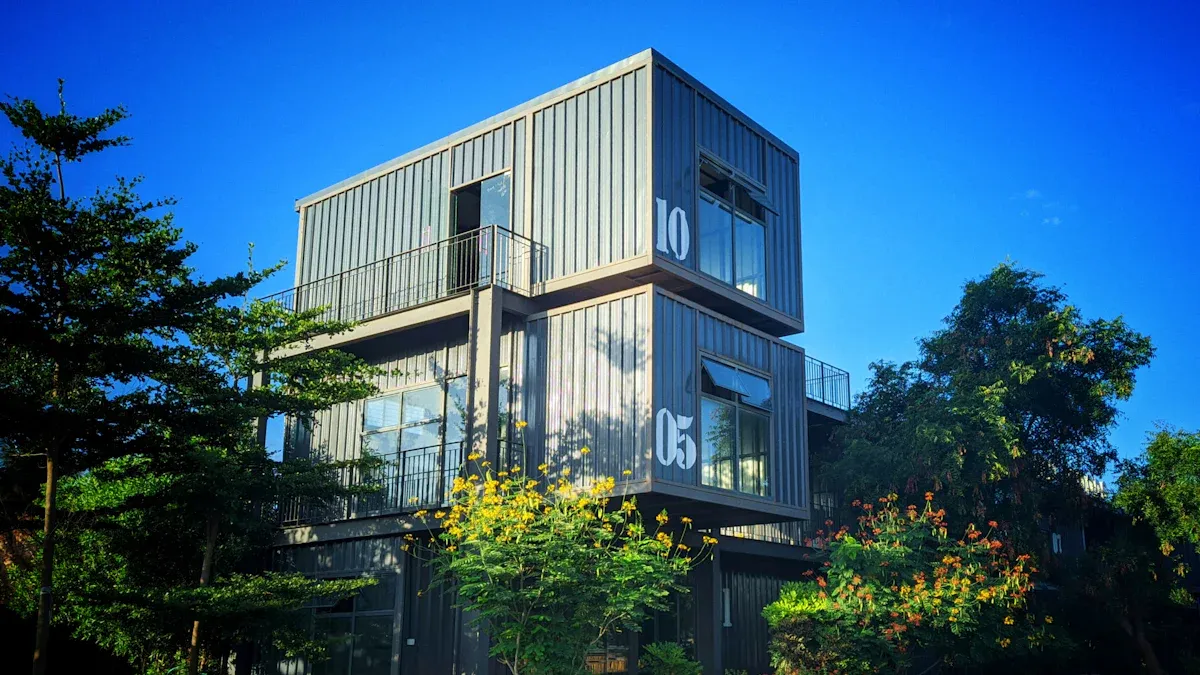
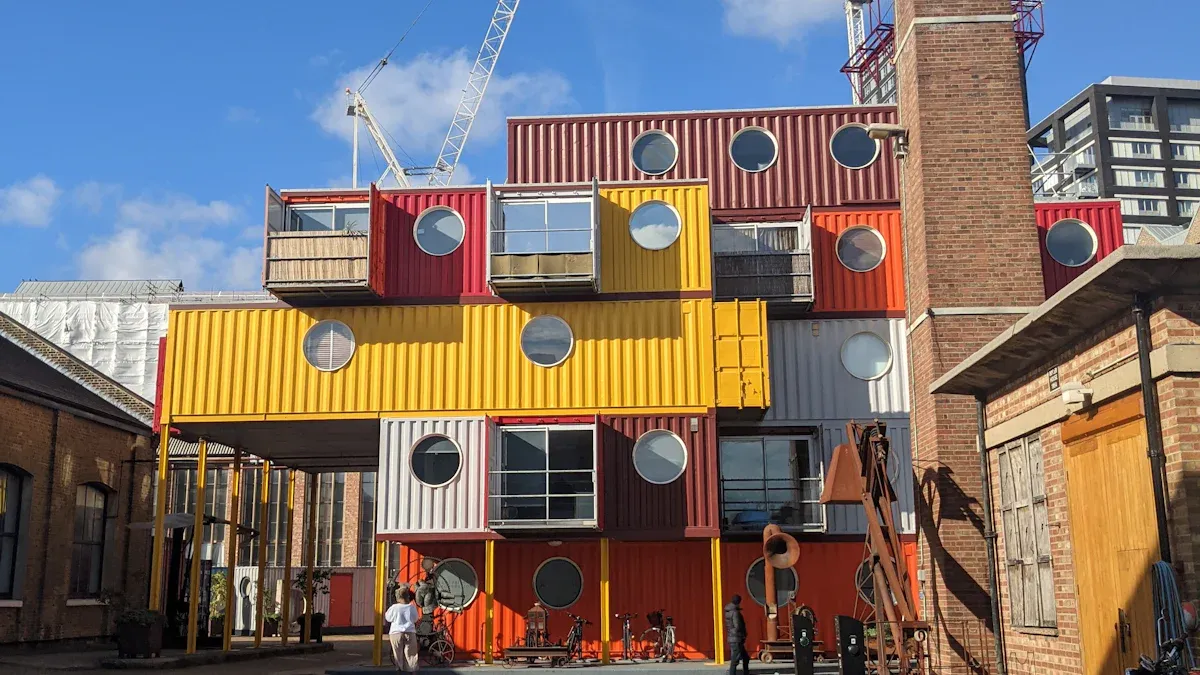
Stackable designs are changing architecture in cities and suburbs. You can build up, not just out. This means you can have two or three floors in your modern container house. Expandable container homes let you add new levels or connect containers in creative ways. You see these ideas in places like Container City in London and APAP OpenSchool in Seoul. St. John’s Village in Portland uses modular prefab designs to help people find safe homes quickly.
Modular shipping container homes can grow with your family.
You can customize your design for extra bedrooms or bigger living areas.
If you want a home that grows with you, modular and flexible layouts are the way to go.
Biophilic and Modern Aesthetics
You might notice that modular homes in 2025 look more alive than ever. Biophilic design is everywhere. You see it in the way modern container house projects bring nature right into your living space. This style connects you to the outdoors and makes your home feel fresh and healthy.
Natural Elements
When you step inside a modern container house, you often find natural elements all around. Biophilic design uses wood cladding, stone, and even edible gardens. You can grow herbs or small vegetables right in your kitchen. Many modular homes now feature:
Wood accents that add warmth and texture
Edible gardens for fresh food and a green touch
Open layouts that let you move easily from one space to another
You get a home that feels cozy and close to nature. Biophilic features like these make your space both beautiful and practical.
Large Windows and Living Walls
Big windows are a must in modular homes with biophilic design. They let in lots of sunlight and help you see the world outside. You feel happier and more awake in a bright room. Living walls, or vertical gardens, are another big trend. These walls use real plants to clean the air and add color. You might see a wall of ferns or flowers right in your living room.
Tip: Living walls don’t just look cool—they also help keep your air clean and fresh.
Minimalist Exteriors
Modern container house architecture often keeps things simple on the outside. Minimalist exteriors use clean lines and neutral colors. You see fewer decorations and more focus on shape and function. This style makes modular homes look sleek and modern. Biophilic design still shines through with touches like wood panels or small garden spaces by the door.
You get a home that stands out for its smart design and natural beauty. Modular homes in 2025 prove that you can have both style and a strong connection to nature.
Customization and Personalization
You want your home to feel special. Prefab container houses let you change many things. You can pick colors, layouts, and features you like. This helps your home match your style and needs. Let’s see how you can make your home your own.
Tailored Floor Plans
You do not need a house that looks like everyone else’s. You can choose floor plans that fit you best. Maybe you want a small studio with smart storage and big windows. Or you want a fancy home with a nice kitchen and space outside. You might like a rustic look with old wood and open rooms. These choices let you decide how each room looks and feels.
Features | |
|---|---|
Cozy Studio | Smart storage, large windows, energy-saving systems |
Luxury | High-end materials, custom kitchens, outdoor spaces |
Rustic Charm | Reclaimed wood, natural elements, open floor plans |
Modern | Futuristic look, smart tech, green roofs, minimalist layouts |
Off-Grid | Solar panels, rainwater harvesting, flexible designs |
Minimalist Retreats | Clean lines, neutral colors, sustainable materials |
You can change your home with modular designs. You can add rooms or take them away when you need to.
DIY Trends
You might want to do some work yourself. Many people like DIY because it adds a personal touch. You can put in special lights, build a garden, or paint walls with safe paints. Some people make their own kitchen cabinets or bathroom sinks. You can also set up windows that save energy or put plants on the roof.
Custom lights like LED strips or hanging lamps
Special gardens or yard designs
Good kitchen appliances and cabinets
Custom showers and bathroom sinks
Solar panels for clean energy
Tip: DIY projects help you save money and make your home unique.
Regional Influences
Where you live can change your home’s style. Warm places may have bright colors and big open rooms. Cold places need more insulation and smaller windows. Some people use local materials like bamboo or stone. Others add things for the weather, like rainwater collection or ways to keep cool.
Description | |
|---|---|
Aesthetic Enhancements | Custom lighting, gardens, landscape designs |
Functional Modifications | Custom kitchens, bathrooms, high-quality fixtures |
Sustainable Features | Energy-efficient windows, green roofs, renewable energy sources |
You can mix local styles with new ideas. This makes your prefab container house special and right for your area.
Challenges in Prefab Container House Design
 Permitting and Regulations
 Permitting and Regulations
Building a prefab container house is not always easy. Getting permits can be hard. Each city or town has its own rules. You may need to visit many offices before you start. Here are some problems you might have:
Local rules are different everywhere, so check them first.
You need many permits, like building, zoning, and utility ones.
Zoning laws and building codes tell you where and how to build.
You often need these permits in this order:
Building permit lets you begin building your house.
Zoning permit checks if you can use your land that way.
Foundation permit makes sure your house sits on a safe base.
Electrical and plumbing permits keep your systems safe.
Tip: Go to your local building office before you begin. Ask what you need for your modular construction project. This can save you time and stop surprises.
Insulation and Climate Control
It is important to keep your container home comfy all year. You need the right insulation for your weather. Some types work better in cold places. Others help in hot areas. Here is a quick guide:
Insulation Type | Climate Suitability | Key Benefits |
|---|---|---|
Spray Foam Insulation | Cold and humid climates | High R-value, vapor barrier against condensation |
Blanket Insulation | General use | Common, needs vapor barrier for best results |
Panel Insulation | Cold climates | Great thermal resistance, moisture-resistant |
Eco-friendly Options | Various climates | Sustainable, non-toxic |
Reflective Barriers | Warm climates | Reflects heat, keeps inside cool |
Closed-cell Spray Foam | Cold climates | High R-values, moisture barrier |
Batt Insulation | Budget-friendly | Cost-effective, good for big projects |
Pick insulation that matches your weather for best results. This saves money and keeps your home cozy.
Modification Costs
Changing a shipping container into a home costs money. You need to plan for more than just the container. Here is what you might pay:
Cost Category | Estimated Cost Range |
|---|---|
Structural Modifications | $3,000 to $20,000 |
Utilities and Services | $1,000 to $10,000 |
You also pay for insulation, heating, cooling, plumbing, electrical work, doors, windows, and paint. These costs can add up fast. To save money, do some work yourself or pick simple designs.
Note: Make a budget before you start. This helps you avoid surprises and keeps your project on track.
You see how new design ideas are making prefab container house living better every year. Eco-friendly materials and smart tech help you save energy and feel safe. Flexible layouts let you shape your space for work or play. Shipping container homes now connect you with nature through big windows and indoor gardens. If you plan to build or buy, these trends give you more choices and a healthier place to live.
FAQ
What is a prefab container house?
A prefab container house uses shipping containers as the main building blocks. Builders turn these containers into homes in a factory. Then, they deliver and set up your house on your land. You get a strong, modern home fast.
How long does it take to build a container home?
You can get your prefab container house in just a few weeks. Most projects finish in 2 to 4 months. The process is much faster than building a regular house.
Are container homes safe and durable?
Yes! Shipping containers are made of strong steel. They can handle tough weather and last for many years. You get a safe, sturdy home that protects you and your family.
Can I customize my prefab container house?
Absolutely! You can pick your floor plan, colors, and features. Many builders let you add things like solar panels, big windows, or special rooms. Your home can match your style and needs.