


24 Aug Why Capsule Houses Are the Best Option for Minimalist and Green Living
Table of Contents
Capsule houses are a great choice for people who like simple and green living. These homes use space in a smart way and help the planet. Many people pick capsule houses because they want to protect nature. Capsule houses use about 65% less energy than normal homes. They have insulation that works six times better than regular houses. Capsule houses stop air from leaking out. They use safe materials and can last more than 50 years. Here are some of the best ways they help the environment:
Environmental Benefit | Description & Quantitative Evidence |
|---|---|
Energy Efficiency | Capsule houses use about 65% less energy than regular homes. |
Thermal Insulation | The insulation is six times better than what most homes have, with a thermal resistance of 3.2 m²·K/W. |
Air Tightness | Capsule houses have a very low air leak rate of n50 = 0.45, which helps keep the inside temperature steady. |
Material Environmental Impact | They use safe, clean materials that meet national air quality rules. |
Service Life | Capsule houses are made to last over 50 years, so you do not need to rebuild or fix them often. |
Weather Resilience | They are built to handle strong hurricanes (up to 70 m/s winds) and big earthquakes (up to magnitude 9), so they do not get damaged easily. |
If you want a home that fits your simple and earth-friendly lifestyle, capsule houses are a smart and caring choice.
Key Takeaways
Capsule houses use about 65% less energy. They have strong insulation and tight seals. This helps keep the temperature the same inside. Their small and smart design uses space well. It also helps cut down waste and pollution when building. Capsule houses cost less to buy and take care of. You save money on heating, cooling, and fixing things. You can change and customize capsule houses easily. This helps them fit your needs and lifestyle. Living in a capsule house is good for the planet. They use safe materials and help lower your carbon footprint.
Capsule Houses Overview
Compact Design
Capsule houses use space in a smart way. Most are between 200 and 400 square feet. They have everything you need, like a bed, kitchen, and bathroom. Clever layouts and furniture help the space feel bigger. Beds can fold up, and tables can get longer. Storage is built into the walls or under beds. You can use one room for many things. Capsule houses first appeared in Japan in the 1960s. People wanted to solve problems with crowded cities and little land. Today, this design helps you live well with less space and fewer things.
Prefabrication and Materials
Capsule houses are made from parts built in factories. These parts include walls, roofs, and floors. They use strong materials like aluminum alloy and steel. Building this way is fast and can take just a few days. Factories use only what they need, so there is less waste. Capsule houses have insulated walls and good windows to save energy. Many use eco-friendly and sustainable materials, like recycled steel and old wood. Some have solar panels and other green systems to help the planet.
Tip: Building capsule houses in factories saves time and makes less noise, dust, and pollution at the site.
Urban Space Efficiency
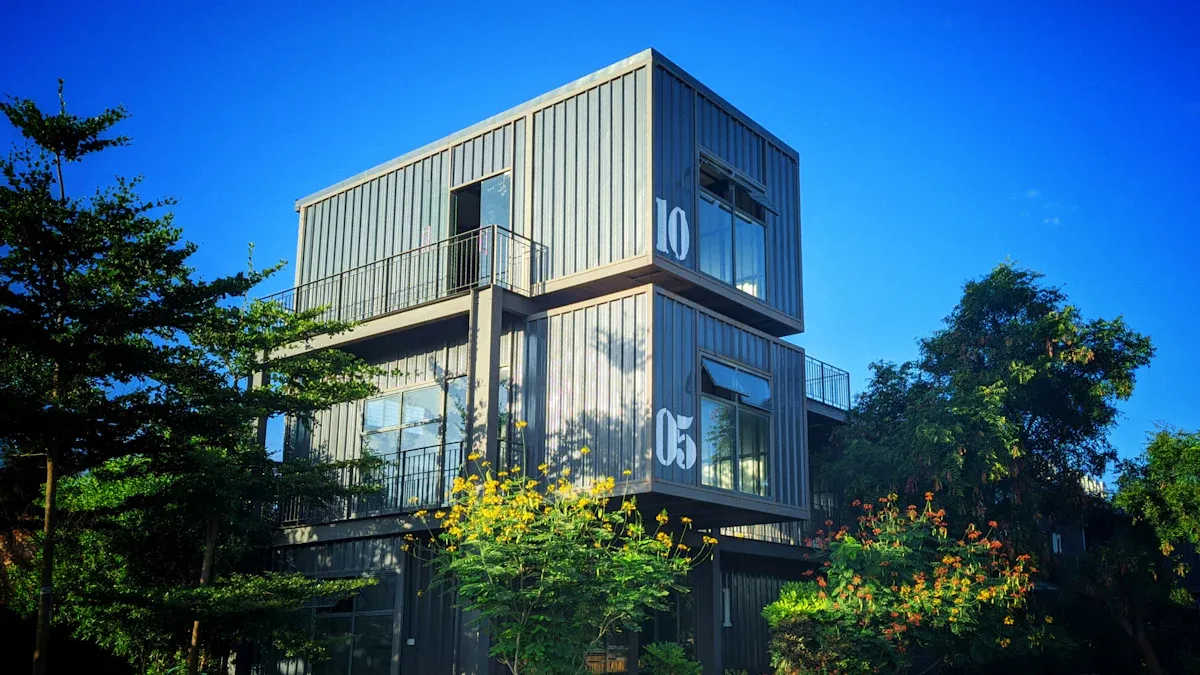
Capsule houses work well in cities where land is costly. Their modular design lets you stack or join units together. This means you can fit more homes in small places. You can add or take away modules if your needs change. Capsule houses use vertical space with loft beds and storage. Every bit of space is used well. Unlike normal apartments, capsule houses help stop cities from spreading out too much. They fit on rooftops or empty lots. This helps cities stay green and keeps people close together.
Environmental Benefits
Energy Efficiency
Capsule houses save a lot of energy. They have special insulation called R-34 multi-layer panels. This keeps your home warm in winter and cool in summer. The insulation is six times better than most regular homes. Less heat escapes in winter, and cool air stays inside in summer. Capsule houses have tight seams, so air does not leak out. This means you do not waste energy. Your heating and cooling bills will go down. The house keeps the temperature steady.
Many capsule houses have solar panels. These panels turn sunlight into electricity. You can use this power for lights, appliances, and heating. Sometimes, you make extra energy and use less from the grid. Capsule houses are small, so you only heat or cool a little space. This saves even more energy. You use about 65% less energy than in a regular home. Saving energy helps lower your bills and helps the planet.
Tip: Living in a capsule house lets you control your energy use. You can live in a greener way.
Reduced Waste
Capsule houses help you make less waste from the start. Builders make them in factories and use only what they need. This means there are fewer scraps and less trash at the site. There is also less noise and pollution when building. Many capsule houses use recycled and sustainable materials. Some use magnesium oxide boards. These boards are strong, fireproof, and water-resistant. They last a long time and do not break easily. You do not need to replace them often.
Choosing a capsule house helps the environment. You use fewer resources. The small size means you need less wood, steel, and other things. Builders often use leftover pieces from other jobs. This helps with sustainability. Capsule houses use safe, non-toxic materials. You avoid harmful chemicals. All these things make your home eco-friendly and energy efficient.
Lower Emissions
Capsule houses are good for the planet because they make less pollution. They use fewer raw materials, so less carbon dioxide goes into the air. The prefab method is fast and needs less heavy equipment. This lowers the carbon footprint even more.
Here is a quick look at how capsule houses and traditional homes compare:
Aspect | Capsule Houses | Traditional Homes |
|---|---|---|
Construction Materials | Use eco-friendly materials like recycled steel, sustainably sourced wood, and biodegradable insulation | Usually use more raw materials, often less sustainable materials |
Size and Material Use | Small size needs fewer raw materials, so less carbon footprint | Bigger size needs more materials, so more carbon footprint |
Construction Method | Modular, prefab building is faster and uses less labor, so fewer emissions | Longer, more complex building needs more labor and materials |
Energy Consumption | Lower energy use for heating, cooling, and lighting because of size and insulation | Higher energy use because of bigger size; needs upgrades for efficiency |
Energy Features | Has energy-saving features like insulation, low-energy windows, LED lights, and solar panels | Can add energy-saving features, but it costs more and takes work |
Construction Speed | About 40% faster to build because of prefab methods | Slower to build, takes months |
Living in a capsule house helps the environment every day. These homes use less energy and make less pollution. They are built to last and need fewer repairs. Capsule houses let you live in a way that saves energy and helps the earth.
Sustainable Living Advantages
Minimal Resource Use
Capsule houses help you live with less stuff. They use smart designs to save water and power every day.
Beds can fold away, and furniture can change shape. You can use one room for many things.
Good insulation keeps your house warm in winter and cool in summer. This means you do not need as much energy.
The small size means you need fewer lights and less water to clean.
You can put solar panels on the roof to use the sun’s energy.
Smart tech lets you control lights and heat so you do not waste power.
These things help you live in a way that does not waste. You only use what you need each day.
Cost Savings
Capsule houses cost less than normal homes. You pay less money at the start. Here is a table that shows the price difference:
Type of House | Average Initial Purchase Price Range |
|---|---|
Capsule Houses | $20,000 – $100,000 |
Traditional Homes | Generally over $150,000 |
You spend less on heating, cooling, and fixing things. You also do not need to buy much furniture. Over time, you save more money and life costs less.
Tip: When you spend less on your home, you have more money for fun things like trips or hobbies.
Adaptability
Capsule houses let you change things as you need. You can move your house to a new place if you want. The design lets you add or take away rooms.
You can use smart controls to change lights or heat with your voice.
Foldable furniture and hidden storage help you use every bit of space.
Solar panels and solar glass help you live green.
You can use these homes as shops, offices, or even shelters in an emergency.
Capsule houses can be used in many ways. They can grow or change with you. This makes them a good choice for people who want a home that fits their life.
Eco-Friendliness Compared to Traditional Homes
Sustainability
Capsule houses are better for the earth than regular homes. They use less energy and fewer resources every day. Their modular design means there is less waste and less pollution. Many capsule houses have solar panels and smart thermostats. They also have insulated walls to save energy and money. Builders use recycled steel and old wood, which helps the planet. Tiny homes use natural things like straw, clay, and wood. Both types are good for the environment. But capsule houses usually save more energy and cost less.
Aspect | Capsule Houses | Traditional Tiny Homes |
|---|---|---|
Energy Efficiency | Solar panels, smart thermostats, insulated walls | Natural materials regulate temperature |
Materials Used | Recycled steel, reclaimed wood, modular design reduces waste | Straw, clay, wood; eco-friendly |
Environmental Impact | Smaller size, fewer resources used, lower pollution, lower maintenance costs | Negative carbon footprint, eco-sustainable over life cycle |
Construction Waste | Modular designs reduce waste | Varies by building method |
Long-term Cost | Lower maintenance and energy costs | Higher maintenance, benefits from natural insulation |
Greenhouse Emissions | Lower emissions, more energy-efficient | Lower emissions, focus on natural materials |
Comfort and Practicality
Capsule houses are cozy and easy to live in. They have good insulation and soundproofing to keep things quiet. Some models have big windows and balconies for fresh air. Light colors and shiny surfaces make rooms look bright and open. You can use sofa beds and foldable tables to save space. Open floor plans help air move and make rooms feel bigger. You get a kitchen, bathroom, and washer in most capsule houses. These things make life simple and fun.
Capsule houses have good insulation and soundproofing for comfort.
Some models have balconies for extra space outside.
Foldable furniture and open rooms help you stay neat.
Strong materials and sturdy frames keep you safe for a long time.
Note: Capsule houses are made to be green and comfy, so they are a smart pick for today’s world.
Long-Term Value
Capsule houses give you many good things over time. If you take care of your house, it keeps about 70–80% of its value after ten years. They use strong materials like aviation-grade aluminum and galvanized steel. This means you do not spend much on repairs. The main frame can last more than 50 years. You also save money on energy bills because of energy-saving features. Capsule houses cost less and often sell faster than regular homes. They might lose value a little quicker because people think they are easy to move. Where you put your house, how well it is built, and upgrades like solar panels help keep its value high.
Capsule houses need less fixing than most regular homes.
You save money on heating, cooling, and repairs.
Good building and energy-saving parts add to their value.
Being green and easy to change makes them a smart buy for the future.
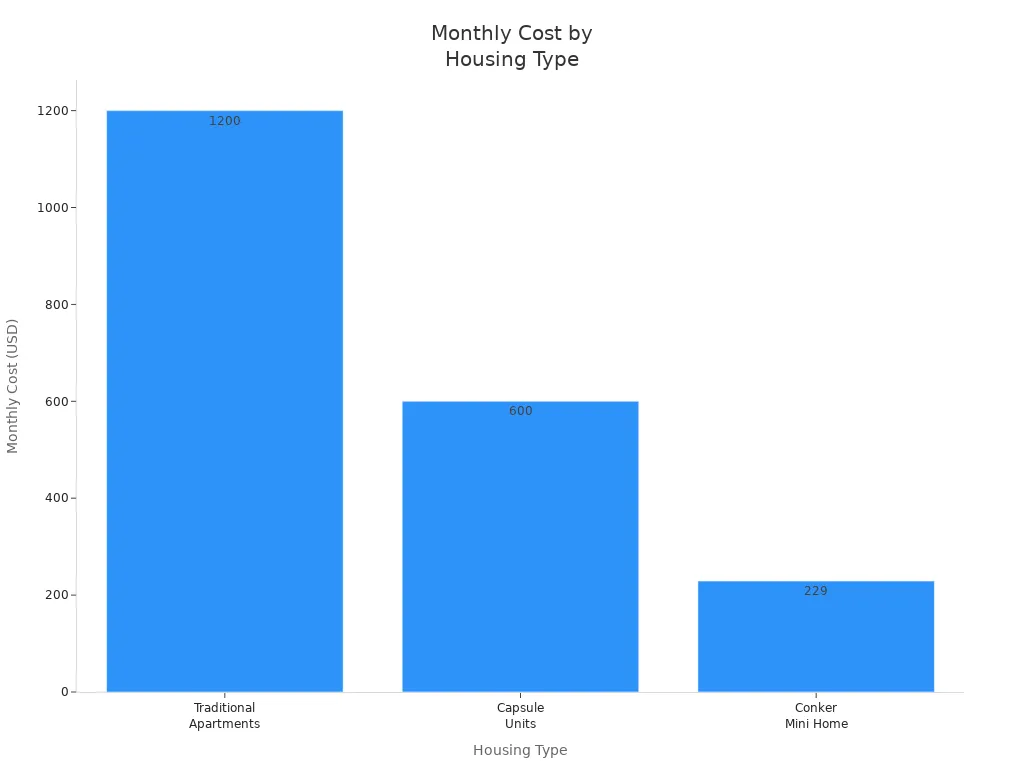
You can choose a home that saves energy, money, and time. Many people like capsule houses because they use less space, cost less, and help the planet. You get a flexible design that fits your needs and a healthy living space with safe materials. Monthly costs stay low, as shown below:
Think about how this smart choice can support your green lifestyle and future goals.
FAQ
What is a capsule house?
A capsule house is a small, modular home. It is built to save space and keep life simple. Many people pick capsule houses to help the earth. They want to live in a way that does not hurt the planet.
Can you customize a capsule house?
You can make your capsule house your own. You choose the layout, colors, and features you like. Some companies let you add solar panels or smart tech. This helps you build a home that fits your life and helps the planet.
How do capsule houses help the environment?
Capsule houses use less energy and fewer resources. You live in a way that is safe for nature. The small size and smart design mean less waste. Many capsule houses use recycled materials and save energy to protect the earth.
Are capsule houses comfortable for daily living?
Capsule houses are cozy and easy to live in. They have good insulation, smart storage, and flexible furniture. You get all you need in a small space. Many people think capsule houses are simple to clean and take care of.
Can capsule houses be part of a larger community?
Capsule houses can be grouped together in a community. These groups share green spaces and resources. You help make a place where everyone lives in an earth-friendly way.