


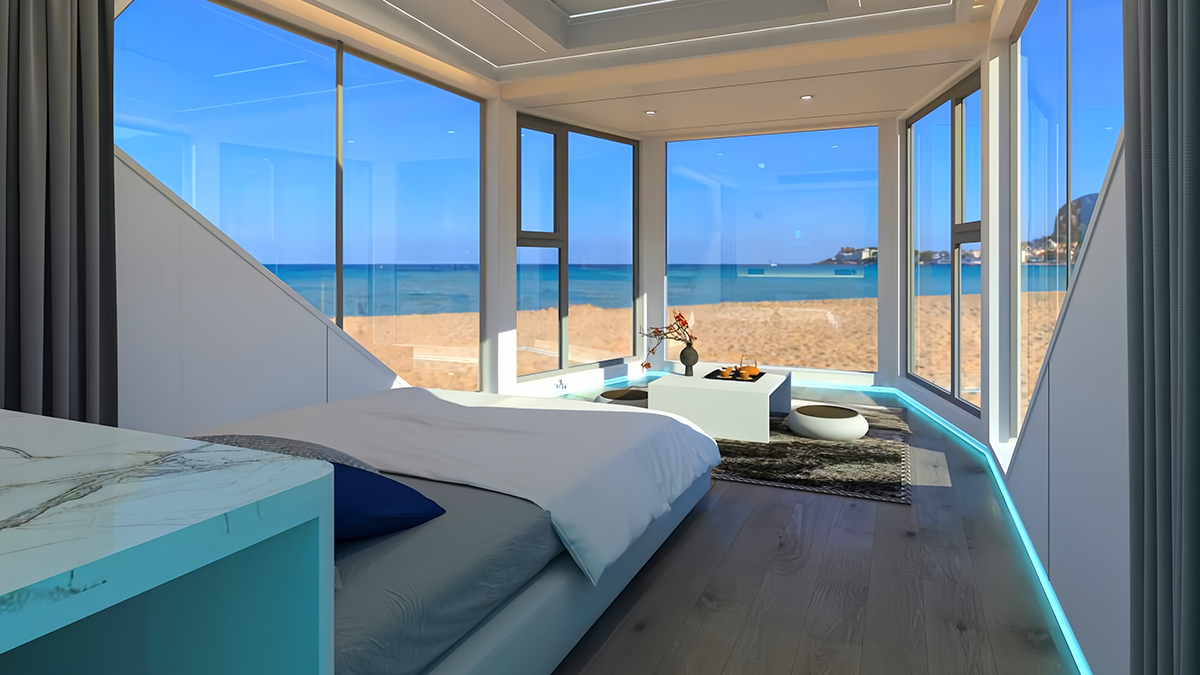
25 Aug How Smart Prefab Capsule Houses Are Shaping the Future of Housing
Table of Contents
Smart prefab capsule houses are quickly changing city life. Cities like Tokyo and New York have 25% more people using them. People choose them because they cost less and help the planet. Millennials and Gen Z like these homes for their easy style and smart tools. The world market for capsule hotels was $262.9 million in 2024.
Aspect | Smart Prefab Capsule Houses | Traditional Housing (Tiny Homes) |
|---|---|---|
Lower first cost, saves energy | Higher price, needs more care | |
Sustainability | Uses recycled stuff, makes less trash | Bigger, uses more energy |
Modern Lifestyle | Small, has tech, easy to move | More room, feels cozy for longer |
Key Takeaways
Smart prefab capsule houses give people cheap homes. They are good for the environment and help save money. These homes use smart technology to make life easier. Modular designs help use space well. The homes are built in factories, so building is faster. This also means less waste is made. Homes can be ready in just a few weeks. Capsule houses work in cities and in nature. They help when there are not enough homes. They also help people who move a lot. More people want green and smart homes now. The market for these homes is growing quickly. People want homes that are good for the planet and not expensive.
Smart Prefab Capsule Houses
Definition
Smart prefab capsule houses are a new way to build homes. LubanCabin says these homes are made in pieces using special technology and patents. Each unit is built by itself and uses parts made ahead of time. This helps builders put them together fast. These homes do not harm the land much when built. They are strong, easy to move, and good for the planet. They fit today’s lifestyles and work well for people living off the grid.
Top companies like Sleadgroup, KODA, Ecocapsule, and Nestron make smart prefab capsule houses. These homes are strong, easy to move, and can be changed to fit needs. They use space well and have smart systems for comfort and saving energy. People can live in cities, travel, or work from far away in these homes.
Smart prefab capsule houses often use steel frames that can handle earthquakes. Some can last up to 70 years and stand up to bad weather like typhoons. These homes mix luxury, safety, and care for nature. Builders use new ways and skilled workers to make great places to live.
Core Features
Smart prefab capsule houses have many special features:
Advanced Modularity: Factories make these homes in parts. Owners can add or take away rooms. This makes the homes easy to change and quick to build.
Smart Technology Integration: These homes have climate control, voice tools, and energy checks. Solar panels and batteries help them work without city power.
Sustainability: Builders use recycled and green materials like magnesium wallboards and recycled metals. This cuts down on waste and saves energy.
Space Efficiency and Flexibility: Designers use foldable furniture, smart room plans, and moving walls. This helps people use small spaces better.
Enhanced Durability: Strong steel and aluminum frames keep the homes safe from storms and earthquakes.
Faster Construction and Lower Costs: Factory work means building is fast and costs less. People can move in just weeks after building starts.
Portability and Lifestyle: Owners can move these homes easily. This helps people live on the go and join new communities.
Smart prefab capsule houses are small, so there may be less privacy. Designers use moving walls to help with this. These homes let people live in a modern, smart, and green way.
Innovations
 Smart Technology
 Smart Technology
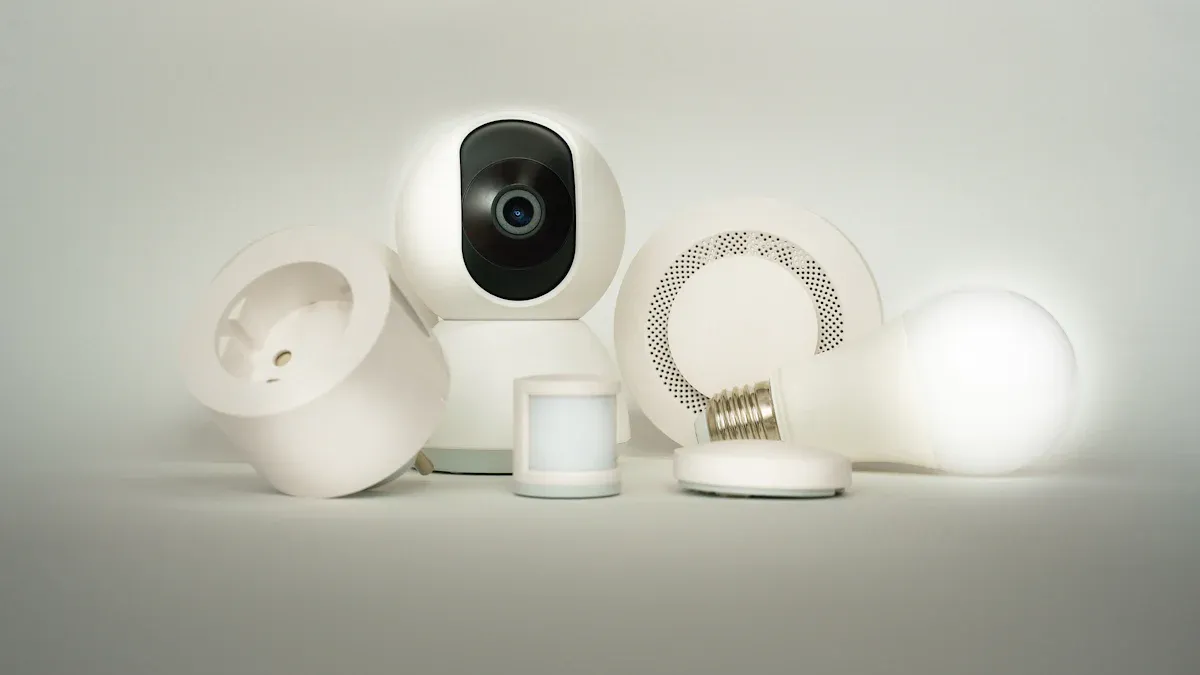
Smart prefab capsule houses use new technology to help people every day. Many homes have up to 24 smart systems that work together. These systems control lights, heat, and safety. People can use phones or tablets to lock doors or change lights. They can also set the air conditioning. Some homes have smart locks with codes or cards. Guests can get a password for a short time. HEPA filters and special features keep the air clean. Solar panels and batteries help the house work during blackouts. Some homes make water from air and handle waste alone. These features help people live well in many places and weather.
Smart automation lets people use their homes from anywhere. This saves energy and keeps homes safe.
Modular Design
Modular design makes these houses easy to change. Each capsule can stand alone or join with others. People can stack, move, or swap units easily. Factories build capsules with strong steel frames and light panels. This makes them simple to put together and move. If a family grows, they can add more rooms or offices. A 50-unit house in Auckland shows how easy it is to change the layout. The main frame can hold many designs, like open spaces or private rooms. Cranes can add or take away units fast. These homes fit many needs.
Modular design lets people change their space as life changes.
Extra modules can be storage, work areas, or rooftop gardens.
Sustainable Construction
Smart prefab capsule houses use green ways to build. Factories use safe paints and finishes to keep air clean. Builders pick foam, fiberglass, or wool for insulation to save energy. Many homes use recycled metals and plastics to lower pollution. Composite panels make strong walls and keep homes warm or cool. Fire and water-resistant coatings add safety. Robots and AI help cut and build parts with little waste. Prefabrication saves work time and cuts waste by 75%. Carbon emissions drop from 380kg to 90kg per square meter. These ways make smart prefab homes use less energy than old houses.
Prefab building uses clean energy and helps protect nature for the future.
Benefits
Affordability
Many people pick capsule houses because they cost less. A mid-range capsule house costs between $20,000 and $50,000. Fancy models start at $50,000 and can cost more. These homes may have luxury materials or extra technology. Most regular homes cost over $150,000. This big price gap helps first-time buyers and young families.
Housing Type | Notes | |
|---|---|---|
$20,000 – $60,000 | Factory-made, built on-site, affordable | |
Customized Capsule Houses | $60,000 – $100,000 | Higher cost due to unique features |
Traditional Homes | Over $150,000 | Larger space, more options, expensive |
Capsule houses save money in other ways, too. Factories use machines and robots to build these homes. This takes less time and needs fewer workers. Many units fit inside one shipping container, so delivery costs less. Owners do not wait long or pay high bills like with regular building. Using recycled materials keeps prices low but quality high. Modular designs let owners change or upgrade their homes easily. These things make capsule houses a smart choice for people who want to save money.
Tip: Factory-built homes help more people get safe and comfy places to live.
Space Efficiency
Capsule houses use space in smart ways. Designers make small areas feel bigger and useful. Many homes have beds built into walls, foldable tables, and hidden storage. Kitchens mix cooking, eating, and relaxing in one spot. Bathrooms are small but have modern fixtures.
Furniture can do more than one job.
Modular storage keeps things neat and easy to find.
Small appliances fit well in tiny kitchens.
Smart systems control lights, heat, and safety from a phone.
Flat-pack designs make moving and setting up simple.
Bedrooms feel private and calm, even in small spaces. Open kitchen lounges let people cook, eat, and relax together. Many homes have smart features like automatic curtains and electric floor heating. Air purifiers help people stay healthy in small areas.
Aspect | Prefab Capsule Houses | Tiny Homes |
|---|---|---|
Around 408 sq ft, smaller footprint | Typically 200-400 sq ft, generally larger | |
Space Usage | Maximizes every inch with built-in beds, foldable furniture, and hidden storage | More open rooms, separate sleeping areas, customizable storage |
Storage Solutions | Built-in storage under beds, inside benches, and behind walls; fewer closets | Custom storage like drawers in stairs, shelves in lofts, furniture with storage |
Design Focus | Modular, factory-built, fast assembly, smart home tech, energy efficient | More customization options, traditional home feel, more space for families |
Suitability | Ideal for city living, short stays, and those prioritizing space efficiency | Better for long-term comfort, privacy, and more space needs |
Energy Efficiency | Better insulation and smart controls, reducing energy use by ~65% compared to tiny homes | Standard insulation, less energy efficient |
Capsule houses often have fixed layouts with hidden storage. This design helps people keep only what they need. In crowded cities, these homes help people live well without feeling cramped.
Sustainability
Capsule houses help the planet in many ways. Factories use recycled steel and aluminum for frames and panels. Floors use reclaimed or eco-friendly wood. Green insulation and panels keep homes warm or cool and can be recycled later. Modular designs let builders reuse parts, which cuts down on waste.
Measurable Improvement Compared to Traditional Housing | |
|---|---|
Construction Waste Reduction | Approximately 52% less waste generated |
Energy Consumption | Up to 72% less energy used |
Fresh Water Usage | Around 48% less fresh water consumed |
Greenhouse Gas Emissions | 53% fewer emissions over the house’s lifetime |
Carbon Dioxide Emissions | About 50% reduction (~73 tons less CO2) |
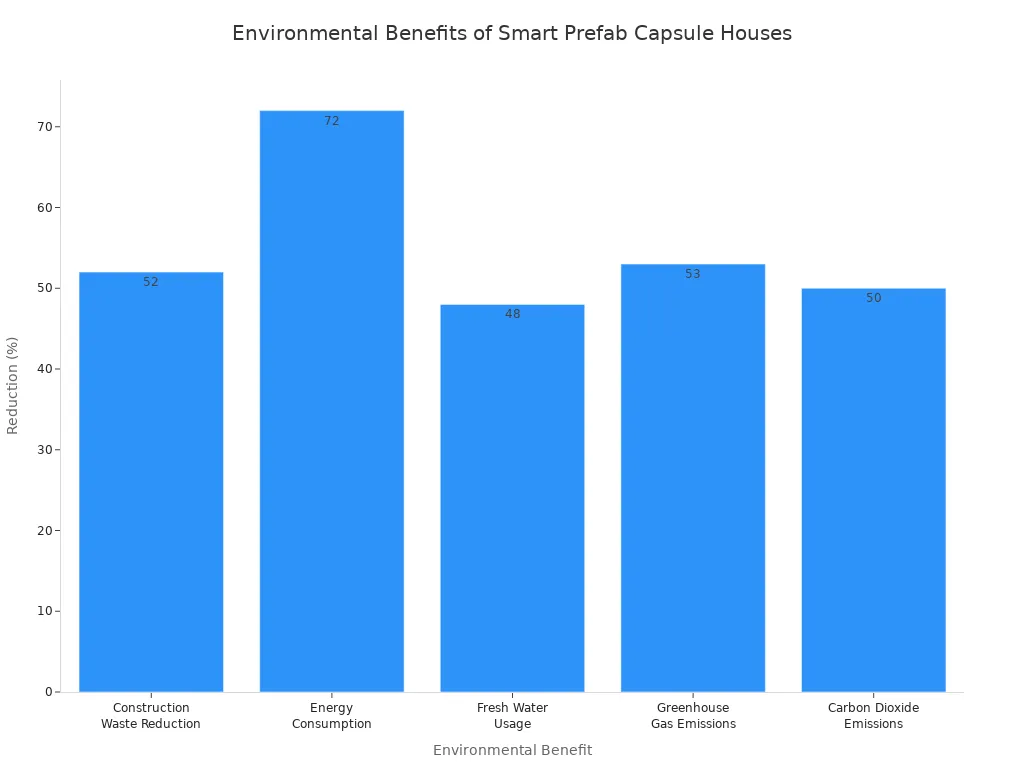
Factories that build capsule houses use less energy and make less waste. Building in factories means fewer mistakes and less leftover material. Many homes use solar panels and energy-saving appliances. Good insulation and smart controls lower heating and cooling needs. Smaller homes use less water and electricity. Some models collect rainwater or use wind turbines for power.
Closed-loop recycling reuses steel and aluminum, cutting waste.
Solar panels and smart designs lower energy bills by up to 40%.
Small homes use less land, leaving more green space in cities.
City locations mean people need cars less, so there is less pollution.
Capsule houses often meet or beat green building standards. Many get energy ratings above 95%. These homes help owners save money and protect the planet.
Applications
Tiny Homes
Tiny homes are now popular in cities and the countryside. Many people pick them because they cost less and are fast to build. In big cities like Tokyo, Hong Kong, and London, tiny homes help with not enough houses. They are cheaper than normal houses and use less energy. People can move in just a few weeks after building starts. Vacation cabins in forests, mountains, and beaches use these designs too. These cabins give travelers comfort and smart features. Emergency shelters also use tiny home designs. Builders can set up these shelters quickly after disasters like earthquakes or floods.
Application Area | Description | Key Benefits and Features |
|---|---|---|
Affordable Residential | Used in crowded cities like Tokyo, Hong Kong, and London to help with not enough homes. | Low price ($20,000–$60,000), built in weeks, easy to care for, saves energy. |
Vacation Cabins | Built in places like beaches, forests, and mountains for eco-tourism and glamping. | Quick to set up, easy to move, strong against weather, smart tech, saves energy with solar panels. |
Emergency and Temporary | Fast shelters for help after disasters like earthquakes, floods, or storms. | Ready in hours, can fold and move, strong against weather, solar power, walls that resist fire. |
Commercial and Urban Uses | Used as hotels and offices, making use of easy moving and changing spaces. | Fast, flexible, saves money, can change for new needs. |
Mobile Living
Mobile living homes have strong steel frames and good insulation. They work well in hot or cold places. Plumbing and electricity come already set up. People use them as offices, for camping, or as extra rooms. Some families take them on trips off the road. Others use them as green places to stay in nature. These homes are easy to move from place to place. They help save money and energy. Their design lets people live or work anywhere.
Mobile homes can be offices, adventure cabins, or guest rooms.
They are quick to set up and easy to move.
Hospitality
Hotels use capsule houses for hotel pods and fancy villas. The GS-PB01 prefab capsule house is one example. It has a living room, bedroom, and bathroom. Up to five people can stay inside. It has air conditioning and modern furniture. Hotels use these homes to give guests comfort and privacy. Some companies make these homes for short or long stays. They focus on safety, ease, and a good stay.
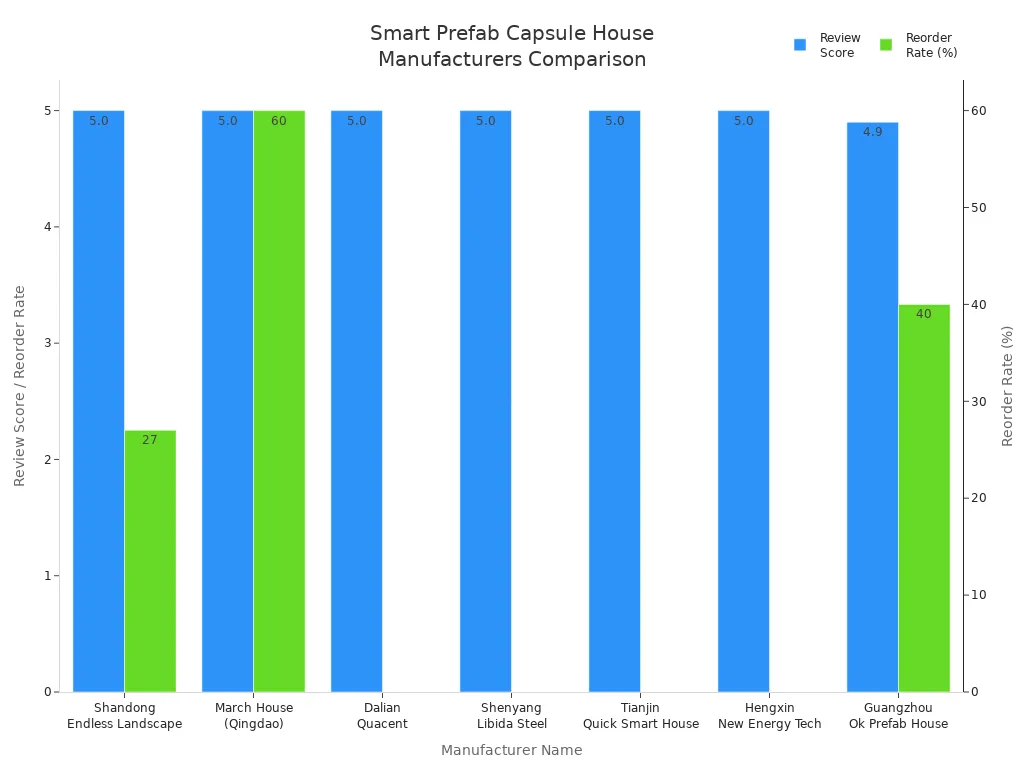
Many top companies lead this market. Companies like Shandong Endless Landscape Technology Co., March House (Qingdao) Co., and Dalian Quacent Co. make strong, energy-saving homes. They finish projects on time and give hotels and resorts many choices.
Note: These homes help hotels and resorts grow quickly and serve more guests.
Challenges
Limitations
Smart prefab capsule houses have many good things, but they also have problems. These homes are small and can feel crowded. Big families may not fit well inside. Thin walls and open rooms make it noisy. People get less privacy because of this. It is hard to change the inside or pick new finishes. Owners need land with water, power, and sewage. In faraway places, these things are hard to find.
Small rooms can feel tight for big families.
Open rooms and thin walls make it loud and less private.
Not many ways to change the inside or finishes.
Need local water, power, and sewage to work.
They do not sell for as much as regular homes.
People must follow rules and get permits to build. These rules say where you can put capsule houses. Getting permits and passing checks takes time and money. Some people see that these homes do not sell for as much as normal houses.
Tip: Check local rules and make sure the land has water, power, and sewage before you buy a smart prefab capsule house.
Regulations
Regulations are very important for smart prefab capsule houses. Local rules and laws decide where you can put these homes. Some places want strong safety rules or a set foundation. Other places call them RVs if they have wheels. Rules for water and power are different in each area. Some places want public hookups, but others let you go off-grid.
Regulatory Factor | Impact on Deployment of Smart Prefab Capsule Houses |
|---|---|
Zoning Laws | Say where you can put homes; some places want certain sizes or foundations, but mixed-use zones are more flexible. |
Building Codes | Make sure homes are safe; rules are different for homes on wheels and those with foundations. |
Utility Connections | Some places want public water and power; others let you use off-grid systems, which changes how you set up the home. |
Accessory Dwelling Units (ADUs) | Many cities let you use tiny homes as ADUs, but there are rules about size and how many people can live there. |
Manufacturers must learn these rules before selling in new places. They need to follow local laws to avoid problems. Some governments make new rules to help green homes, but others make it harder. Japan’s new rules for very small homes show that things are changing. These changes help smart prefab capsule houses become more popular.
Note: Talk to local officials early to make getting permits easier and avoid problems.
Future Trends
Community Impact
Cities are changing as more capsule houses appear. These homes help with space and money problems. Builders use modular designs for single homes and tall buildings. Cities can grow taller, not wider, so parks stay safe.
They fill empty spaces and make old areas busy again.
Modular designs let owners add new things as tech changes.
Many cities use capsule houses for crowded neighborhoods. These places use land well and cut down on pollution. In Auckland and Berlin, capsule houses made empty homes fewer and areas more fun. After disasters, cities use them for quick, safe shelter. They can also be offices or stores to help businesses.
Capsule houses help people connect with each other. Shared spaces and events make people feel less lonely. Living simply in these homes teaches people to use less and care for nature.
Market Growth
The capsule house market is growing quickly. Experts think it will grow by 8.8% each year from 2025 to 2030. By 2030, the market could be worth $432.5 million. This happens because more people move to cities and want cheaper homes. Smart technology is also getting more popular.
Region | Market Drivers and Trends |
|---|---|
Cities grow fast, many people live there, and new designs are popular. Japan and China are leaders. | |
People want cool, green homes with smart tools. Fast building in factories is liked. | |
Europe | People want green materials and homes that save energy. Germany and the UK are top places. |
Middle East & Africa | Cities like Dubai and Johannesburg want cheaper homes. The market is new but getting bigger. |
New technology makes these homes better and cheaper. Builders use 3D design and smart systems for lights, heat, and safety. Many homes have solar panels and recycled parts. These trends make capsule houses a good choice for the future. More young people and remote workers pick these homes for their low price and easy style. As cities get bigger, capsule houses will help more people find homes.
Smart prefab capsule houses make people see homes in new ways. They use space with beds that fold and walls that move. Builders pick eco-materials and smart tools to save energy. These homes fit in cities and country places. They help when there are not enough homes. People can set them up fast and change the design easily. This makes them good for today’s life. Experts think these homes will grow more. New tech and designs will make them comfy and better for the planet.
FAQ
What is a smart prefab capsule house?
A smart prefab capsule house is a small home made in a factory. Workers use special tools and strong materials. The house has smart technology for comfort and saving energy. People can move these homes from place to place.
How long does it take to build and install one?
Most smart prefab capsule houses are built in two to eight weeks. Putting the house on-site takes just a few days. This is much faster than building a regular house.
Can these homes work off-grid?
Yes, many smart prefab capsule houses can work off-grid. They use solar panels, batteries, and water-saving systems. People can live far away without city water or power.
Are smart prefab capsule houses safe in bad weather?
Manufacturers make these homes with steel frames and tough materials. Many models can stand up to storms, heavy rain, and earthquakes. Safety features change depending on the builder and model.
Who should consider living in a smart prefab capsule house?
People who want cheap, green, and flexible homes should look at these. They are good for singles, couples, travelers, and remote workers. Families who need more room may want bigger models or extra units.
Tip: Always check local rules before you buy or put a smart prefab capsule house somewhere.