


07 Sep A Complete Guide to Modular Homes Versus Container Homes
Table of Contents
Are you unsure about price, looks, and comfort for your home? You may ask if Modular Homes or container homes are better for you. Modular Homes have parts made in a factory. Container homes use old shipping containers. Many people pick container homes because they are cheaper. They are good for the planet. You can change the space to fit your needs. You do not need to know how to build. Just think about your money, style, and how you want to live.
Key Takeaways
Modular homes are made in factories. They must follow strict building rules. This helps make sure they are safe and good quality.
Container homes cost less and are faster to build. They use old shipping containers. This makes them better for the environment.
You can change both home types to fit your needs. But it is easier to change the design of modular homes.
Think about how much money you have and your future plans. Modular homes usually keep their value more than container homes.
Good insulation is important for comfort. Modular homes often have better insulation. Container homes need extra work for good insulation.
Modular Homes
Overview
Modular Homes are built in a factory. Workers make the house there. Then, they move it to your land. These homes are not like old mobile homes. They follow the same rules as regular houses.
Modular homes must follow the International Residential Code (IRC). This is the same code as site-built homes. They meet state and local rules. Manufactured homes use the HUD code instead. Modular homes follow strict building codes. This makes them different from other prefabricated homes.
You get a house that feels strong and safe.
Braun says, “Most of my colleagues think modular homes are better because you get an engineered house.” This means modular homes are built with high quality.
Construction
You may wonder how Modular Homes are made. Workers build each part in a factory. The factory is climate-controlled. They use strong materials. They check every part for quality.
Braun says modular homes must be moved after building. He explains, “Imagine your home. Now attach a crane to it, pick it up, shake it around, and then put the whole thing back down.” This means modular homes must be strong for transport.
After building, workers move the parts to your land. Crews put the pieces together fast. You get a home that meets strict rules. Here are some facts about the codes Modular Homes must follow:
Modular homes must follow the same building codes as site-built homes. These codes are usually the state version of the International Residential Code (IRC).
There is no special ‘modular building code.’ Modular homes follow the same rules as regular homes.
States choose their own building codes. Local areas enforce these codes. This means rules can change in different places.
Modular homes do not get special treatment in building codes. They must meet all the rules.
Styles
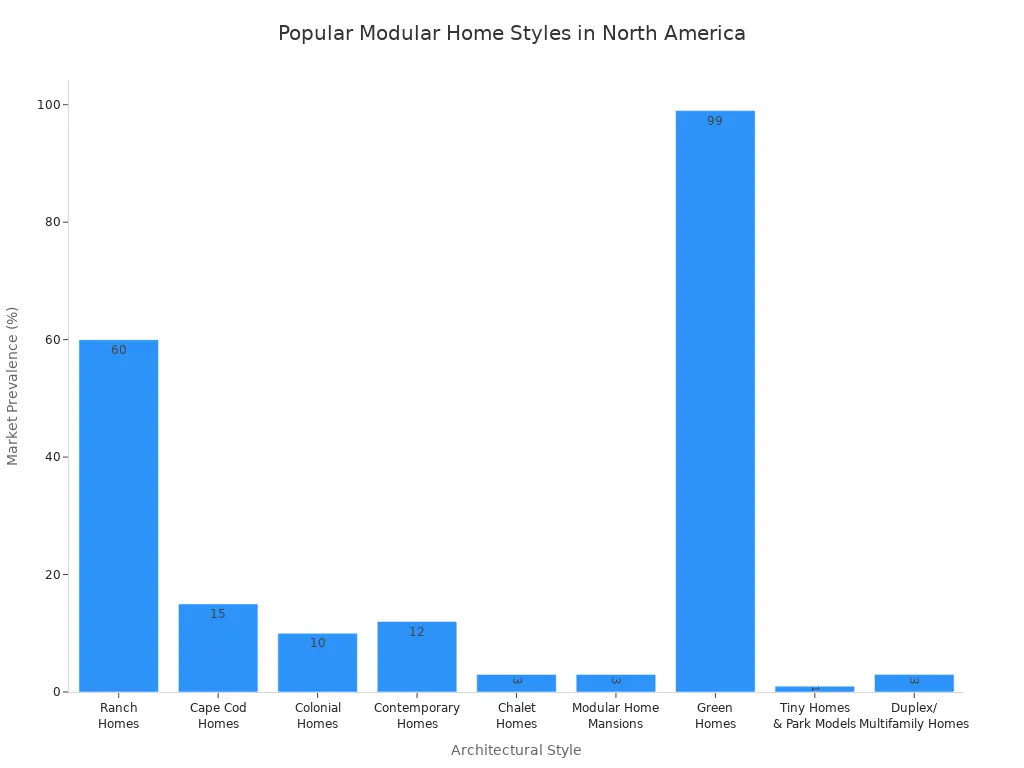
You have many choices with Modular Homes. You can pick a ranch, a Cape Cod, or a mansion. Some people want green homes that save energy. Others like tiny homes or log cabins. Here is a table showing the most popular styles:
Architectural Style | Description | Market Prevalence |
|---|---|---|
Ranch Homes | One story, rectangle shape, simple outside, mixes Modernist and Western styles. | Over 60% of modular homes made. |
Cape Cod Homes | Low frame, steep roof, simple look, common in Northeastern US. | Less than 15% of the industry. |
Colonial Homes | Steep roofs, fancy details, big chimneys, found in the Southeast. | Less than 10% of the industry. |
Contemporary Homes | Modern designs, styles change quickly. | Less than 12%, but growing fast. |
Chalet Homes | Wood build, sloped roofs, often used for vacations. | Less than 3% of construction. |
Modular Home Mansions | Big homes over 5,000 square feet, fancy designs. | Less than 3% of construction. |
Green Homes | Built with earth-friendly ways, very green. | Over 99% meet green standards. |
Tiny Homes & Park Models | Small homes under 400 square feet, used for long stays. | Less than 1% of construction. |
Log Cabin Homes | Rustic look, can add charm to modular homes. | No data available. |
Duplex/Multifamily Homes | Split living spaces, includes apartments and townhomes. | Less than 3% of construction. |
Modular Homes give you lots of choices. You can pick the style and size you like. You get to choose what fits your life.
Container Homes
Overview
Container homes use old shipping containers for building. The steel shell is very strong. It can handle bad weather. Many people like container homes because they are fast to build. They also cost less than regular houses. You can stack containers to make more space. You can also join them together. If you want a home that looks different, container homes are a good choice. They look modern and bold.
Here’s a quick look at how container homes compare to traditional homes:
Feature | Container Homes | Traditional Homes |
|---|---|---|
Materials | Steel containers | Masonry, concrete, wood |
Fast construction, high flexibility | Longer construction period, complex engineering | |
Durability | Strong basic durability and pressure resistance | Higher stability, longer service life |
Foundation Requirements | Usually do not require extensive foundational work | Require foundation based on soil conditions |
Tip: Container homes can save you money. You use a structure that already exists. You also save time because you skip some heavy foundation work.
Construction
First, you plan your home. You pick a design and set your budget. You also check the local rules. Next, you add insulation to the container. This keeps your home warm in winter. It also keeps it cool in summer. You can use spray foam or boards. Some people use natural materials.
After that, you do plumbing and electrical work. These jobs can be hard. You might need to hire experts. Some companies sell containers with plumbing already done. For power, you can use regular electricity. You can also use solar panels or wind power.
Construction Method | Description |
|---|---|
Planning | Design, budget, and check local rules. |
Insulation | Use spray foam, boards, or natural materials for comfort. |
Plumbing | Hire a pro or buy a pre-plumbed container. |
Electrical Installation | Get an expert for safety and code compliance. |
Power Sources | Choose from mains, solar, wind, or hydro-electric. |
Container homes are fast to set up.
You do not need a big foundation.
You can move or make your home bigger later.
Styles
You have many style choices for your container home. Some people like the modern industrial look. This style uses metal and concrete. Others want a cozy boho chic space. This style has soft textures. If you like clean lines, try Scandinavian minimalism. This style uses light colors and simple decor. Modern farmhouse mixes rustic charm with new finishes. Coastal light and airy styles use white and light wood for a beach feel.
Modern Industrial: Metal, concrete, and exposed beams.
Scandinavian Minimalism: Clean lines, light colors, and simple decor.
Boho Chic: Warm, cozy, and full of textures.
Modern Farmhouse: Rustic touches with modern updates.
Coastal Light & Airy: White walls and light wood, perfect for beach lovers.
Container homes give you lots of freedom. You can design a small studio or a big family home. You might find container homes are more flexible than Modular Homes. This is true if you want a special layout.
Design
 Flexibility
 Flexibility
You want a home that fits your life. Both modular and container homes give you choices, but they do it in different ways. Modular homes let you pick from many floor plans. You can change the size, add rooms, or move walls. Builders use high-quality standards, so it is easy to make changes. You can ask for bigger kitchens, extra bedrooms, or even a porch. You get a home that matches your needs without much trouble.
Container homes look unique. You can stack or join containers to make new shapes. Some people choose expandable container houses. These let you pick the layout, the materials, and even the finishes. You can make your home feel just right for you. But, you may need big changes to turn a shipping container into a cozy space. You might need to cut windows, add insulation, or change the doors. This takes more work, but you end up with a home that stands out.
Tip: If you want a home that is easy to change, modular homes offer more simple and consistent options. If you want a bold look and do not mind extra work, container homes give you lots of freedom.
Aesthetics
You care about how your home looks and feels. In 2024, both modular and container homes follow cool trends. You can pick a style that matches your taste. Here are some of the most popular looks:
Trend | Description |
|---|---|
Minimalist Retreats | Simple spaces, clean lines, lots of light, and soft colors. |
Eco-friendly Oases | Green materials, solar panels, and ways to save water. |
Urban Chic Designs | Mix of metal, glass, and modern shapes with a city vibe. |
Rustic Charm | Old wood, cozy spaces, and natural touches. |
Modern Marvels | Futuristic looks, smart tech, and rooms that do more than one thing. |
You can make your home feel calm and simple or bold and modern. Modular homes often look like regular houses, but you can add your own style. Container homes stand out with their industrial look, but you can soften them with wood, plants, or bright colors. Your home can show off your personality, no matter which type you choose.
Cost
Upfront Costs
When you start looking for a new home, price matters. You want to know what you will pay before you move in. Modular homes and container homes have very different starting prices. Take a look at this table to see the average cost range in the United States:
Home Type | Average Cost Range |
|---|---|
Modular Homes | |
Container Homes | Starting at $25,000 |
You can see that container homes often cost much less at the beginning. If you want a home on a tight budget, a container home might catch your eye. You can buy a basic container home for the price of a new car. Modular homes cost more upfront, but you get a house that feels like a traditional home. You also get more space and more choices for design.
Tip: Always ask what is included in the price. Some builders include delivery, setup, and basic finishes. Others charge extra for these things.
Long-Term Value
You want your home to last and keep its value. Modular homes usually hold their value better over time. They follow strict building codes and look like regular houses. If you plan to sell one day, buyers may feel more comfortable with a modular home.
Container homes can last a long time, but you may need to spend more on repairs or upgrades. Some banks do not offer loans for container homes, which can make selling harder. Still, if you keep your container home in good shape, you can enjoy low living costs for years.
Modular homes often have higher resale value.
Container homes save you money upfront but may need more care later.
Think about your budget now and your plans for the future. The right choice depends on what matters most to you.
Energy Efficiency
Insulation
You want your home to feel nice all year. Good insulation keeps you warm in winter. It also keeps you cool in summer. Modular homes have strong insulation in the walls, floors, and roof. Builders use fiberglass, foam, or recycled materials. These homes often meet local energy rules. This means less heat escapes and your bills are lower.
Container homes have steel walls. Steel does not keep heat in or out well. You must add insulation to make it comfortable. Many people use spray foam because it sticks to metal. It also fills small spaces. You can use foam boards or natural wool too. If you do not use good insulation, your home may get too hot or cold.
Tip: Ask your builder about the insulation type and thickness. Better insulation gives you more comfort and saves money.
Here is a table with common insulation types:
Home Type | Common Insulation Methods | Effectiveness |
|---|---|---|
Modular Homes | Fiberglass, foam, recycled fill | High |
Container Homes | Spray foam, rigid boards, wool | Varies by method |
Utility Costs
You care about your monthly bills. Saving energy helps you spend less each month. Modular homes have tight seals and new windows. This means you use less power for heating and cooling. Many modular homes have Energy Star appliances and LED lights. Some even have smart thermostats.
Container homes can save energy too, but you must plan. Good insulation and special windows help a lot. Some people add solar panels or rainwater systems to save more.
Modular homes usually have lower bills right away.
Container homes can have low bills if you upgrade them.
Note: If you want the lowest bills, focus on insulation, windows, and energy-saving appliances. Small changes can help a lot!
Durability
Structure
When you pick a home, you want it to last. Modular homes give you strong, long-lasting options. Most modular homes in the UK and Europe last at least 60 years. If you choose a modular home with a steel frame, it can last up to 83 years. Laminated timber frames usually last around 65 years. These numbers show that modular homes can stand the test of time.
Container homes use steel shipping containers. The steel shell is tough and can handle harsh weather. Many people like this strength. However, experts do not have a clear answer on how long container homes last. Studies compare them to lightwood houses, but there is not much data about their true lifespan. You might find that a well-cared-for container home lasts for decades, but it depends on how you maintain it.
Tip: If you want a home with a proven long life, modular homes have more data to back them up.
Maintenance
Every home needs care, but the type of work you do can change. Modular homes and container homes both need regular checks. Here are some of the most common maintenance tasks for container homes:
Maintenance Issue | Description |
|---|---|
Checking for rust and corrosion | Monitor for corrosion and address it promptly to prevent spread. |
Protective coatings | Apply protective finishes to prevent moisture and salt exposure. |
Ventilation and insulation | Ensure good insulation to control temperature and prevent mold growth. |
Signs of rust or corrosion | Look for discoloration, visible holes, and moisture buildup as indicators. |
You should remove rust as soon as you see it. Clean the spot and use anti-rust paint to stop damage. Check the sealing around joints and corners to keep rainwater out. Repaint every few years to protect against sun and moisture.
Modular homes need less work with rust, but you still need to check for leaks, roof damage, or worn-out seals. Good insulation and regular checks help both home types stay strong and safe.
Note: A little care goes a long way. If you keep up with small repairs, your home will last much longer!
Construction Process
Timeline
You probably want to know how long it takes to build each type of home. The answer depends on the builder, your location, and how complex your design is. Here’s a quick look at the usual timelines:
Home Type | Typical Construction Timeline |
|---|---|
Modular Homes | 4 to 8 months |
Container Homes | At least 6 months (can be as fast as 4 weeks for some makers) |
Most modular homes take between four and eight months from start to finish. You spend time on design, permits, and site prep. The factory builds your home while you get the land ready. After that, workers deliver and assemble the house on your lot.
Container homes can be quick if you pick a simple design. Some companies finish a small container home in just four weeks. Most projects, though, take at least six months. You need time for planning, permits, and custom work like cutting windows or adding insulation.
Here’s a simple breakdown of the steps for both home types:
Design and Planning (1 to 3 months)
Permitting and Site Preparation (1 to 2 months)
Factory Construction (2 to 4 months)
Transportation and Installation (1 to 2 weeks)
Tip: Start early with your design and permits. Delays often happen before building even begins.
Installation
When it’s time to install your new home, you want things to go smoothly. Both modular and container homes arrive in big pieces. Workers use cranes and trucks to move them into place. The process is fast, but you might face a few challenges.
Challenge Type | Specific Issues |
|---|---|
Sealing problems, heat loss, and tricky assembly steps. | |
User Experience Shortfalls | Small spaces, noise, and layouts that are hard to change. |
Durability & Maintenance Risks | Rust, shifting ground, and hidden pipes or wires that are tough to fix. |
Regulatory Hurdles | Local rules and energy codes can slow things down. |
Market Perception Barriers | Some buyers worry about looks or resale value. |
You may need to watch for leaks, especially at the joints. Good builders seal every gap to keep water out. Sometimes, you’ll need extra work to meet local codes. If you plan ahead and hire pros, you can avoid most problems.
Note: Ask your builder about common issues and how they handle them. A little planning now saves you big headaches later!
Amenities
Space
You want a home that feels roomy and fits your needs. Modular homes usually give you more space than container homes. You can pick from many floor plans. Some modular homes have two stories. You can add extra rooms or even a garage. This makes it easy to fit a big family or lots of stuff.
Container homes start with a single shipping container. Most containers are about 160 to 320 square feet. You can join containers together to make a bigger house. Some people stack them to create two floors. Still, container homes often feel smaller inside because of the steel walls.
Here’s a quick look at how the two compare:
Home Type | Average Cost | Average Square Footage | Cost per Square Foot |
|---|---|---|---|
$157,500 | N/A | $98.43 | |
Modular Home | $132,500 | N/A | $82.81 |
Modular homes are built in separate sections and can be multi-story.
Container homes are often single units but can be combined for larger structures.
Tip: If you want more space or plan to grow your family, modular homes give you more options.
Comfort
You want your home to feel cozy and welcoming. Modular homes often feel like traditional houses. You get good insulation, quiet rooms, and lots of windows. You can choose your flooring, cabinets, and even the color of your walls. Heating and cooling systems work well in modular homes. You stay comfortable in every season.
Container homes can feel cool and modern. You get a unique look and a fun layout. You need to add good insulation to keep the temperature just right. Sometimes, you might hear more outside noise because of the steel walls. You can fix this with extra soundproofing. Many people add big windows or skylights to bring in more light.
Note: Both home types can feel comfortable if you plan your design well. Think about what matters most to you—space, quiet, or a special style. Your choices make your home feel just right.
Sustainability
Materials
You may wonder what builders use for these homes. Many builders pick recycled or renewable materials. Some companies reuse wood and steel for modular homes. This helps lower waste and gives old things new uses. Shipping containers become homes instead of scrap metal.
Modular homes use recycled wood and steel.
Container homes use old shipping containers.
Choosing a container home keeps lots of steel out of dumps. Modular homes help the planet by using recycled and renewable parts. Builders try to make eco-friendly choices. You get a home that is good for you and the earth.
Picking a home with recycled materials helps the environment. You cut down on waste and save natural resources.
Environmental Impact
You care about how your home affects nature. Container homes have a small carbon footprint. They use containers that already exist. This means less need for new materials. It saves energy and lowers pollution. Building with containers keeps about 8,000 pounds of steel from being wasted.
Container homes use fewer resources and make less pollution.
Quick building uses less energy for machines and trucks.
A study in Canada showed recycled containers saved 46 tonnes of CO₂ and 538 gigajoules of energy over 50 years compared to wood houses. Modular homes help the earth by using recycled and renewable materials. But container homes make a bigger difference by reusing large steel containers.
If you want a home that is better for the planet, container homes are a great choice. Modular homes also help if builders use green materials.
Legal Considerations
Permits
You need to get the right permits before you build a modular or container home. Every city and state has its own rules. Some places make it easy, while others have strict steps. Most states want you to get a permit if you plan to live in a shipping container home. You should always check with your local zoning office first.
Here’s a quick look at permit requirements in some major states:
State | Permit Requirement | Notes |
|---|---|---|
Florida | Permits for structural, electrical, and plumbing work | Extra rules for wind loads, especially in Miami-Dade |
Texas | Relaxed rules for container homes | Always check with your local zoning office |
California | Stricter zoning laws for container homes | Local rules can change a lot from city to city |
Tip: Start your permit search early. Some cities take weeks or even months to approve your plans.
You might find it easier to get permits in states like Texas, Florida, Georgia, and Tennessee. States like California, New York, and Connecticut have stricter rules. Always ask your local office what you need. They can tell you about fees, inspections, and paperwork.
Regulations
Rules for modular and container homes can feel confusing. Each state and city sets its own standards. You must follow building codes, zoning laws, and sometimes even neighborhood rules. Some places want your home to look a certain way or sit a certain distance from the street.
Here are some things you should know:
Most states require a permit for using shipping containers as homes.
Always check with your local zoning authority for the exact rules.
Some cities care about how your home looks from the street. Others focus on safety, like making sure your home can handle strong winds or heavy snow. In Florida, you must meet wind load rules because of hurricanes. In California, you face strict zoning laws, especially for container homes.
Note: If you skip permits or break the rules, you could face fines or have to remove your home. Always follow the steps to keep your project safe and legal.
You can save time and stress by learning the rules before you start. This way, you can enjoy your new home without worry.
Choosing the Right Home
Lifestyle
 Lifestyle
You want a home that fits your daily life. Think about how you live now and how you want to live in the future. Do you need lots of space for a family? Maybe you want a cozy spot just for yourself. Some people love to move often or travel. Others want to settle down for many years.
Here’s a table to help you see how container homes and traditional homes compare for different lifestyle factors:
Factor | Container Home | Traditional Home |
|---|---|---|
Cost | Often more affordable, especially with DIY options | Generally higher costs due to construction methods |
Time | Rapid assembly allows for quicker move-in | Longer construction time, often months to years |
Environment and Climate | Requires insulation for climate adaptation | Can be designed for specific local conditions |
Customization | Modular design allows for flexible changes | Extensive customization but may involve complex permits |
Long-term Investment | Emerging market with potential for appreciation | Historically stable appreciation and resale value |
Sustainability | Recycling aspect is significant | Can be eco-friendly with sustainable practices |
If you want to move in fast, a container home can be ready in weeks. If you want a home that looks and feels like a classic house, Modular Homes give you that comfort. You can also pick a style that matches your taste. Both options let you make changes, but the process feels different for each.
Tip: Think about your daily routine. Do you need a big kitchen? Do you want a yard? Your answers will help you choose.
Budget
Money matters when you pick a home. You want to know what you can afford now and what you might spend later. Container homes often cost less at the start. You can save even more if you do some work yourself. Modular Homes cost more upfront, but you get a house that feels like a regular home.
Let’s look at some main pros and cons side by side:
Feature | Modular Homes | Container Homes |
|---|---|---|
Construction Material | Built from traditional materials | Made from steel containers |
Cost | Generally cost less than traditional homes | Can be more affordable but varies greatly |
Lifespan | Depends on materials and maintenance | Susceptible to rust, requires maintenance |
Aesthetic | Looks like conventional homes | Unique, industrial look |
If you want to spend less, container homes can help you save. If you want a home that holds its value, Modular Homes may be a better choice. Think about repairs, too. Steel containers need care to stop rust. Modular Homes need regular checks, but the work feels more familiar.
Note: Always plan for extra costs. Permits, land, and upgrades can add up.
Preferences
Your personal taste matters most. Some people love the bold, modern look of a container home. Others want a house that blends in with the neighborhood. You might want a green home that helps the planet. Maybe you want a space that feels warm and classic.
Ask yourself these questions:
Do you want a home that stands out or one that feels traditional?
Is eco-friendliness your top goal?
Do you want to design every detail, or do you prefer ready-made choices?
How long do you plan to stay in your new home?
Both Modular Homes and container homes offer ways to match your style. You can pick colors, layouts, and finishes. You can add smart tech or green features. The right home will fit your dreams and your needs.
Remember: Your home should make you happy every day. Take time to think about what matters most to you.
You can pick between two good home types. Modular homes let you choose many designs. They feel like regular houses. Container homes use old shipping containers. This helps the earth and saves money. Both kinds are built faster than normal houses. Here’s a quick summary:
Modular homes give you more ways to change the look.
Container homes cost less, help the planet, and look different.
Both types are quick to build and good for the environment.
Choose the home that fits your life and dreams. You get to pick what feels best for you! 🚀
FAQ
Can you move a modular home after it’s built?
You can move a modular home, but it’s not easy. Movers must take it apart and use special trucks. Most people keep modular homes in one place because moving costs a lot.
Do container homes get hot or cold easily?
Container homes can get hot or cold fast because of the steel walls. Good insulation helps keep the temperature comfortable. Always ask your builder about the best insulation for your climate.
How long does it take to build a modular or container home?
You can get a modular home in about 4 to 8 months. Some container homes are ready in as little as 4 weeks, but most take at least 6 months. Planning and permits can add time.
Are modular and container homes safe in storms?
Both types can be safe if built right. Modular homes follow strict codes. Container homes have strong steel shells. Always check local rules and ask your builder about storm safety features.
Can you get a loan for a container home?
Some banks offer loans for container homes, but not all do. Modular homes are easier to finance because they follow regular building codes. Ask your bank about their rules before you start.