

22 Aug Understanding Expandable Container Houses for Modern Living
Table of Contents
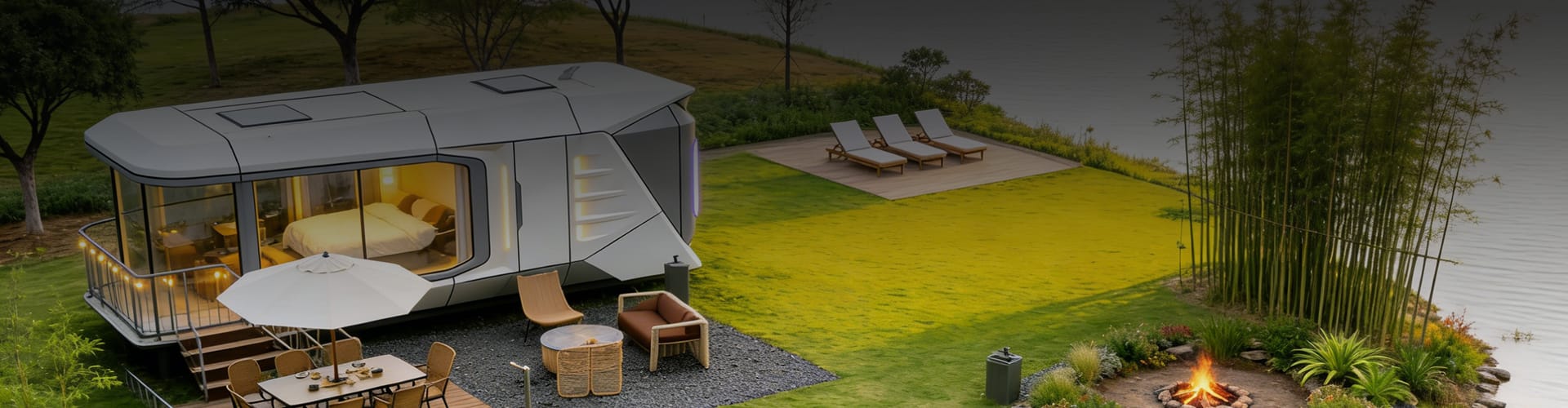
You can pick an expandable container house if you want a home that can get bigger as you need it. This house has slideouts and foldable parts to make more space fast. The expandable house uses a simple lifting way, so you do not need a lot of work or many materials. You will see that it can change easily, so you can use your home in different ways. Expandable container houses save time and work when compared to building a regular house, so setting them up is quick and does not cause much trouble.
Key Takeaways
Expandable container houses can get bigger when you need more space. They use slideouts, foldable parts, and modular units to change space fast. These homes are strong and can handle bad weather. They keep heat in well, so you feel comfortable all year. They last a long time. You can move and set up these houses quickly, sometimes in just a few hours. This saves you time and hard work compared to regular homes. Expandable container homes cost less than normal houses. They give you many ways to live that fit different needs. They are good for the planet. They use recycled materials and save energy to help the environment.
Expandable Container House Basics
What Is an Expandable House
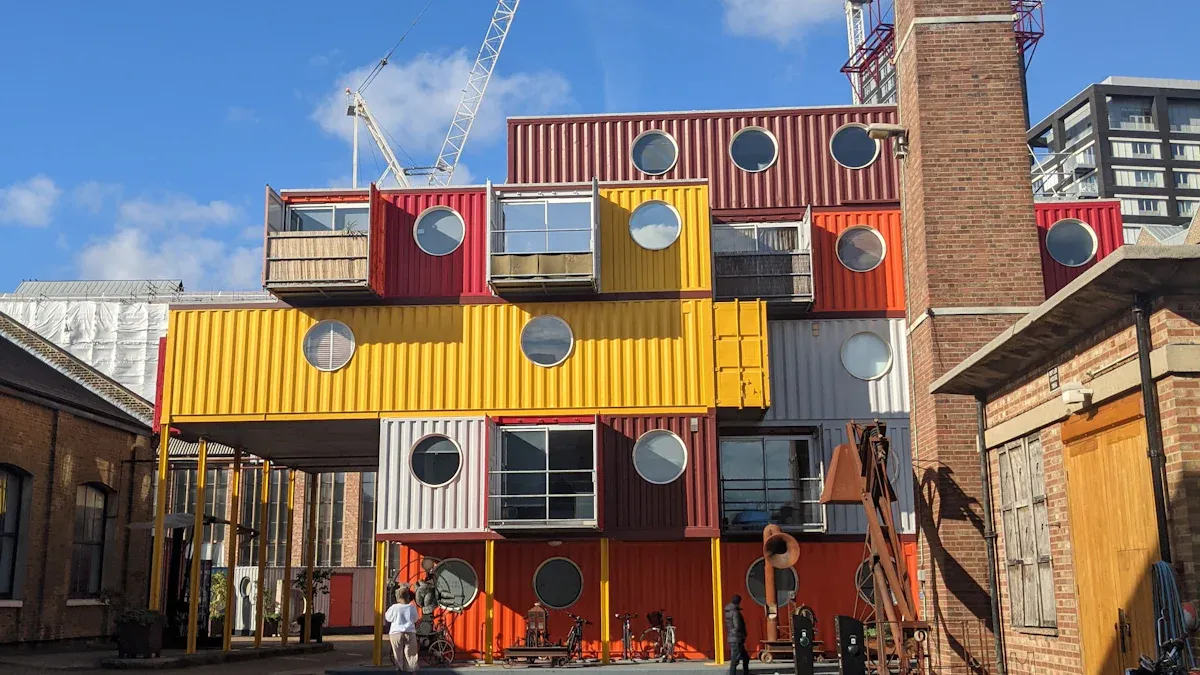
You may wonder how an expandable house is not like a regular home. An expandable container house is made from old shipping containers. These containers are very strong and last a long time. This kind of house can change its size or shape for your needs. The modular design lets you add or take away parts. Your house can get bigger as your family grows.
Most expandable container houses use weathering steel, called COR-TEN steel. This steel makes a layer that protects the house from rust. It keeps your house safe in bad weather. Inside the walls, there is insulation like spray foam, fiberglass, or rock wool. These keep your house warm in winter and cool in summer. For floors, you can pick wood, vinyl, or bamboo. Windows and doors often have aluminum or PVC frames. They use double-glazed glass to help keep heat in or out.
Tip: The modular design lets you add more rooms or connect new units. You can make your house bigger if your family or needs change.
Expandable container houses are special because they are strong and flexible. With good care, your house can last 25-30 years or even longer. The modular system means you can set up your house fast. You can also move it if you want. Some people call this a mobile expandable prefab house. You can take it almost anywhere and install it.
How Expansion Works
You may ask how an expandable house gets bigger or changes shape. The secret is in its smart expansion systems. These let you make more space without building a new house.
Here are the main ways these houses expand:
Mechanical Expansion: Hinges, slides, or hydraulic lifts move parts in or out. You can make your house bigger fast and easily.
Modular Expansion: You can add or remove extra units. This lets you make your house larger by adding modules.
Foldable Design: Some parts fold out to give you more space. When you need to move or store your house, you fold these parts back in.
You can see the main ways to expand in the table below:
Expansion Mechanism | Description |
|---|---|
Sliding Mechanism | Side or end panels slide out to give more space inside. |
Folding Design | Walls or roofs unfold to make open areas like terraces. |
Modular Assembly | You join containers together to make a bigger house. |
When you use these systems, you get more space to live, work, or relax. You can set up your expandable container house in just hours or days. You do not have to wait weeks or months. This is good if you want a home that fits your life.
Expandable houses use strong materials and smart designs to stay safe. Even when you make them bigger, they keep their shape. If you want to build up, you might need extra support. But the main design stays strong and safe. You get a house that is both flexible and dependable.
Key Features
Modular Design
Modular design helps these houses stand out. The house uses foldable and prefabricated parts. You can move and set up your home fast. The steel frame is light and strong. Galvanized steel and insulated panels make it last long. These materials help your house stay safe for years. You can change the inside to fit your needs. You can add rooms or stack units. You can put units next to each other. You can make bedrooms, offices, or classrooms.
Foldable and prefabricated parts make moving easy
You can change layouts and walls for different zones
Building is eco-friendly and does not waste much
You can set up your house in 10-15 minutes
Living spaces have kitchens and bathrooms
Strong materials keep you safe in bad weather
You can make your house bigger from a shipping container size. You can build a larger space on-site. The modular design lets you build and take apart your house fast. You can change your home when you need to.
Portability
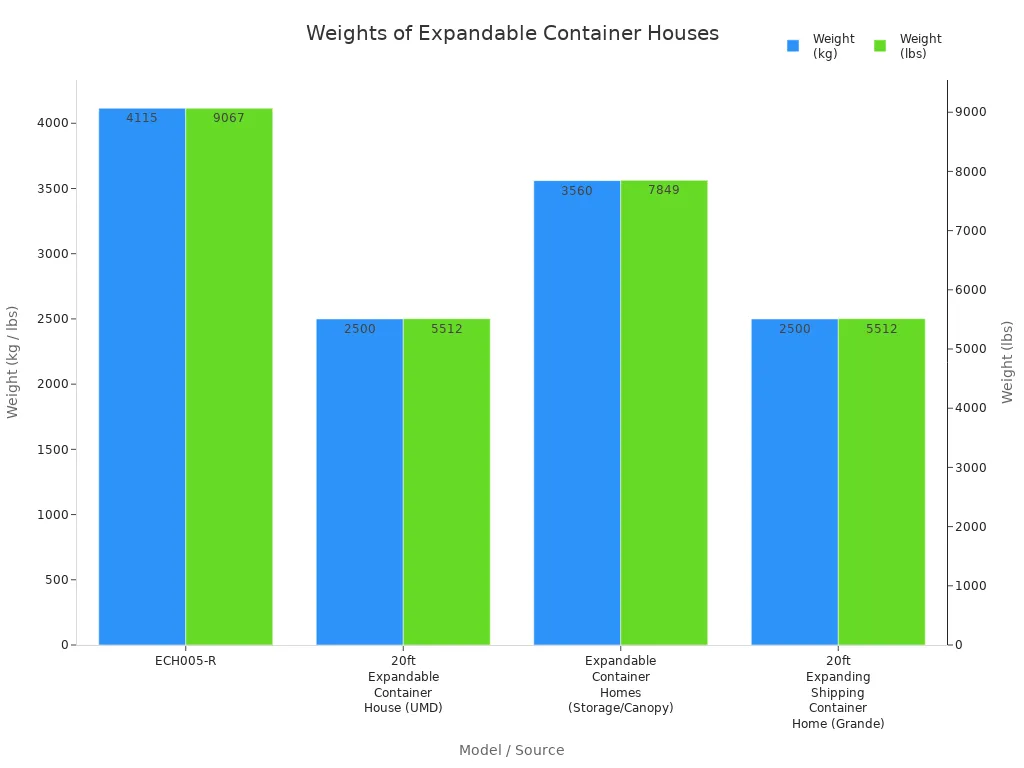
Expandable container houses are easy to move. You can take your home to a new place. The small closed size helps with moving. Most houses weigh between 2,500 kg and 4,000 kg. You need the right tools and a team to move your house. The moving process is simple.
Model / Source | Weight (kg) | Weight (lbs) | Dimensions (Closed) | Notes on Portability |
|---|---|---|---|---|
ECH005-R | 4,115 | 9,067 | 19.19ft x 7.38ft x 8.30ft | Heavy but you can move it with the right tools |
20ft Expandable Container House (UMD) | 2,500 | 5,512 | 5900mm x 6320mm x 2480mm | Five workers can install it; small size helps with moving |
Expandable Container Homes (Storage and Canopy) | ~3,560 | 7,849 | 232in x 80in x 99in | Steel frame and hydraulic braces help set it up |
20ft Expanding Shipping Container Home (Grande House) | 2,500 | 5,512 | 5860mm x 2280mm x 2500mm (folded) | Small folded size and strong frame make moving easy |
You can use trucks, trailers, or cranes to move your house. Some builders use forklifts or special tools. You can build and take apart your house quickly. This makes moving and setting up your home easier.
Rapid Installation
Rapid installation is a big benefit of these houses. You can set up your home in a few hours. The steps are simple:
Put together the modular sections.
Test things like electricity, plumbing, and HVAC.
Check the house before you move in.
Get help for repairs and upgrades.
You can build and take apart your house with a small team. Some houses unfold in 45 minutes. Full setup takes about 6 hours. You save time and work compared to building a regular house. You can move in fast and enjoy your new space.
Benefits of Expandable Container Homes
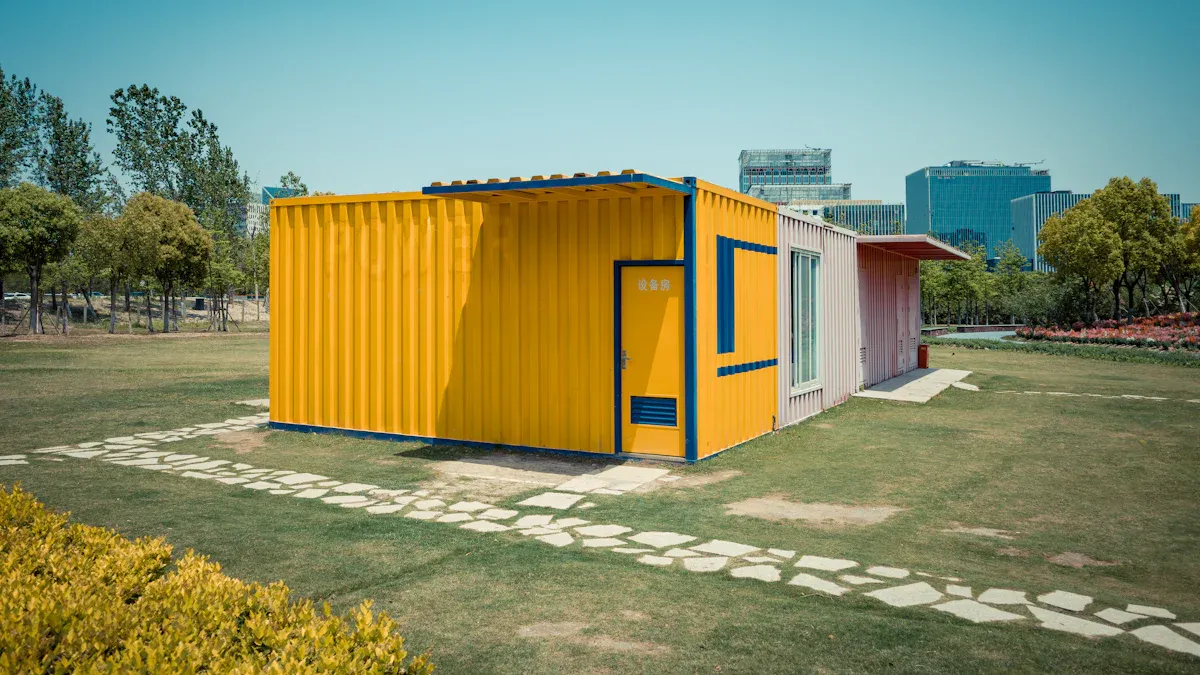 Image Source: unsplash
Affordability
Expandable container homes are a good choice if you want to save money. These homes cost less because they use old shipping containers and ready-made parts. Building them is cheaper than building regular houses. Expandable container homes usually cost $150 to $350 for each square foot. Regular homes often cost more than $400 for each square foot. Some prefabricated models can be as low as $120 per square foot. In Quebec, a 20-foot expandable container home costs about $70,000. The price changes based on size, finishes, and how you connect utilities. You also save money on building because you need less work and fewer materials. There are many ways to pay for these homes. You can use Buy Now Pay Later plans, regular loans, or government grants. These choices help you pay for your home and make owning one easier.
Note: Some payment plans do not need home equity, and you can get approved right away.
Flexible Living Solutions
Expandable container homes give you many ways to use your space. You can add rooms, balconies, or rooftop gardens. The modular design lets you change the layout as your family grows or your needs change. You can use these homes for offices, guest rooms, or temporary places to stay. If you need to move, you can take your home with you. You can make your home bigger or smaller without spending a lot on changes. This helps you get a house that fits your life, whether you want a small or big space.
Demographic Group | Benefits from Expandable Container Homes |
|---|---|
Affordable way to buy a home; easy to build and change. | |
Retirees | Good for downsizing; saves money and has modern features. |
Eco-Conscious Consumers | Like the green design and can live off-grid. |
Rural and Remote Area Residents | Strong and easy to move; good for faraway places. |
Commercial Users (Businesses) | Can use for offices or places to stay; easy to change. |
You can see that many people can use these homes. Expandable container homes are good for anyone who needs a house that can change with their life.
Sustainability
Expandable container homes are good for the environment. You help the earth by using old shipping containers and making less waste. These homes are better for nature than regular houses. You can add things like solar panels, green roofs, and ways to collect rainwater. Good insulation and airflow help you save on heating and cooling. You get a home that saves money and uses fewer resources. The strong steel frame means your home lasts longer and does not need much fixing. Being eco-friendly is part of the design, so you do not have to pay extra for upgrades.
Container homes use better insulation to save 30% more energy
You can easily add solar panels and other green energy
Water-saving tools help you pay less for water
Expandable container homes give you a smart, flexible, and green way to live.
Practical Considerations
Site Prep
You must get your land ready before you set up an expandable container house. First, clear the land and make it flat. Take away rocks, trash, and plants to make a strong base. Then, pick a foundation that fits your money and local rules. You can use concrete slabs, footings, or steel piers. Make sure trucks and cranes can get to your land. You will need a crane to lift and put the container on the base. Hold the container in place with steel brackets or by welding. Use tools to check if it is level and fix it with shims if needed.
Soil and weather matter a lot for site prep. Clay soil can swell and shrink, which moves your base. Sandy soil drains water fast but may need more support. Loamy soil is best because it holds water and drains well. Rocky soil is strong but hard to dig. Cold places can cause frost heave, which hurts bases. You should ask an expert to check your soil and help pick the right base.
Tip: Deep bases or ways to control water help stop shifting in clay or sandy soils.
Regulations
You have to follow local building codes and zoning rules for your container house. These rules say where you can build, how big your house can be, and what you can use to build it. Codes also have rules for fire safety, plumbing, and saving energy. Some places have strict rules about how your house looks and the yard. Cities often have more rules than country areas. In cities, you might need more permits and must follow rules for size, style, and safety. In the country, there are usually fewer rules and getting a permit is easier.
Rules often cover how your house looks, its size, and the base.
You must meet fire, exit, and energy rules.
Always talk to local officials before you start building.
Transport
Moving an expandable container house needs good planning. The house is heavy and big, so moving it can be hard, especially in small or rough places. You might need special permits and helpers for flatbed trailers. Trucks work well for short trips, but trains are better for long trips, though they may not go to faraway places. Modular homes need careful planning for safe delivery and setup.
Move Type | Traditional Movers Cost Range (USD) | |
|---|---|---|
Local Moves | $299 – $499 | $700 – $1,500 |
Long-Distance Moves | $1,000 – $3,000 | $2,000 – $5,000 |
Extra costs for delivery, pick-up, and storage can make moving cost more. You should plan your move and save money for these costs. Careful moving helps your house get there safely and ready to set up.
Customization and Uses
Design Options
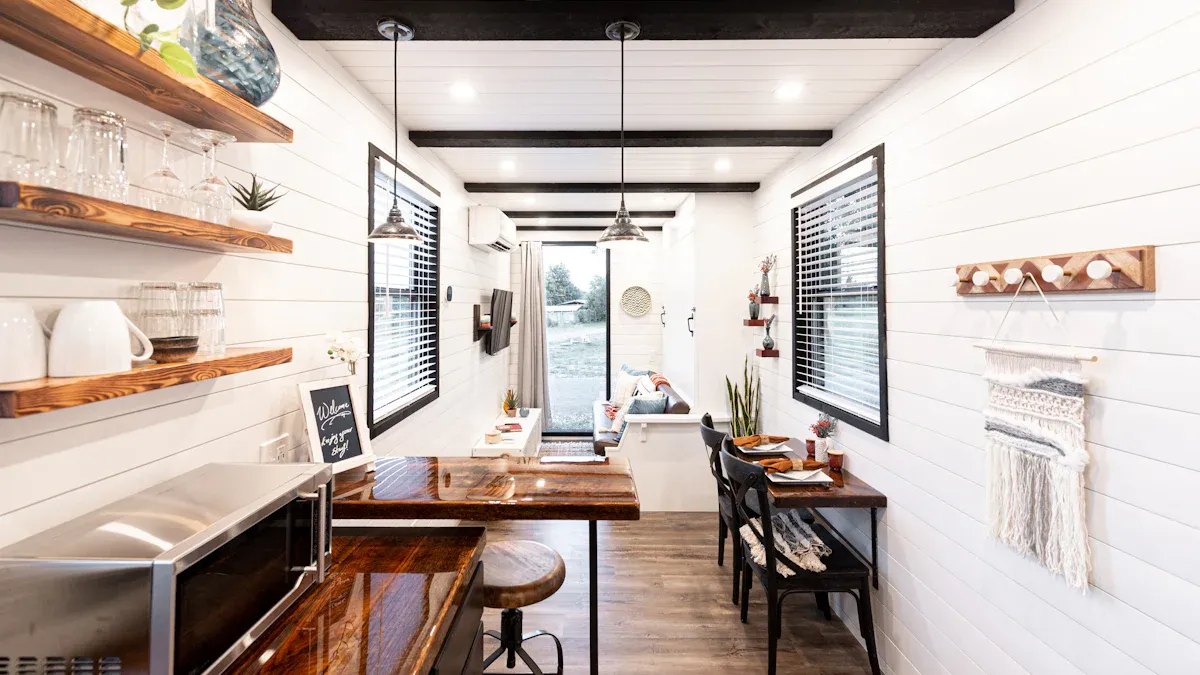
You have more than 80 ways to change your expandable container house. These choices help you make a space that fits your style. You can pick different layouts, like one or four bedrooms. Bathrooms can have showers, sinks, and toilets. Many people like open living rooms or lofts for more space. You can choose finishes like white ceilings or green floor leather.
On the outside, you can pick the color and panel style. You decide where doors and windows go. Some people add rooftop decks or garage doors. You can even add your own logo or special things like pools or saunas. Builders use strong steel frames and thick insulation. This helps your house last longer and stay comfy.
Tip: You can design your house to follow local rules and your taste.
Adaptable Spaces
Expandable container houses give you rooms that change as you need. You can use hydraulic or mechanical systems to make rooms bigger. Fold-out decks give you more space outside. Sliding glass walls help you make rooms for many uses. Loft beds and smart furniture help you use all your space.
You can use these spaces for many things: living rooms that get bigger for guests, offices that turn into bedrooms, kitchens that open to decks, and small bathrooms with smart storage. These features help you use your home well, whether you live alone or with family.
Modern Applications
Expandable container houses work for many things today. You can use them as homes for a long or short time. Many people use them for vacation cabins or guest houses. Businesses use them as mobile offices or pop-up shops. They also work as classrooms or training centers.
In emergencies, these houses become safe shelters fast. Disaster teams use them after floods, earthquakes, or fires. These shelters set up quickly and give people a safe place. Their strong steel frames and good insulation make them better than tents for long stays.
Note: Expandable container houses help many people, from families to disaster teams, because they are flexible.
You have learned how an expandable container house gives you a strong, flexible, and fast way to build a home. This type of house lets you change your space as your needs grow. You can move your house or set it up in new places. Many people choose this house for its easy setup and smart design. Think about your needs and see if this house is the right choice for you.
FAQ
How long does it take to set up an expandable container house?
You can set up most expandable container houses in less than one day. Some models take only a few hours. The process is much faster than building a regular house.
Can you live in an expandable container house year-round?
Yes, you can live in one all year. Good insulation and strong materials keep you warm in winter and cool in summer. You can add heating or air conditioning for extra comfort.
What utilities can you add to an expandable container house?
You can add electricity, plumbing, and internet. Many homes come ready for these systems. You can also install solar panels or water tanks if you want to live off-grid.
Tip: Ask your builder about utility options before you buy.
Are expandable container houses safe in bad weather?
Expandable container houses use strong steel frames. They can handle wind, rain, and snow. You should check local rules and add extra support if you live in an area with hurricanes or earthquakes.