

14 Sep What Is an Expandable Prefab House and How Does It Work
Table of Contents
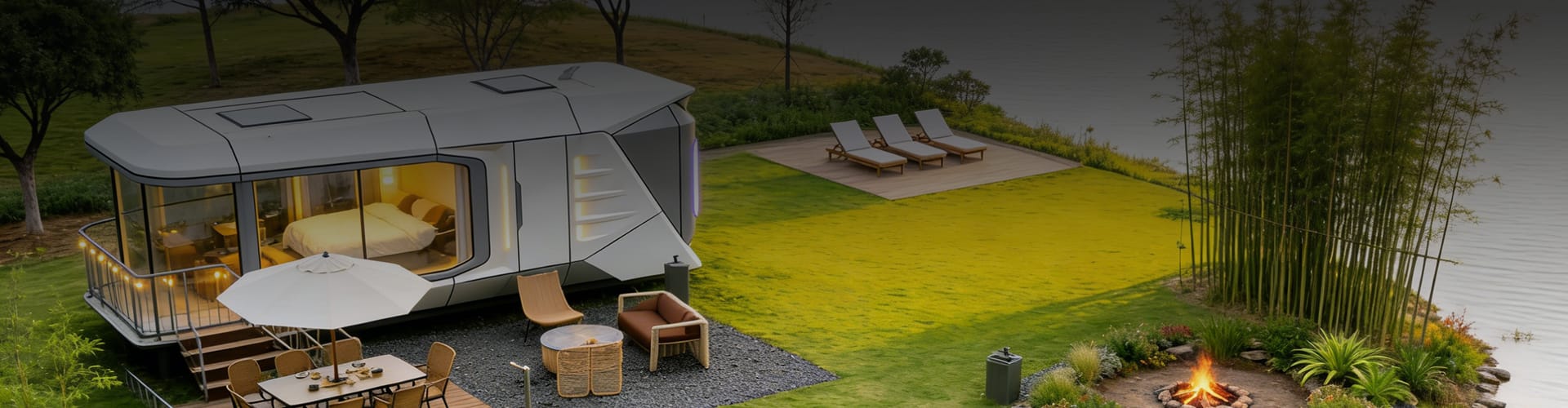
You might ask what makes an expandable prefab house special. This home uses a modular, container-based design. It starts small and grows into a bigger space. If you pick an expandable house, you get fast setup and lower cost. You can also move your home easily. Many people like that they can add more space later. Expandable prefab houses get noticed for good reasons. These homes let you change things, have strong quality checks, and care about the environment.
Key Takeaways
Expandable prefab houses give you more choices. You can add rooms when you need more space.
These homes are fast to build. Most work is done in a factory, so you save time.
Eco-friendly materials make these houses good for the planet. They help lower energy use and cut down on waste.
Strong steel frames make these homes last long. They can handle bad weather.
You can change many things to fit your style and needs.
Expandable Prefab House Basics
What Is an Expandable Prefab House
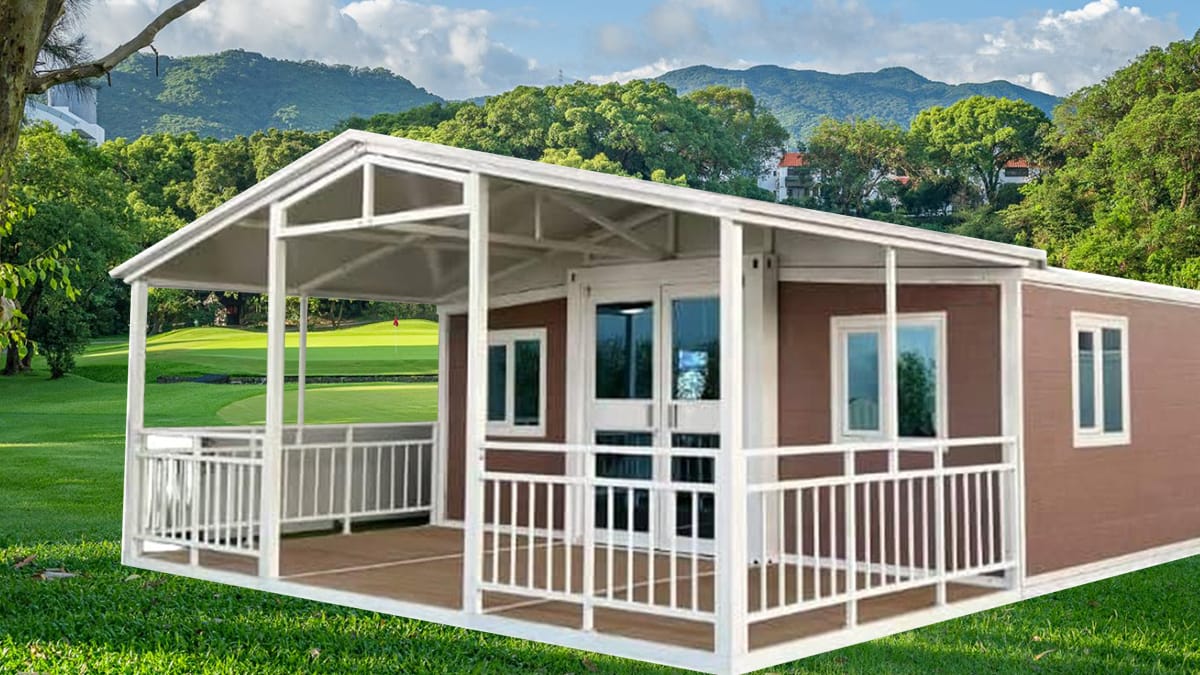
You might wonder why an expandable prefab house is different. This house is built with a modular, container-based design. You get a small unit that can become bigger when you need more space. The house uses parts that fit together easily, so it is quick to set up. You can move the house to new places or add more rooms if you want.
Expandable prefab houses use eco-friendly materials and smart technology. These homes can work in many places and for many needs. You can change the layout and features to match your life. These homes are more flexible than other modular homes.
Tip: If you want a home that can grow with your family or business, an expandable prefab house is a good choice.
Here is a table that shows how expandable prefab houses compare to other modular housing types:
Feature | Expandable Prefab Houses | Other Modular Housing Types |
|---|---|---|
Modularity and Expandability | High flexibility with standardized components | Limited flexibility |
Construction Speed | 90% factory prefabrication for rapid assembly | Varies, often slower |
Sustainable Design | Eco-friendly materials and smart technology | May not prioritize sustainability |
Adaptability | Designed for various terrains and needs | Less adaptable |
Expandable Container House Design
When you see an expandable container house, you notice strong materials and smart design. Most use shipping containers made from cast steel or carbon steel. These materials help the house stand up to bad weather and heavy use. You do not need soil or sand like in regular building. The steel frame makes the house strong and steady.
The house also has waterproofing and insulation. Thick panels and double-glazed windows keep the inside warm or cool. These features help save energy and keep the house comfortable. In cold places, an expandable container house keeps heat inside better than many regular homes. The modular design helps use less energy, about 30% less than normal building.
New containers can last around 25 years.
With good care, an expandable container house can last 30 to 50 years or even longer, just like regular homes.
Note: Modern prefab expandable house designs use 3D modeling and digital tools. These tools make sure every part fits right. You can also add features you want for your home.
Expandable vs. Traditional Homes
You may wonder how expandable prefab houses are different from traditional homes. The biggest difference is how fast they are built and how flexible they are. Expandable prefab homes come almost ready to use. Most of the work is done in a factory, so you do not have to wait for good weather.
Type of Home | Average Construction Time |
|---|---|
Traditional Homes | 9 to 12 months |
Modular Homes | 4 to 7 months |
Expandable prefab houses can be set up even faster than modular homes. You save time and feel less stress when building.
Cost is also important. Expandable prefab homes usually cost between $180 and $220 per square foot. Traditional homes cost $150 to $250 per square foot. Modular homes can start at $50 per square foot but can go up to $250 for fancy ones.
Expandable prefab houses have strong insulation and save energy.
Traditional homes may not have as much insulation unless you pay more.
Expandable designs use eco-friendly materials and smart ways to build.
You can move or make your home bigger if you need to, but most traditional homes cannot do this.
Did you know? If you take care of it, an expandable house can last as long as a regular home. You get a strong, flexible, and modern home all in one.
How Expandable Houses Work
Expansion Mechanism
You may wonder how a small expandable prefab house becomes bigger. The answer is its special expansion mechanism. Most houses use hydraulic or mechanical systems to help them grow.
Many expandable container homes use hydraulic or mechanical systems to make expanding easier.
When you get to your site, you can turn on these systems. The walls and floors slide or fold out. This turns a small container into a larger home. The process is smooth and safe. Over time, these systems have become better and faster.
Many expandable container homes use hydraulic or mechanical systems.
These systems help the house change size easily.
The systems have improved, making expansion quicker.
Expandable prefab houses give you more than just extra room. You get space that works well, can change, and has many uses. The eco-friendly design helps protect the environment. You can change the layout to fit what you need. This makes it a smart housing choice for many people.
Expandable portable homes can fit different places and needs.
They have built-in systems for expanding and shrinking based on space.
This makes them good for many uses, like city homes or remote cabins.
Assembly and Setup
You do not have to wait a long time to move in. Fast assembly is a big benefit of prefab expandable house designs. Most building happens in a factory. You get a house that is almost finished. When your house arrives, you can set it up fast.
Stage of Assembly | Time Required |
|---|---|
Weathertight | |
Final Taping | 1-2 days |
Interior Fit-Out | About 6 weeks |
The first setup, which keeps the house dry, takes less than a day. Taping and sealing may take one or two days. Adding inside finishes and fixtures takes about six weeks. This means you can move in much sooner than with regular homes.
Prefab expandable houses use parts that fit together easily. You do not need big machines or a large team. This makes building safer and saves money. The eco-friendly way also cuts down on waste and energy use.
Mobile Expandable Prefab Houses
Mobile expandable prefab houses let you move your home when you want. These homes are made to be easy to transport and set up quickly. You can take your house to a new place or use it for short-term needs, like emergencies or work far away.
To move a mobile expandable prefab house, you must follow some rules. The house modules are usually about 5.3 meters wide, 14.5 meters long, and 3.8 meters high. You need to plan your trip carefully. Roads should be at least 3.5 meters wide. You need a height clearance of 4.5 meters to avoid tunnels or wires.
Mobile expandable prefab houses can fit many places. You can use them in cities, country areas, or off-grid spots. The fast setup lets you get your home ready quickly, wherever you go. You can also make your living space bigger or smaller as needed.
Mobile expandable prefab houses are great because they are flexible and easy to move. You can use them as homes, cabins, offices, or shelters. The eco-friendly design and quick setup make them a good choice for people who want a modern and green home.
Tip: If you want a home that moves with you and fits your life, think about a mobile expandable prefab house.
Key Features of Prefab Expandable Houses
 Flexibility and Customization
 Flexibility and Customization
You can make an expandable prefab house fit your needs. The modular design lets you move rooms or add new ones. If your family gets bigger, you can make your house bigger too. You do not have to build a new house. You might want a backyard with an outdoor kitchen. You could add a workspace with storage. Some people want a studio with a kitchen and bathroom. These choices make it easy to change your home.
Details | |
|---|---|
Layout | Modular design lets you move or join units. |
Finishes | Pick metal, wood, or stone for the outside. Choose floors, cabinets, and counters for inside. |
Add-ons | Add kitchens, bathrooms, or entertainment systems. |
You can start with a small house and add more space later. This makes prefab expandable houses great for families that grow or needs that change.
Durability and Weather Resistance
You want your house to last a long time. Expandable prefab houses use strong steel frames and tight construction. These things help your house stay safe in wind, rain, and snow. Special treatments stop the steel from rusting. Waterproofing keeps water out and the inside dry.
Feature | Contribution to Weather Resistance |
|---|---|
High-Strength Steel Framework | Makes the house strong and safe from weather. |
Anti-Corrosion Treatment | Helps the house last longer and stops damage. |
Integrated Waterproofing | Keeps water out and protects the inside. |
If you take care of it, an expandable house can last 15 years or more. Good materials and smart design help your house stay strong for a long time.
Cost and Sustainability
Expandable prefab homes help you save money. You pay less at first, and you save on energy and repairs. The chart below shows how much you can save compared to a regular house.
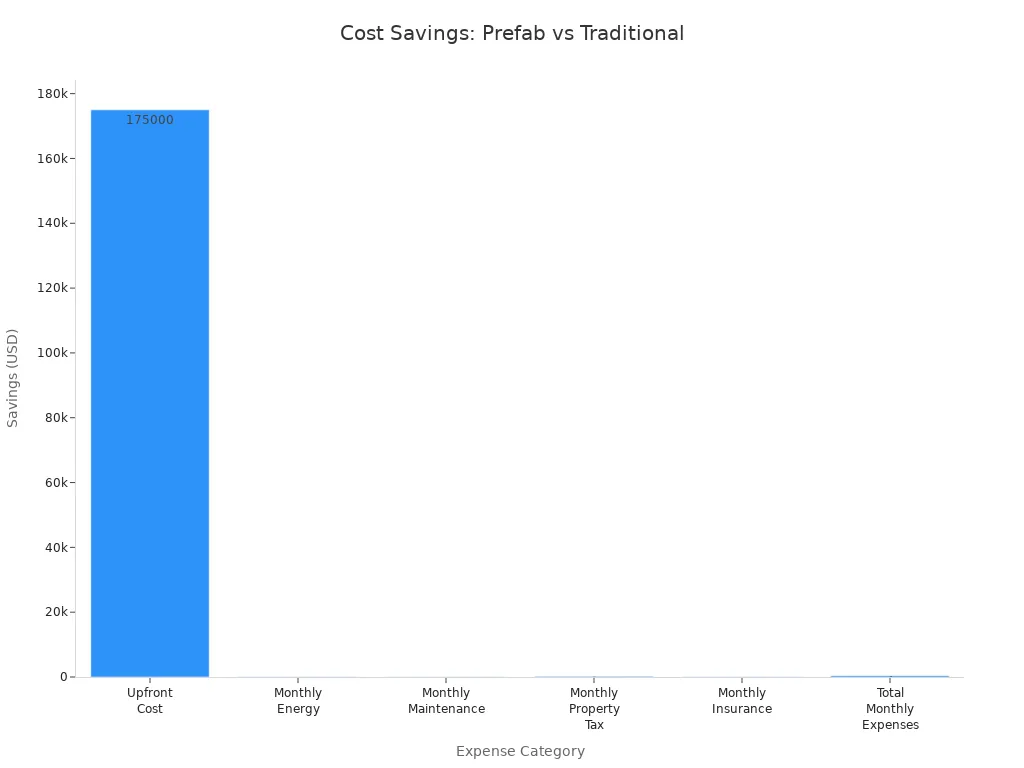
Prefab expandable houses use eco-friendly and smart designs. You get good insulation and energy-saving appliances. There is less waste when building these homes. You can add solar panels or other green features easily. This makes them a good choice for people who want to save money and help the planet.
Sustainability Benefit | Expandable Prefab Houses | Conventional Construction |
|---|---|---|
Yes | No | |
Energy efficiency | High | Variable |
Reduced waste generation | Yes | No |
Customization options | Extensive | Limited |
Integration of renewable energy | Easy | Difficult |
Tip: Picking an expandable prefab house gives you a home that is easy to change, strong, and good for the earth.
Uses and Misconceptions
Applications of Expandable Houses
You can use an expandable prefab house for many things. These homes are good for families, students, and workers. They also work for hotels, offices, or pop-up shops. Some people use them as medical clinics, classrooms, or labs in faraway places. The table below shows some common uses:
Application Type | Description |
|---|---|
Residential | Modular homes for families, students, or workers. Fast to install and ready to use. |
Commercial | Hotels, offices, and retail spaces. Many businesses use them for pop-up shops or mobile offices. |
Infrastructure | Medical clinics, classrooms, and labs. Great for remote or hard-to-reach areas. |
Expandable prefab houses help a lot during emergencies. You can set up a shelter, first-aid station, or command center in just 10 minutes. You do not need big machines to do this. You can start with a small space and add more if you need it. This makes them great for disaster relief.
Customization Options
You have lots of ways to make a prefab expandable house your own. You can pick your floor plan, finishes, and fixtures. You can add a glass front, special doors, or more windows. Some people want one bedroom, but others need five. You can also add things like mold, fire, bug, wind, and water resistance.
Description | |
|---|---|
Floor Plans and Layouts | Pick from tiny homes to large family dwellings. |
Finishes and Fixtures | Choose siding, roofing, paint, and flooring. |
Integrated Systems | Add custom electricity and water systems. |
Additional Features | Full kitchens, bathrooms, and resistance to mold, fire, and more. |
Expandable prefab homes let you make a space that fits your life. You get more choices than with most modular homes.
Common Myths
Some people think an expandable house is not as strong or comfy as a regular home. That is not true. Builders make these homes in special factories. They use the same materials as regular houses. The design keeps them strong for moving and setting up. You get a home that is safe, tough, and eco-friendly. Prefab homes can last as long as site-built ones and often need fewer repairs.
Tip: Do not let myths keep you from looking at prefab and expandable prefab houses. You can have a modern, flexible, and high-quality home.
Expandable prefab houses help you live in a smart way. You get a home that is flexible and easy to change. These houses are quick to build and good for the planet. The table below explains why many people pick expandable houses for long-term living:
Advantage | Description |
|---|---|
Flexibility | You can move or make your home bigger when you need. |
Affordability | You save money because prefab homes cost less. |
Environmental Sustainability | You use less energy and help the earth. |
Durability | Strong materials keep you safe from bad weather. |
Customization Options | You can make your home match your style and needs. |
You get a home that lasts and can grow with you. Expandable prefab houses are leading new ideas in prefab and green living. If you want to know more about eco-friendly homes or long-lasting houses, check out articles on sustainable building and expandable prefab house choices.
FAQ
How long does it take to set up an expandable prefab house?
You can set up most expandable prefab houses in just a few days. The main structure arrives ready to assemble. You save time because most work happens in the factory.
Can you move an expandable prefab house to a new location?
Yes, you can move your house if you need to. The design allows for easy transport. You can pack it up, move it, and set it up again in a new place.
Are expandable prefab houses safe in bad weather?
Expandable prefab houses use strong steel frames and waterproofing. You stay safe during storms, heavy rain, or snow. Good insulation keeps you comfortable in hot or cold weather.
What can you customize in an expandable prefab house?
You can pick your floor plan, finishes, and features. You might add extra rooms, special windows, or eco-friendly systems. The house grows and changes with your needs.
Tip: Always talk to your builder about your options before you order your house.