

11 Aug How Small Can a Capsule House Be in 2025
Table of Contents
The smallest capsule house in 2025 can be only 2-3 square meters. That is about 20-30 square feet. More people are picking very small homes in cities everywhere. This is happening in places like Hong Kong and Australia. Tiny apartments and homes are becoming more common.
Region | Trend Example |
|---|---|
Hong Kong | Micro-apartments smaller than prison cells |
Australia |
You might ask about the smallest size. You may also wonder about features, comfort, and if these homes work for daily life.
Key Takeaways
Capsule houses can be as small as 2-3 square meters. That is about 20-30 square feet. They can still feel comfortable to live in. Smart furniture and clever design help a lot.
These homes use eco-friendly materials and energy-saving systems. This makes them cheaper and better for the environment.
Capsule houses are good for young people and mobile workers. They are also good for people who want simple, flexible living. They work well in crowded cities with high land costs.
Local laws and building codes decide where you can build or live in a capsule house. Always check the rules before you start.
In the future, capsule houses will have more smart technology. They will use better materials and have flexible designs. This will make small living easier and more popular.
Capsule House Basics
Definition
A capsule house is a small, modular home. It looks a little like a space capsule. These homes are found in busy cities. Space is limited and land is expensive there. Designers make capsule houses to save space and use less stuff. Most capsule houses are made in factories. You can set them up fast and move them if you want. Inside, you will see smart furniture. Beds fold into the wall. Tables can also be used as desks. These homes use eco-friendly materials and energy-saving systems. This helps the planet and saves you money.
Capsule houses began in Japan in the 1970s. Architects wanted to help with crowded cities. The first capsule hotel opened in Osaka. People saw how useful these tiny spaces were. Now, capsule houses are used as homes, offices, and emergency shelters. They are made to be practical and affordable. They are not just about being cozy or pretty.
Here is a quick look at what makes capsule houses special:
Feature/Aspect | Description |
|---|---|
Size | Usually 100–500 sq ft, but some are as small as 20–30 sq ft |
Urban Suitability | Perfect for crowded cities with high land prices |
Cost Reduction | Can lower housing costs by about 30% |
Mobility | Modular design lets you move and set up your home easily |
Sustainability | Uses eco-friendly materials and energy-saving systems |
Design Focus | Smart, multifunctional furniture and modular layouts |
Shared Facilities | Many complexes share kitchens and bathrooms to save money and build community |
Demographic Preference | Popular with millennials, students, and remote workers |
Livable Space
You may wonder how small a capsule house can be and still feel like home. Many countries have rules for the smallest living spaces. Here are some main rules:
Minimum Area and Height: In the United States, the International Building Code says a living room must be at least 70 square feet (about 6.5 m²). The ceiling must be at least 7.5 feet high. Many capsule houses are smaller, so they may not count as official homes in some places.
Fire Safety: Builders must use flame-retardant materials. Smoke detectors must be in each sleeping area. Escape routes must be at least 36 inches wide. Emergency exits need clear signs and lights.
Health and Hygiene: You need bathrooms and showers. In shared buildings, there should be enough for everyone. Good airflow is needed to stop mold and keep air fresh.
Zoning and Licensing: Local laws decide where you can put capsule houses. Some cities only allow them in certain places or for short stays.
Privacy and Security: Rules protect your privacy. Cameras are not allowed in sleeping areas. Your personal information must stay safe.
Capsule houses give people a new way to live in cities. They use every bit of space. They are a smart and cheap choice for people who want to live simply and help the planet.
Smallest Size
 Dimensions
 Dimensions
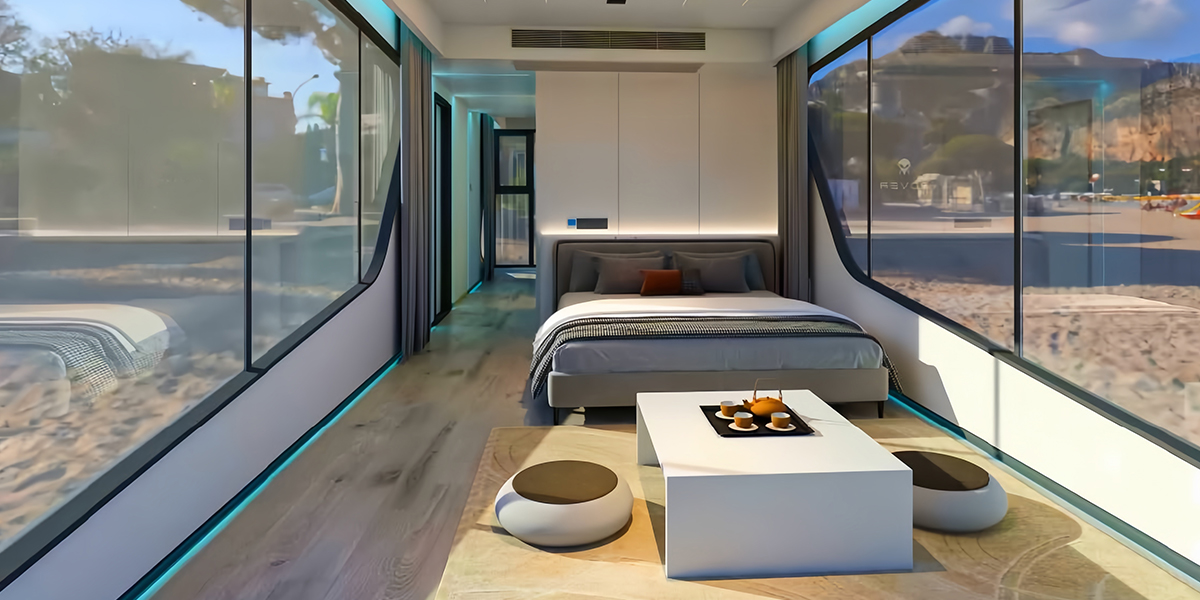
You might wonder just how small a capsule house can get in 2025. The smallest size for these homes starts at about 2-3 square meters, which is around 20-30 square feet. Most capsule houses you find on the market today are a bit larger, usually up to 200 square feet (about 18 square meters). This size gives you enough room for a bed, a small living area, and sometimes even a balcony. You can see that designers focus on making every inch count.
Let’s look at some real-world models and their exact measurements:
Model | Dimensions (L×W×H in meters) |
|---|---|
E30 | 3.85 × 2.15 × 2.5 |
E50 | 5.8 × 2.15 × 2.5 |
E70 | 11.5 × 2.15 × 2.5 |
D50 | 5.8 × 2.15 × 2.5 |
k70 | 11.5 × 3.3 × 3.3 |
K50 | 11.5 × 3.3 × 3.3 |
The E30 model stands out as one of the smallest size options, measuring just 3.85 meters long and 2.15 meters wide. This compact design shows how much you can fit into a tiny footprint.
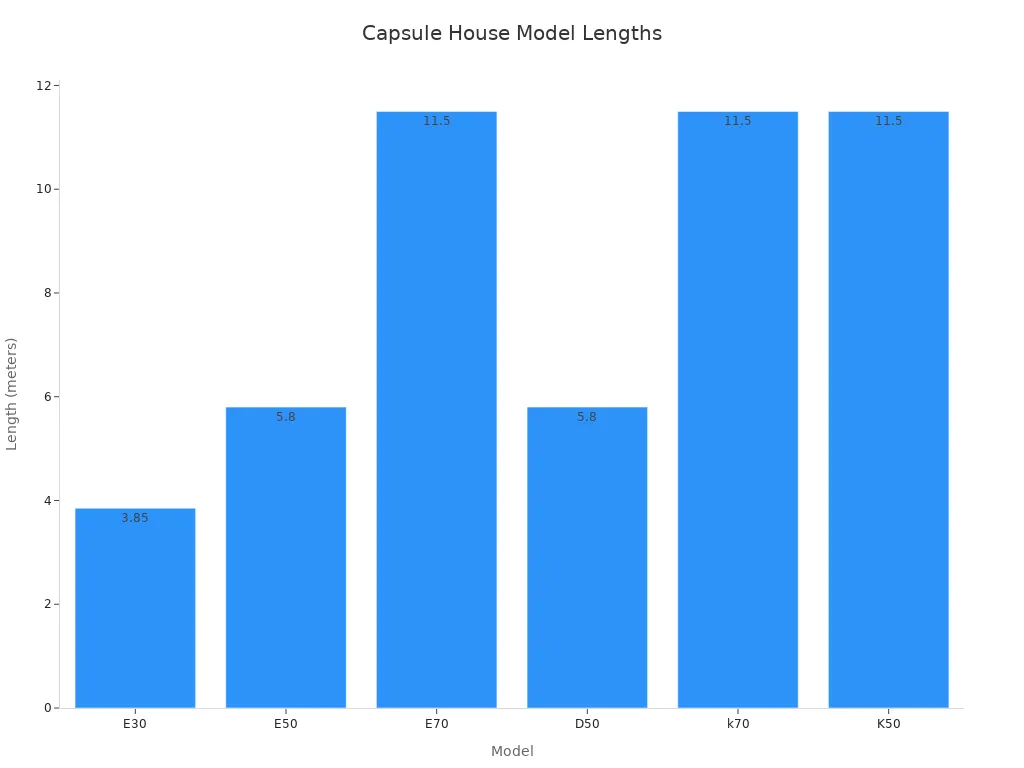
You can see from the chart that the smallest size models are much shorter than the larger ones. This makes them easier to place in tight city spaces or even move to new locations.
Features
Even at the smallest size, capsule houses pack in many features to make your life easier. Designers use built-in storage, foldable furniture, and smart layouts. You can turn a bed into a sofa or hide a table in the wall. These tricks help you use every bit of space.
Here are some features you often find in the smallest size capsule houses:
Built-in storage under beds or in walls
Foldable or sliding furniture to save space
Smart home controls for lights, temperature, and security
Eco-friendly materials like bamboo, steel, and insulated panels
Modular design for easy moving and setup
Strong insulation for comfort in any weather
Custom layouts with hidden compartments
You also get strong and safe construction. Many capsule houses use a steel frame with hot-dip galvanized steel. The shell often uses aluminum alloy with a special coating to protect it. For insulation, builders use polyurethane foam and high-tech glass for windows and skylights. Some models use magnesium wallboards. These boards are light, fire-resistant, and good for the environment. They do not give off harmful gases when heated, so you stay safe inside.
A typical capsule house with a size of about 29.4 square meters weighs around 7 tons. The light materials make it easy to move and set up. Even the smallest size models use these strong and green materials.
Tip: If you want a home that is easy to move, look for capsule houses with modular parts and lightweight walls. This makes moving and setting up much faster.
The smallest size capsule houses show how smart design and new materials can give you a full living experience in a tiny space. You get comfort, safety, and flexibility, all in a home that fits almost anywhere.
Living Experience
Comfort
 Comfort
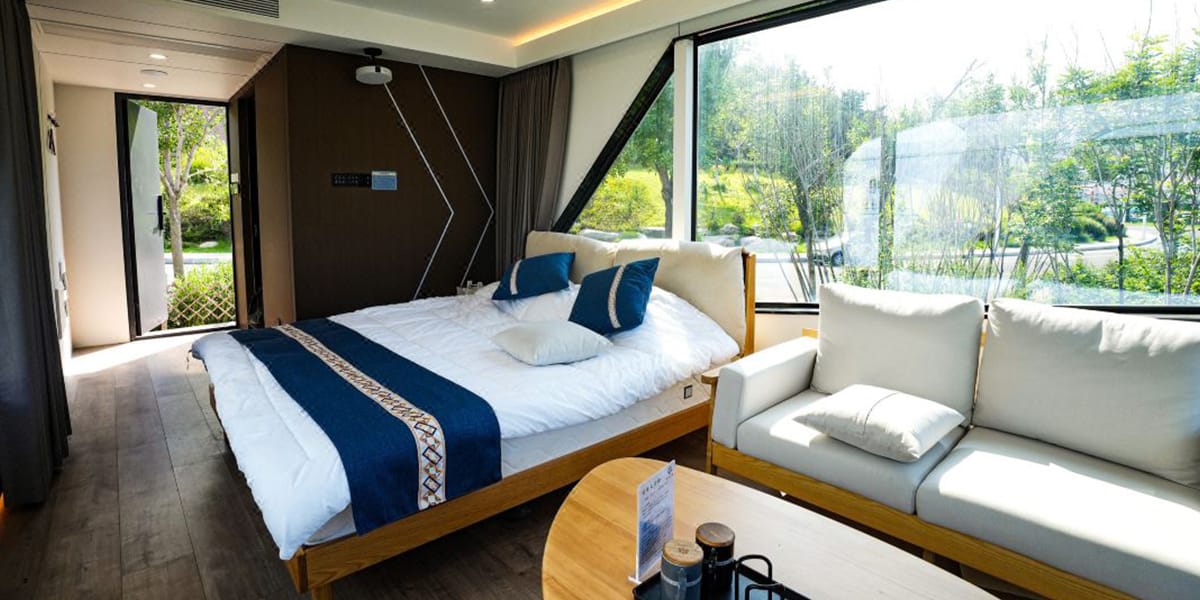
You might wonder if a capsule house feels comfortable. These homes are small, but many people think they are cozy. They help you live with less stuff and use less energy. This can make you feel calm and focused each day. When you live in a small space, you keep only what you need. This can give you more control and make you feel happy.
But living in a tiny home can be hard sometimes. If you live with others, you might feel crowded. Thin walls and open rooms mean you have less privacy. You may hear noise from neighbors or shared areas. It is not easy to change the space because there is not much room. Some people add plants, pictures, or smart gadgets to make it feel special. You can also use technology, like AI helpers, so you do not feel lonely.
Tip: Try to see your small home as a way to grow and start new habits. Many people use stories or online experiences to stay happy in a small space.
Suitability
Capsule houses are best for some people. If you are young, move a lot, or work in a city, these homes might be great for you. They are good for crowded places where space and money are tight. People who care about the planet or want to save money also like them.
User Group | Why Capsule Houses Fit Well | Typical Monthly Cost |
|---|---|---|
Millennials | Like less work at home, want flexibility | |
Young Professionals | Need cheap homes and remote work spots | $600–$800 |
Mobile Workers | Move a lot, need homes that move too | N/A |
Budget-Conscious | Want low rent and save on energy | $229+ |
You might think capsule houses are too small for families. Some families use more than one unit or spend time outside. These homes are not free from chores, but they are fast to build and easy to move. If you like simple living and want to help the planet, a capsule house could be a smart pick for you.
Legal Factors
Regulations
You need to follow many rules when you want to build or live in a capsule house. These rules help keep you safe and make sure your home fits in with the neighborhood. In many places, you must meet minimum size requirements for homes. Some cities and states have started to relax these rules to help with housing shortages.
Houston has minimum lot size rules, but new housing types can now skip these limits.
California passed Senate Bill 9, which lets you build up to four homes on a single-family lot.
Cities like Berkeley and San Jose are ending single-family zoning to allow more housing choices.
States such as Oregon, Washington, Montana, and Vermont have changed their laws to allow more than one home per lot.
British Columbia, Canada, now requires cities to let you build up to four units per lot, especially near transit.
You must also follow building codes. These codes set standards for safety, design, and construction. Here is a simple process you might follow:
Research local building rules.
Prepare detailed plans for your capsule house.
Talk to experts like architects or builders.
Submit your plans for approval.
Pay any required fees.
Wait for the city to review your plans.
Make changes if needed.
Get final approval before you start building.
Note: Local rules can change quickly. Always check with your city or county before you start your project.
Zoning
Zoning laws decide where you can put your capsule house and how you can use it. These laws split land into different zones, such as residential, commercial, or community service. Each zone has its own rules.
Urban areas often have strict rules about home size, height, and how many homes you can build.
Suburban and rural areas may give you more freedom, but you might need special systems for water or waste.
Some places let you use capsule houses as mobile or temporary homes, which can make the permit process easier.
If you want to connect your home to city utilities, you will need extra permits.
Not following zoning laws can lead to fines or even removal of your home.
You should always check local zoning laws before you choose a spot for your capsule house. This helps you avoid problems and makes sure your new home is legal and safe.
Future Trends
Innovations
 Innovations
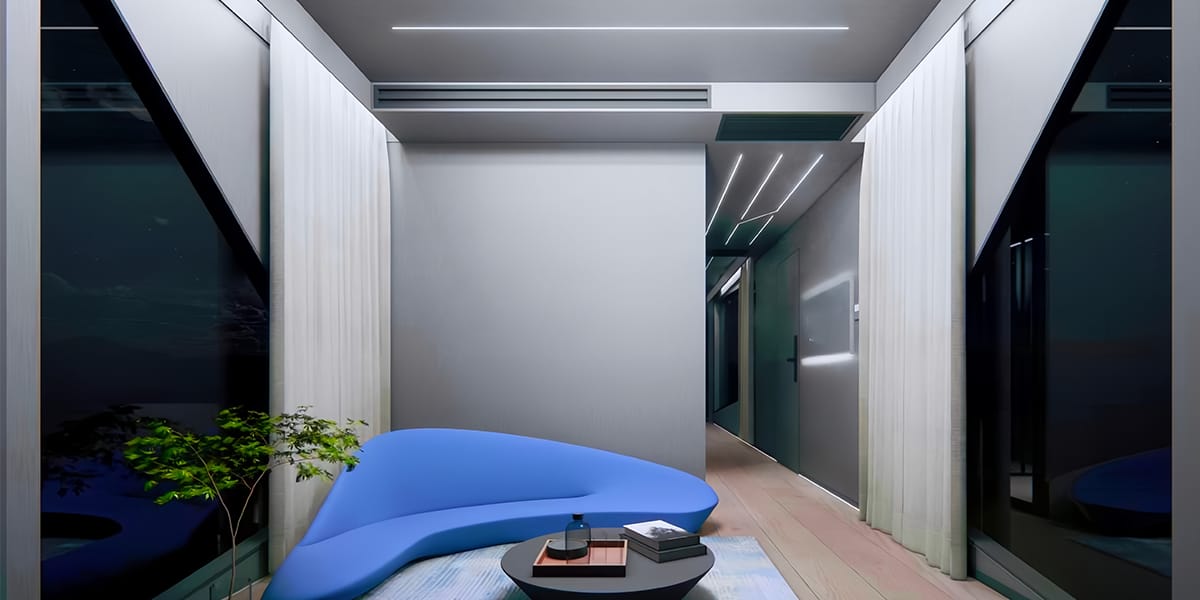
In 2025, capsule houses will have new technology and design. Designers use smart ways to save space. They add loft beds and storage in the walls. Open rooms make small spaces feel bigger. Furniture can fold or slide to save room. You can turn a bed into a sofa or a table into a desk. This lets you use one spot for many things.
Loft beds and wall storage help use space above.
Sofa beds with storage do more than one job.
Open rooms let in more light and air.
Smart home systems control lights and temperature.
Builders use bamboo and recycled steel to help the earth.
Modular designs make moving and setting up easy.
Smart tech makes life simple in a small home. You can use your phone or voice to control lights and heat. Builders use strong but light materials. This makes it easy to move your home. Prefab and 3D printing help build homes fast and with less waste. Some capsule houses use solar panels or wind power to live off the grid.
Capsule houses are used for many things now. People use them as homes, offices, cabins, or shelters.
Outlook
Capsule houses may get even smaller as tech gets better. Designers keep adding more features in less space. More cities and states are changing rules to allow tiny homes. California and British Columbia make it easier to build small and movable homes. These changes may set new size rules for modern homes.
More people want very small capsule houses. In Asia Pacific, the market could grow from $266.94 million in 2024 to $575.95 million by 2033. Cities are growing, and people want cheaper, flexible homes. Many young people and solo travelers want green, low-cost homes. You may see more capsule houses in cities, tourist places, and the countryside.
Modular building and smart tech will get better.
More people will pick capsule houses for low cost and flexibility.
Laws may change to support smaller, smarter homes.
If you want a home that fits your life and helps the earth, capsule houses are a smart choice for the future.
You can now see capsule houses as tiny as 2-3 square meters in 2025. These homes use clever designs, built-in furniture, and save energy to make small spaces feel cozy.
Capsule houses are best for students, young workers, and people who want simple, flexible living.
Try these ideas to use your space well:
Pick furniture that does more than one thing and use tall shelves.
Check your safety alarms and insulation every year.
Key Livability Features | |
|---|---|
Space Optimization | Beds that fold, shelves on walls, storage that moves |
Essential Amenities | Tiny kitchen, bathroom, your own private spot |
Sustainability | Solar panels, earth-friendly materials |
Capsule houses will keep getting smarter and nicer, so you can live well in any city.
FAQ
What is the smallest capsule house you can live in?
You can live in a capsule house as small as 2–3 square meters, which is about 20–30 square feet. Designers use clever layouts and furniture to help these tiny homes work for daily life.
Can you cook in a capsule house?
Most capsule houses have a small kitchen or kitchenette. You get a sink, a mini-fridge, and a cooktop. Some models have shared kitchens instead. Always check what is included before you buy or rent.
Are capsule houses safe during storms or earthquakes?
Capsule houses use strong materials like steel and insulated panels. Many models follow safety rules for wind and earthquakes. You should always ask about safety ratings before moving in.
How do you keep a capsule house warm or cool?
You control the temperature with built-in insulation and smart systems. Many capsule houses have heating and cooling units. Some use solar panels to save more energy.
Can families live in capsule houses?
Families can use more than one capsule house or connect units together. Most capsule houses are best for one or two people. You may need extra space if you have kids or pets.