

10 Aug Capsule House Price Guide for 2025 in America
Table of Contents
You might pay $3,000 for a basic capsule house. A fancy model can cost over $50,000 in the United States in 2025. In large cities like New York, prices can go up to $300,000 or even more. These homes are much more popular now than five years ago. More young professionals and people want cheap, modern places to live. Space capsule houses now have smart features and good designs. These things make many people want to buy them.
Key Takeaways
Capsule house prices in 2025 start at $3,000 for basic models. They can go over $300,000 in big cities. The price depends on size, design, and upgrades.
Materials, customization, installation, and location change the total cost a lot. Prefab houses cost less. Custom and luxury choices make prices higher.
Smart designs help save space and energy. Foldable furniture and solar panels can lower bills by up to 30%.
Capsule houses work for many things like homes, rentals, or offices. They last 25 to 50 years if you take care of them.
Before you buy, check local permits. Plan your budget for extra costs. Pick suppliers carefully to get the best value and help.
Capsule House Prices
Price Range
A basic capsule house in 2025 can cost just $3,000. Most small capsule houses with one bedroom and a bathroom cost $20,000 to $40,000. If you want more space and a living room, prices go from $40,000 to $80,000. Large capsule houses with up to 500 square feet can cost as much as $100,000. Custom designs are even more expensive, especially in big cities, and can go over $100,000.
Luxury capsule houses and prefab models have many price options. Some luxury models cost between $25,000 and $35,000. Prefab capsule houses start at about $4,200 and can reach $19,500 for bigger or fancier designs. Container homes are cheaper, starting at $3,200 per ton for basic models.
Tip: If you add things like balconies, smart home systems, or solar panels, the price goes up. These upgrades make your home nicer and save energy, but they also cost more.
Price Breakdown
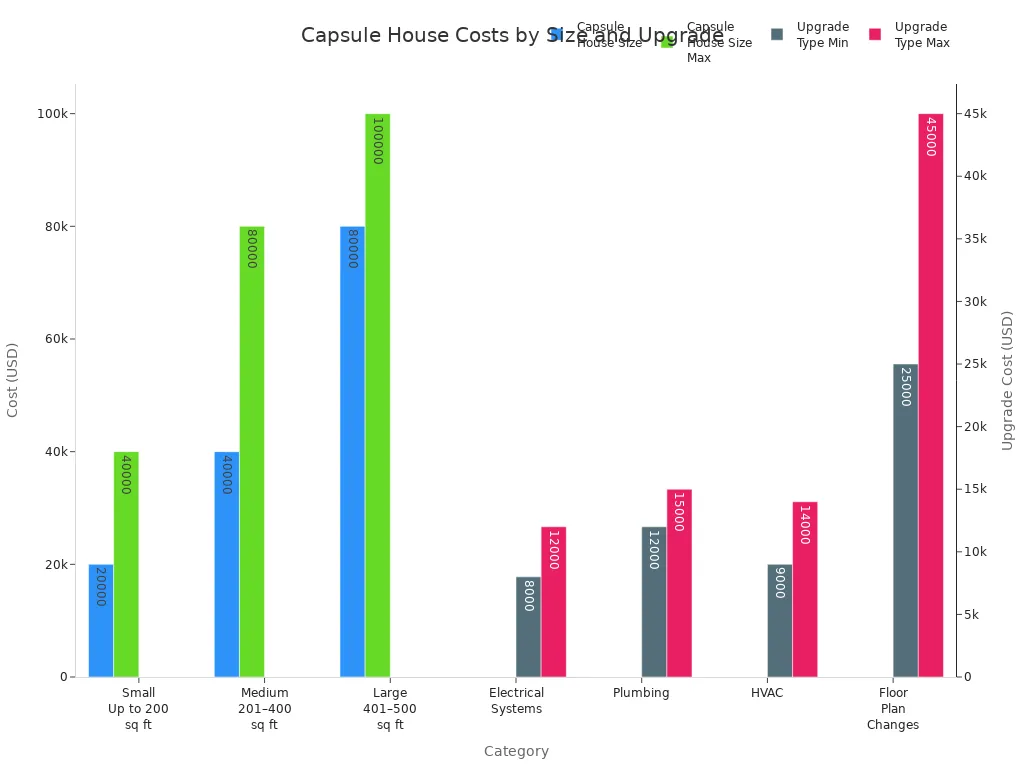
It is important to check the details before buying. The table below shows how size, layout, and features change the price of a capsule house in 2025:
Capsule House Size | Description | Price Range (USD) |
|---|---|---|
Small Capsule House | Up to 200 sq ft, 1-bedroom, bathroom, balcony | $20,000 – $40,000 |
Medium Capsule House | 201-400 sq ft, 1-bedroom, living room, balcony | $40,000 – $80,000 |
Large Capsule House | 401-500 sq ft, 1-bedroom, living room, balcony | $80,000 – $100,000 |
Customized Capsule House | Tailored to exact specifications | Above $100,000 |
Prefab capsule houses are cheaper and faster to build because factories make them. Custom capsule houses let you choose special designs and materials, but they cost more. You also need to save money for delivery, setup, permits, and hooking up utilities.
Interior upgrades can make your total cost much higher. Here are some common upgrades and what they usually cost:
Upgrade Type | Average Cost Range (USD) |
|---|---|
Electrical Systems | $8,000 – $12,000 |
Plumbing | $12,000 – $15,000 |
HVAC | $9,000 – $14,000 |
Floor Plan Changes | $25,000 – $45,000 |
Smart home features and eco-friendly materials can make the price higher at first, but they help you save money on bills later. Energy-saving designs can cut your monthly bills by about 30%. Many companies let you pay over time to make buying easier.
Usage Types
Capsule houses can be used in many ways. The price changes depending on how you use it. Here is a table that shows the main uses and their price ranges:
Use Case | Price Range (USD) | Key Characteristics and Factors |
|---|---|---|
Residential | $5,000 – $340,000 | Highest price in cities; modular, double-decker types; price varies by location and customization |
Rental | $10,000 – $37,000 | Prefab or container-based; focus on affordability and unique designs |
Commercial | $23 – $125,000 | Includes office pods and shipping container homes; often less costly than high-end residential units |
Residential capsule houses cost the most, especially in cities where land and materials are pricey. Suburban homes are usually cheaper. Rental capsule houses are for people who want to stay for a short time, so they are made to be affordable and look different. Commercial capsule houses include office pods and small shops, and their prices depend on size and features.
Note: If you add solar panels, smart home tech, or eco-friendly materials, the price will go up. These features make your capsule house more modern and efficient, and many people want them now.
Price Factors
Materials
The materials you pick for your capsule house matter a lot. Wood is popular because it is cheaper. But wood does not last as long as other materials. Steel costs more money, but it is very strong and can be recycled. Prefabricated capsule houses use parts made in factories. This helps keep the price lower. Custom designs use special materials and layouts, so they cost more.
Material/Build Type | Characteristics | Price Range (per sqft) | Total Price Range |
|---|---|---|---|
Wood (basic material) | Cheaper, less durable | Lower | Lower |
Steel (ecological option) | Durable, recyclable, higher initial cost | Higher | Higher |
Prefabricated Capsule | Factory-made, standardized materials | $100 – $200 | $20,000 – $60,000 |
Customized Capsule | Unique layouts, more design flexibility, higher cost | $200 – $350 | $60,000 – $100,000 |
If you choose recycled steel or reclaimed wood, you help the planet. These choices can cut carbon emissions by about half. Prefabrication also makes less waste, almost 90% less. This can make your home cost less.
Customization
Adding custom features makes the price go up. Custom capsule houses cost about $100 to $150 more per square foot than prefab ones. You might want extra rooms or better insulation. Some people add smart home technology. These upgrades make your home nicer and save energy, but they cost more.
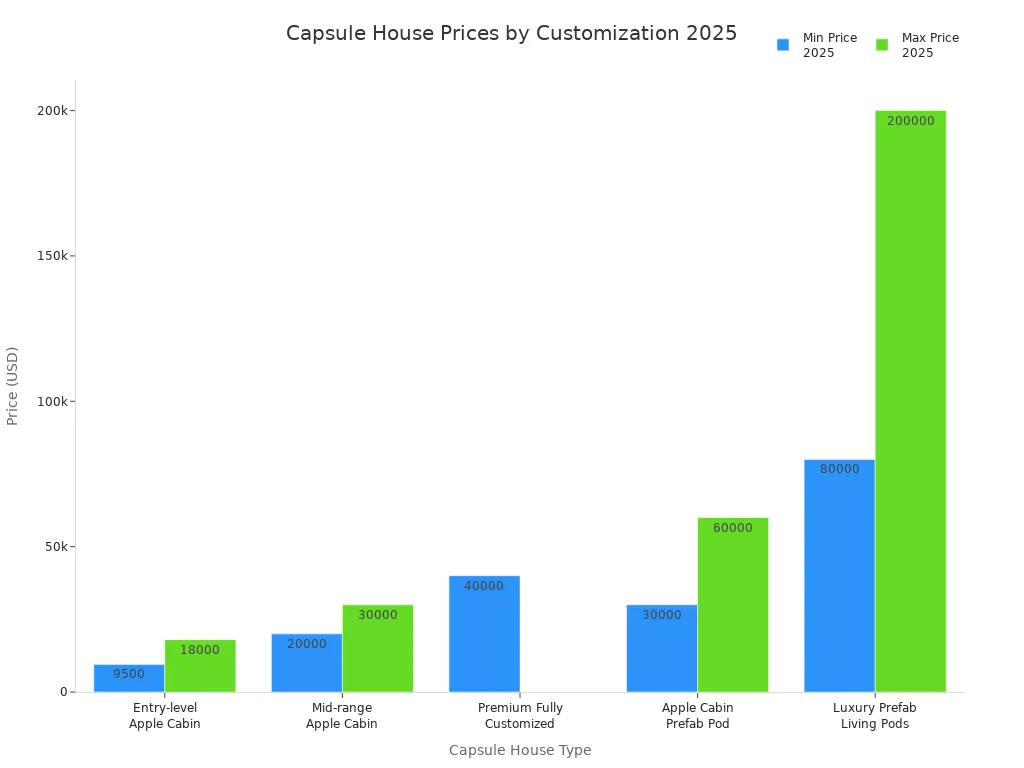
Capsule House Type | Price Range (2025) | Key Customization/Features | Impact on Price |
|---|---|---|---|
Entry-level Apple Cabin | $9,500 – $18,000 | Basic model, minimal customization | Lower price due to fewer custom options |
Mid-range Apple Cabin | $20,000 – $30,000 | Some layout changes, added features | Moderate price increase with customization |
Premium Fully Customized | $40,000+ | Flexible layouts, premium finishes, smart tech | Significant price increase for premium options |
Luxury Prefab Living Pods | $80,000 – $200,000+ | Premium finishes, advanced smart tech | Highest price bracket due to luxury customizations |
Tip: Custom features make your home better, but plan your budget.
Installation
Installation costs can be a surprise. You need a flat, strong spot for your house. A good foundation is important. Hooking up water, sewer, and electricity costs extra. You also need local permits and inspections, which take time and money. Moving your house needs trucks and cranes, which adds more cost. You must hire skilled workers to set up and connect utilities.
Cost Component | Description | Impact on Total Installation Cost |
|---|---|---|
Site Preparation | Solid ground or foundation needed (gravel, soil, concrete pad) | Adds cost beyond house price |
Utility Connections | Water, sewer, electrical hookups | Extra installation and connection fees |
Permitting | Local permits based on state and zoning rules | Adds to cost and timeline |
Transportation & Crane | Trucking and crane services for delivery and placement | Significant extra cost |
Installation Labor | Qualified contractors for setup and utility hookups | Labor costs add to total expenses |
Note: These costs are not part of the basic price for your capsule house.
Location
Where you put your capsule house changes the price. Big cities like New York or Los Angeles cost more for land and permits. Rural and suburban places are usually cheaper. Local rules and zoning laws can also change what you pay. Some states need more permits or special foundations, which adds to your cost. Always check local rules before you buy.
Capsule House Features
Design
Capsule houses in 2025 use smart design to save space. Many have shelves that go up the walls and open rooms without many walls. Some furniture folds up when you do not need it. These things help you keep your home neat and use every bit of space. The table below shows how each design idea helps you use your space better:
Design Feature | Description | Quantitative Impact on Usable Living Area |
|---|---|---|
Vertical Storage Solutions | Uses wall height for shelves and cabinets | |
Open Floor Plans | Removes walls for flexible, open spaces | Adds ~25% space efficiency |
Foldable Furniture | Beds and tables fold away when not in use | Saves up to 40% more space |
Multi-functional Layouts | Rooms and furniture serve many purposes | Improves adaptability |
Integrated Kitchen & Bathroom | Compact appliances and modular fixtures | Boosts usability by up to 30% |
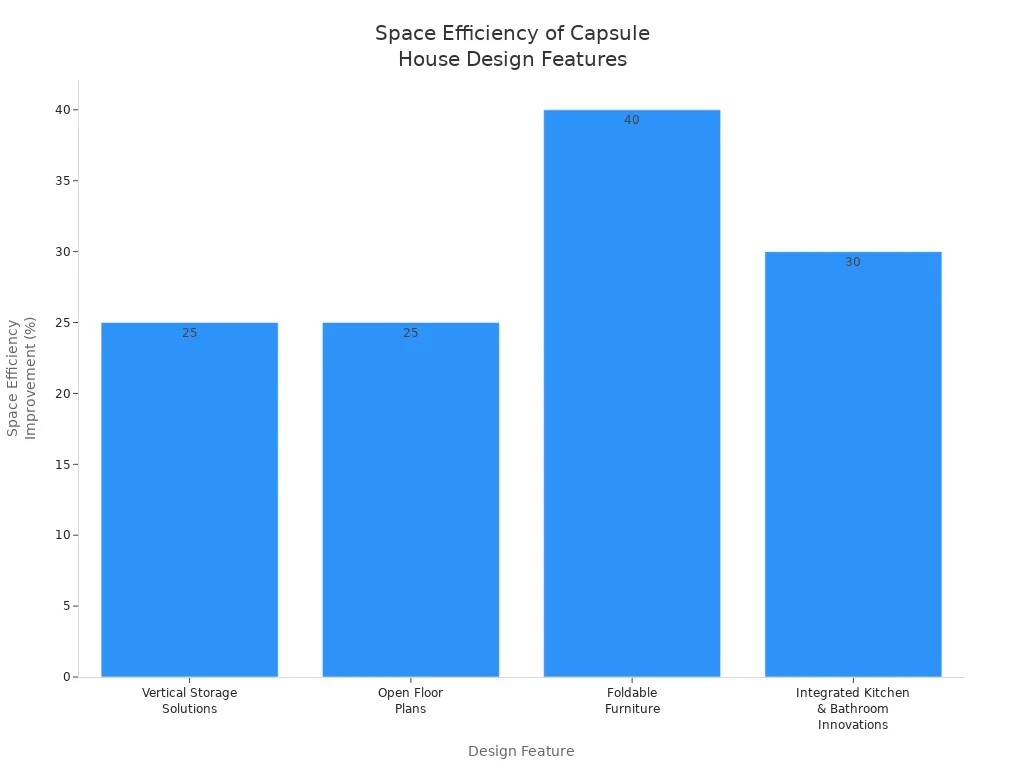
Modern capsule houses have nice things like built-in bathrooms and balconies. Some even have smart toilets, glass doors, and solar panels. These features make your home more comfortable and worth more money.
Energy Efficiency
Capsule houses in 2025 are built to save energy. They have thick walls and tight windows to keep heat in or out. Smart thermostats help control the temperature. These homes use much less energy than regular houses, about 65% less. Many have solar panels, LED lights, and appliances that do not use much power. Some even collect rainwater and track how much energy you use. These things help you pay less for bills and are good for the planet.
Feature | Impact on Long-Term Cost Savings |
|---|---|
Advanced Insulation | Cuts heating and cooling costs by keeping temperatures stable |
Energy Efficiency | |
Solar Panels | Reduces electricity bills and carbon footprint |
Smart Home Systems | Optimizes lighting and temperature, saving money |
Durable Materials | Lowers maintenance costs over time |
Tip: Energy-saving features help the earth and save you money each month.
Versatility
You can use a capsule house for many things. They work as homes, vacation rentals, offices, or small shops. You can add or move rooms if you need to. Many people use them for students, short stays, or business hotels. They are small and easy to move, so they are great for cities or faraway places.
Capsule houses work for both short and long-term living.
You can set up or move your house fast.
Smart tech and green features make them even better.
Lifespan
Capsule houses last a long time if you care for them. Many are made with strong metals like aviation-grade aluminum and galvanized steel. These can last over 50 years, which is longer than most tiny homes. You will not need to fix them often because the materials fight off bad weather and damage. Yearly repair costs stay low because of the strong design.
Note: If you take care of your capsule house, it can last for many years and is a good investment.
Buying & Investment
Choosing
When you pick a capsule house, think about a few things.
Smart features like solar glass and automatic curtains make life easier. Lighting controls help save energy and add comfort.
Strong materials and good insulation are important for your weather.
A smart layout and space-saving ideas help you use all your space.
Make sure you get a good warranty and help after you buy.
Modular construction lets you build fast and move your house if needed.
You can choose options like double-deck models or big windows to fit your style.
Plan for utility hookups and check if your land is right for the foundation.
Remember to save money for land, permits, delivery, and finishing.
Tip: Check your house carefully before moving in to avoid problems later.
Suppliers
There are many suppliers in the USA to pick from. Some sell fancy models, while others have cheaper or eco-friendly choices.
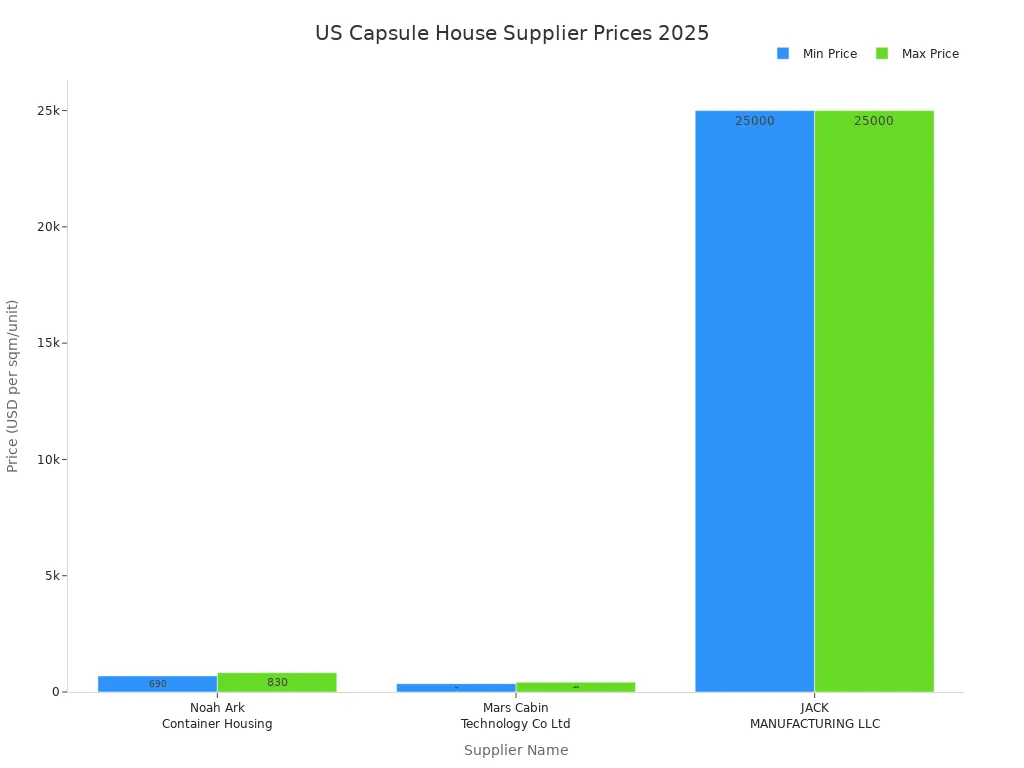
Noah Ark Container Housing sells luxury models for $690 to $830 per square meter. Mars Cabin Technology Co Ltd has mid-range prices from $360 to $420 per square meter. JACK MANUFACTURING LLC makes green, off-grid homes for about $25,000 each. Some Chinese companies like Shandong Suninn and Hebei Weizhengheng have lower prices. But many people like US suppliers for better features and support.
Supplier Name | Location | Price Range (per sqm or unit) | Key Features and Market Positioning |
|---|---|---|---|
Noah Ark Container Housing | USA | $690 – $830 per sqm | US-based, luxury capsule houses |
Mars Cabin Technology Co Ltd | USA | $360 – $420 per sqm | US presence, competitive pricing |
JACK MANUFACTURING LLC | USA | Around $25,000 per unit | US-based, sustainable off-grid capsule houses |
Shandong Suninn Intelligent Tech | China | $160 – $180 per sqm | Lowest cost, flexible ordering by sqm |
Hebei Weizhengheng Construction | China | $200 – $206 per sqm | Aggressive volume pricing, high repeat buyers |
Zhejiang Rongji Intelligent Mfg | China | $500 – $650 per sqm | Flexible ordering, high buyer repeat rate |
Legal
You need to follow the law before putting up a capsule house.
Follow safety rules and local building codes.
Use licensed workers for hooking up water and power.
Have your utilities and house checked by inspectors.
Some states, like Maryland and Washington, have extra rules for off-grid homes and need special plans.
Note: Rules are different in every city and state, so always ask local officials first.
Value
Capsule houses cost less to buy and take care of than regular homes. They are good for people with smaller budgets or who want to live green. But they do not sell for as much money later because most people still want bigger homes. It might be harder to sell your capsule house, but you save money and get more choices.
You now know the key facts about prices, features, and what affects your costs. Take time to compare options and think about your needs. Look at your budget and decide what matters most to you.
Remember: Research local rules and talk to trusted suppliers before you buy.
If you want more details, check guides from home builders or talk to experts in small homes.
FAQ
What is the average lifespan of a capsule house?
Most capsule houses last 25 to 50 years. You can make your home last longer with good care and regular maintenance. Strong materials like steel or aluminum help your house stand up to weather and daily use.
Can you live in a capsule house year-round?
Yes, you can live in a capsule house all year. Many models have insulation, heating, and cooling systems. You stay comfortable in both hot and cold weather.
Do you need a permit to install a capsule house?
You usually need a permit before you set up a capsule house. Local rules change by city and state. Always check with your local building office first.
How much does it cost to move a capsule house?
Moving a capsule house often costs $3,000 to $10,000. The price depends on the size of your house and how far you move it. You may need special trucks or cranes.
Are capsule houses safe during storms?
Capsule houses use strong materials and smart designs. Many models can handle heavy rain and strong winds. Always ask your supplier about safety features for your area.