

18 Jul Space Capsule House Pricing Factors and Ownership Insights
Table of Contents
You can buy a space capsule house for $3,000 or up to $50,000. The price depends on the type and what features it has. The table below shows how the price changes with size and use:
Room Type | Area Range | Main Usage | Reference Price (USD) |
|---|---|---|---|
Single Microcapsule | 5 – 8 sq m | Youth Hostel / Overnight Stay | $3,000 – $6,000 |
Basic Space Capsule | 10 – 15 sq m | Campsite / Resort B&B | $7,000 – $12,000 |
Standard with bathroom | 15 – 25 sq m | Family Camping / Long Stay | $12,000 – $20,000 |
Customized Deluxe | 25 sq m+ | Resort B&B / Commercial | $20,000 – $50,000+ |
You will notice that things like materials, moving the house, and getting the land ready change the final price. Many people who live in these houses pay less and do not have to fix things as much. People who invest in these houses often make good money and see lots of people want them.
Key Takeaways
Space capsule houses cost between $3,000 and $120,000. The price changes with size and features. You should also think about extra costs. These include land, permits, and utilities. Add these when you plan your budget for a capsule house. Capsule houses are fast to build. Most are ready in about a week. This makes them great for people who need a home fast. Energy-efficient designs use less power. They can cut your utility bills by up to 65%. This helps you save money over time. Capsule houses need less fixing than regular homes. This means you spend less on repairs and upkeep. You can change your capsule house to fit your needs. But making changes can make the price go up. Check your local zoning laws and building codes. This makes sure your capsule house is legal. Buying a capsule house can pay off in 2 to 8 years. This makes it a smart way to spend your money.
Space Capsule House Cost Overview
Capsule House Price Range
The price of a capsule house can be very different. It depends on what type, size, and features you want. Some capsule houses cost only $3,000. Others can cost $120,000 or even more. Most people pay between $30,000 and $85,000 for a regular capsule house. If you want a fancy or resort capsule, the price goes up.
Here is a table that shows the price levels and what they are best for:
Capsule Home Type | Approx. Price Range | Best Use Case |
|---|---|---|
Standard Capsule Home | $30,000 – $55,000 | Backyard units, budget rentals |
Mid-Range / Luxury Capsule | $55,000 – $85,000 | Vacation rentals, boutique stays |
Resort-Grade Capsule Home | $80,000 – $120,000+ | Resorts, eco-lodges, premium Airbnb |
You can also find smaller capsule houses for $3,000 to $12,000. People use these for youth hostels or simple overnight stays. Medium capsule houses cost about $40,000 to $80,000. They give you more space and comfort.
Tip: The final price can change based on where you buy your capsule house and what extras you pick.
Room Types and Sizes
Capsule houses come in many shapes and sizes. The kind and size you choose will change the price. You can get a small capsule for one person. You can also get a big capsule house for a family. Some have just a bed and bathroom. Others have living rooms and kitchens too.
Here is a table that shows how room types and sizes change the price:
Room Type/Size | Cost Range | Description |
|---|---|---|
Medium Capsule House | $40,000 – $80,000 | One-bedroom layout with separate living areas. |
Large Capsule House | $80,000 – $100,000 | More space for small families, with options for luxurious finishes. |
Customized Capsule House | Varies | Designed to your needs, allowing for unique layouts and features. |
You can get single microcapsules for short visits. Deluxe capsule houses are good for resorts. If you want more space and features, the price will be higher. Many people pick a medium capsule house because it is comfy and not too expensive.
Price Inclusions and Exclusions
When you look at the price, you should know what is included. Most capsule houses have strong materials, insulation, and basic things you need. For example, many use 22 mm double-layer Low-E glass. This glass lets in light but keeps the inside cool. You often get thermal insulation and a full bathroom too.
Some capsule houses use 20 mm load-bearing steel and round steel pipes. These make the house safe from wind and earthquakes. Many also have an aluminum shell with a special coating. This helps stop rust for up to 30 years.
You should check what is not in the main price. Many companies do not include shipping, customs fees, or special changes in the main price. Some capsule houses come with certifications like ISO 9001, CE, and SGS. These can help you save money on extra rules, especially if you use the house in the EU or Australia.
Note: Always ask the seller for a list of what comes with your capsule house and what costs extra. This helps you avoid surprises and plan your money better.
Capsule House Pricing Factors
Materials and Manufacturing
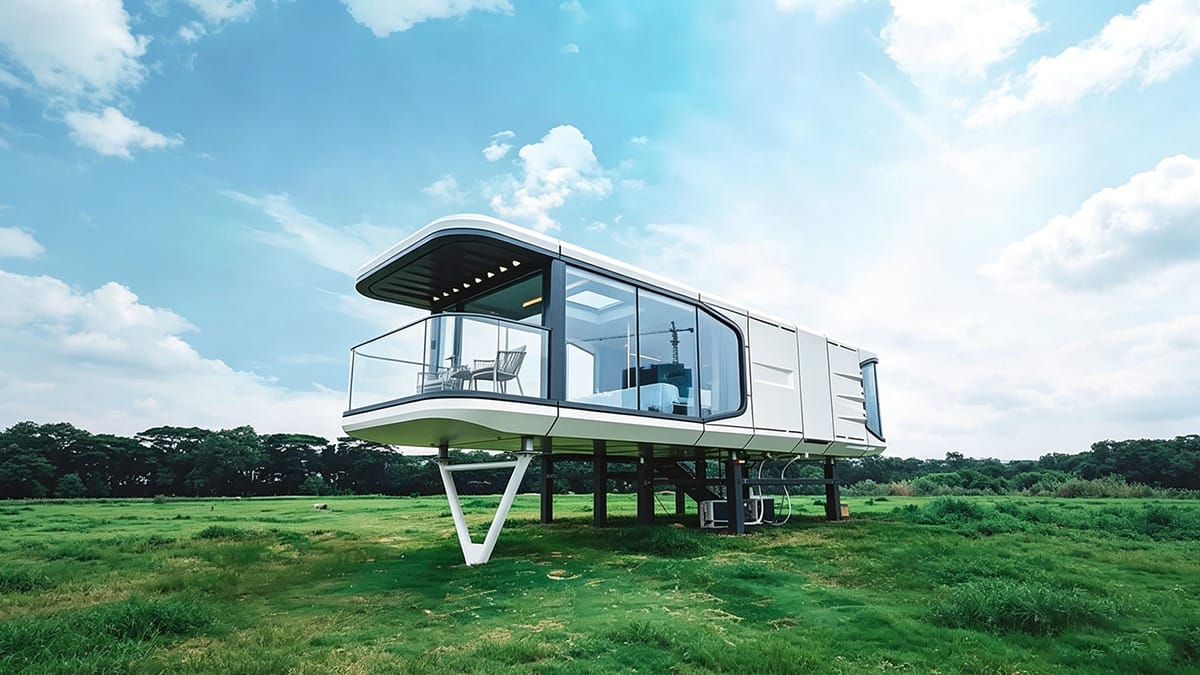
The materials you pick for your capsule house change the price and how long it lasts. Most capsule houses use three main materials: aluminum alloy, steel frame, and fiberglass shell. Each material has its own good points and changes the price in different ways.
Aluminum Alloy
Aluminum alloy makes the house light and simple to move. It does not rust, so rain or snow will not hurt it. You will not need to fix it much. Aluminum alloy keeps the house strong but does not make it too expensive.
Steel Frame
Steel frames make the house strong and safe. They last a long time and protect you well. Steel costs more at first, but you save money later because you do not fix it often. Steel frames help the house stay safe in wind and earthquakes.
Fiberglass Shell
Fiberglass shells are easy to clean. They last a long time and do not break easily. Fiberglass keeps your house looking nice. It also helps you spend less on repairs.
Here is a table that shows how each material changes your capsule house:
Material | Durability | Cost Impact |
|---|---|---|
Steel | High | Strong and lasts long, costs more at first but saves money later. |
Aluminum | Moderate | Light and does not rust, so you pay less to keep it nice. |
Fiberglass | High | Lasts long and is easy to clean, so you pay less for repairs. |
Composite Panels | High | Keeps heat in and is strong, may cost more at first but saves energy. |
Polyurethane Foam | High | Keeps the house warm or cool, so you save money on energy. |
Configuration and Customization
You can pick from different capsule house versions. Each version changes what you get and how much you pay.
Basic Version
The basic version gives you lights, doors, windows, and a power plug. This is the cheapest choice. You get what you need for a simple stay.
Medium Version
The medium version is more comfy. You get your own bathroom, air conditioning, and a small kitchen. This version costs about $2,000 to $5,000 more than the basic one.
High-End Version
The high-end version is fancy. You get floor heating, smart locks, solar panels, and voice controls. This version adds $5,000 to $15,000 to the price.
Here is a table that shows how much each version costs:
Configuration Type | Functional Examples | Increased Cost (Estimated) |
|---|---|---|
Basic Version | Lights, doors, windows, power plug | Included in the basic price |
Medium Version | Bathroom, air conditioning, small kitchen | Extra $2,000 – $5,000 |
High-End Version | Floor heating, smart locks, solar power, voice control | Extra $5,000 – $15,000 |
The price between a basic and a high-end capsule house can be very different. If you want a full living system, you may pay 1.5 to 3 times more than just a simple shell.
Customization Impact
You can also make your capsule house special. If you want better materials or a cool design, the price goes up. Adding extra rooms or special things will cost more. Here is a table that shows how custom choices change the price:
Factor | Impact on Cost |
|---|---|
High-quality materials | 30-40% of custom costs |
Design efforts | Can add 50% to the base price |
Note: If you want bedrooms, bathrooms, or kitchens that are separate, you will pay more than for a simple open room.
Transportation and Installation
Getting your capsule house to your land and setting it up also changes the price. Shipping costs depend on where you live.
Shipping Costs
Shipping a capsule house can be expensive, especially if you live far away. Here is a chart that shows the average shipping costs for different places:
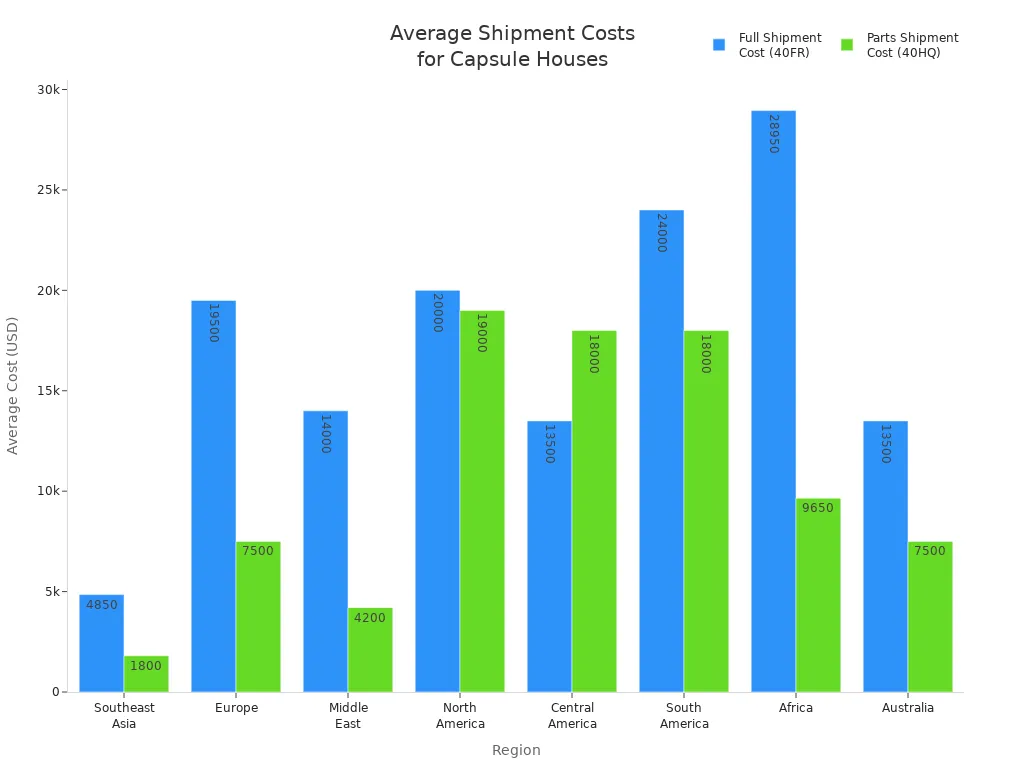
If you live in Europe, Africa, or South America, you will pay more. Shipping to Southeast Asia or Australia costs less. The price also changes if you ship the whole house or just the parts.
Foundation Construction
You need a strong base for your capsule house. The cost depends on your land and how hard it is to build. If your land is flat, it costs less. If you build on a hill or in a forest, it costs more. You might need special machines like cranes to put your house in place.
Tip: Always ask about shipping and setup costs before you buy. This helps you plan your money and avoid surprises.
Additional Capsule House Costs
When you buy a capsule house, you need to think about more than just the price tag. Many buyers forget about extra costs that come after the purchase. These costs can change how much you spend over time. Let’s look at the main extra costs you should expect.
Land and Permits
You cannot place a capsule house just anywhere. You need land for your capsule. Some people already own land, but many need to buy or rent it. The price of land changes a lot depending on where you want to put your capsule house. Land in the city costs more than land in the country. You also need to check local rules. Many places require permits before you set up your capsule. Permits can cost a few hundred to several thousand dollars. Some areas have strict zoning laws. You may need to pay for surveys or inspections. Always ask your local office about what you need before you buy a capsule house.
Utilities and Systems
A capsule house needs power, water, and sometimes gas. You may need to connect your capsule to city systems. This can cost a lot if your land is far from the main lines. Some people use solar panels or water tanks for their capsule. These systems cost more at first but can save money later. You also need to pay for monthly bills. Electricity, water, and internet all add to your costs. If you want your capsule to work off-grid, you may need batteries or special filters. These add to the price of your house.
Furnishings and Appliances
Most capsule houses come empty or with only basic items. You need to buy beds, chairs, and tables for your capsule. You may also want a fridge, stove, or washing machine. The cost of these items depends on what you choose. Some people pick simple furniture to save money. Others want their capsule house to feel like a home and buy more things. You may also need curtains, lights, or storage boxes. These small items add up over time.
Tip: Make a list of everything you want in your capsule house. Add up the prices before you buy. This helps you plan your budget and avoid surprises.
Other costs can come up after you move in. You will pay for ongoing maintenance to keep your capsule in good shape. Utility bills will come every month. Sometimes, you may need to change your lifestyle to fit the space. This can mean buying smaller items or using less power. Planning for these costs helps you enjoy your capsule house without stress.
Capsule House Advantages
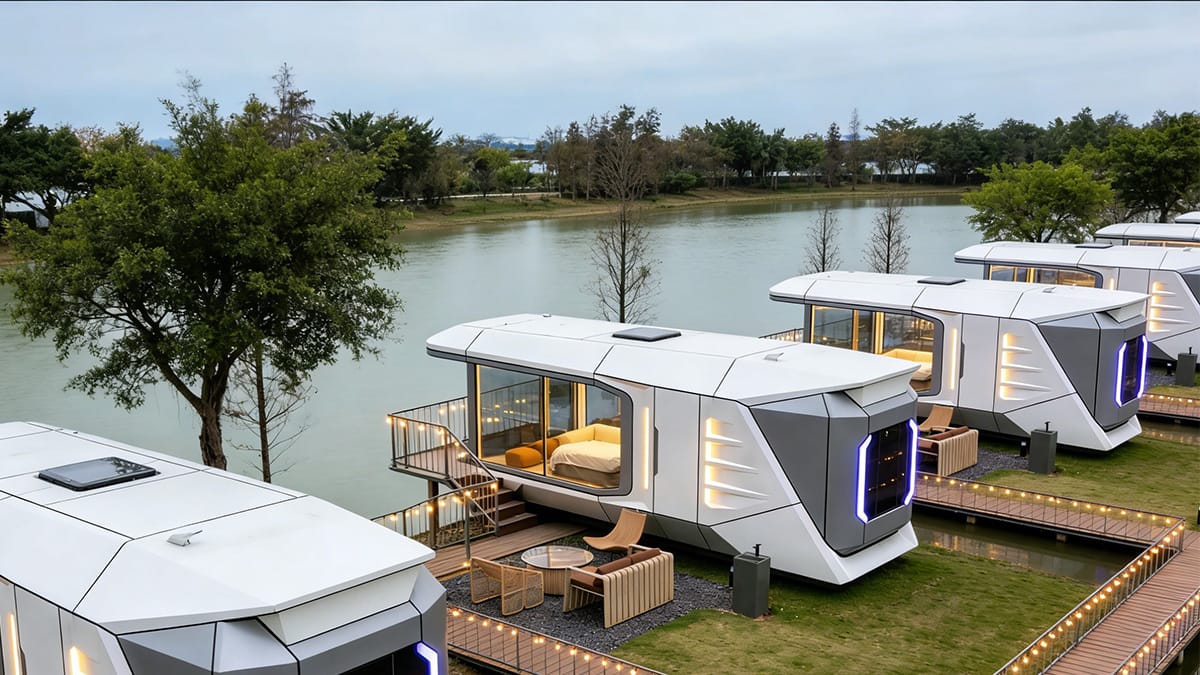
Rapid Deployment
Capsule houses are much faster to set up than regular homes. Most arrive ready to use or need only a few days to build. You do not have to wait months for construction. Many people can move in within one week. Even the biggest capsule house takes less than a month to install. This fast setup helps if you need a home quickly for work, travel, or emergencies.
Here is a table showing how long different homes take to build:
Housing Type | Construction Time |
|---|---|
Space Capsule Homes | |
Traditional Homes | 6–18 months |
You save time and skip the stress of long building projects. This is a main reason people pick capsule houses.
Energy Efficiency
Capsule houses use smart designs and technology to save energy. Many have special insulation that keeps them warm in winter and cool in summer. This can lower your energy bills by up to 65%. The shape of the capsule helps use less power for heating and cooling. You spend less money and help the planet.
Capsule houses often have solar panels, smart home systems, and climate control. These features help you use energy only when you need it. Many capsule houses use materials that are safe for the environment. Some models even reach net-zero energy use.
Here are some common energy-saving features:
Feature | Description |
|---|---|
Advanced Insulation | Cuts energy use by up to 65%. |
Aerodynamic Design | Needs less heating and cooling. |
Modular Construction | Uses less energy to build. |
Carbon Emission Reduction | Lowers emissions by up to 72%. |
Solar Integration | Helps reach net-zero energy. |
Sustainable Materials | Uses parts that can be recycled and are eco-friendly. |
Smart Home Technologies | Controls energy use for comfort and savings. |
Climate Control Systems | Cuts heating and cooling costs by 20-30%. |
You get a modern house that saves energy and is good for the environment. Capsule houses are a smart choice for people who care about eco-friendly living.
Space Utilization
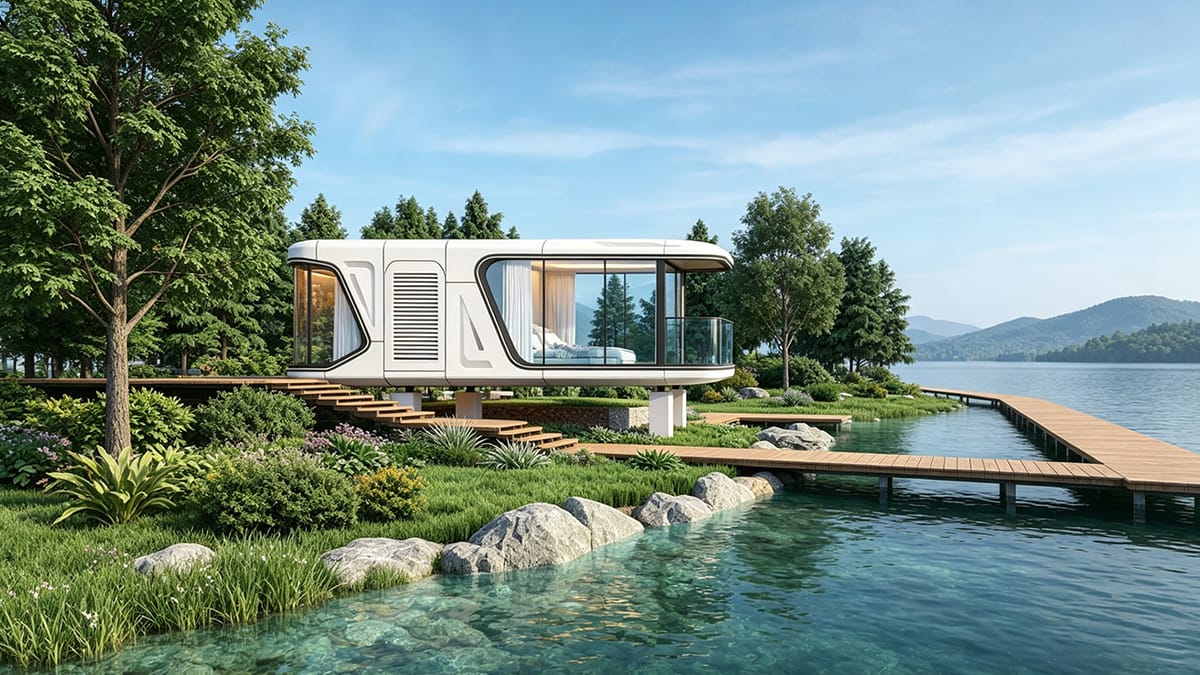
Capsule houses use space in a smart way. You get an open layout that feels bigger than it is. Most capsule houses have modular designs. You can move walls or add sections to fit your needs. Many use furniture that does more than one job, like beds with storage or tables that fold away.
Here is a table comparing capsule houses to regular homes:
Aspect | Capsule Tiny House | Traditional Home |
|---|---|---|
Average Size | Under 400 sq ft | Over 1,000 sq ft |
Layout | Modular, open, space-saving | Separate rooms, fixed foundation |
Features | Eco-friendly, portable, minimalist | More privacy, storage, and amenities |
Capsule houses make small spaces comfy and useful.
You often find smart storage and flexible layouts.
The portable design lets you move your house if you want a new view.
You get a house that fits your life and helps you live with less clutter. The modern look and eco-friendly features make capsule houses special compared to other small homes.
Design Appeal
A capsule house looks very different from normal homes. Its round shape and smooth sides make it look modern and cool. People like capsule houses because they do not look like regular houses. You can put a capsule house in a city, forest, or by the beach. It will always get attention because of its special look.
Capsule houses use smart ideas to look nice to buyers and renters. Here is a table that shows what makes the design special:
Design Element | Description |
|---|---|
Sustainability | Capsule houses use eco-friendly materials and energy-saving features. This helps the environment. |
Minimalism | The compact size supports a simple lifestyle. You focus on what you need and enjoy less clutter. |
Affordability | These houses cost less than traditional homes. Many first-time buyers find them easier to own. |
Space Optimization | The design uses every inch of space. This works well in cities or places with little land. |
Capsule houses often have big windows and bright colors. These let in lots of light and make rooms feel bigger. You can pick different colors or finishes to match what you like. Many capsule houses use recycled materials, so they are good for the planet.
Here are some reasons people like how capsule houses look:
You get a stylish home that is easy to spot.
The simple design helps you live with less stuff.
Smart layouts make small spaces feel open and bright.
Eco-friendly materials and energy-saving systems help the earth.
A capsule house gives you a modern way to live. It looks good and works well in many places.
Lower Maintenance Cost
You will spend less money fixing a capsule house. The materials are strong and last a long time. Most capsule houses use steel, aluminum, or fiberglass. These do not rust or break easily. You do not need to paint or fix the outside as much as a regular house.
Let’s look at the average yearly maintenance costs:
Type of Home | Average Annual Maintenance Cost |
|---|---|
Space Capsule House | |
Traditional Home | $2,000–$5,000+ |
Capsule houses cost much less to take care of each year. The simple design means there are fewer things to break. You will not spend much time or money fixing leaks or cleaning. Many capsule houses have surfaces that are easy to clean. Some even have smart systems that tell you if something is wrong.
Here are ways a capsule house helps you save money on repairs:
Strong materials do not get damaged easily.
Fewer moving parts means fewer things break.
Modern systems help you find problems early.
Small size makes cleaning quick and simple.
Picking a capsule house means you have more time for fun and less time fixing things. You get a modern home that does not cost much to keep nice. This makes it a smart choice for many people.
Space Capsule House Scenarios
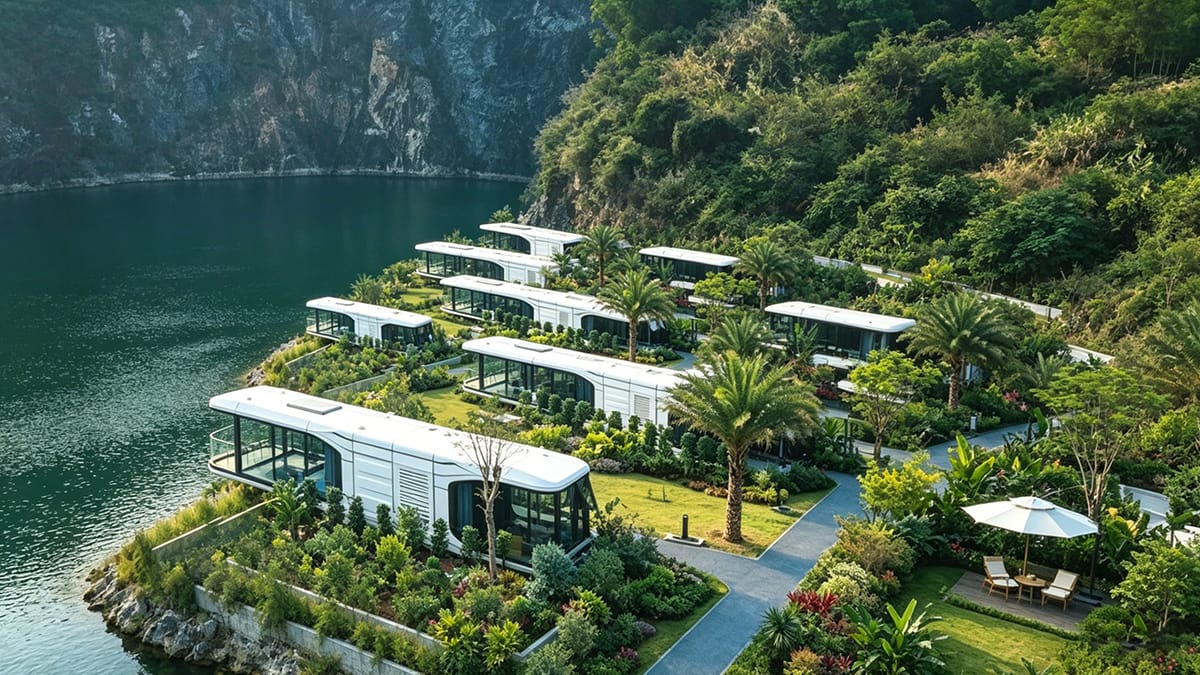
Campsites and Glamping
A space capsule house can make any campsite better. These houses are simple to set up and move. You can put them in the woods, by a lake, or on a mountain. Campsites use them to give guests a special place to stay. Some owners use them for staff to sleep in or as offices for workers.
Here is a table that shows how people use space capsule houses at campsites and glamping spots:
Use Case | Description |
|---|---|
Campground Upgrades | Modern places for guests to sleep |
Quick-Start Projects | Fast to set up for new camping ideas |
Staff Dormitories | Nice rooms for people who work at the campsite |
Mobile Offices | Workspaces you can move to different places |
Unique Lodging Options | Special places for guests to stay |
Eco-Friendly Accommodations | Good for people who care about nature |
Temporary Housing Solutions | Easy and quick homes for short stays |
You can get more guests who want something new, not just a tent or RV. Many people want to stay in places that are good for the earth and look cool. A space capsule house gives you both things. You can also rent these houses for short times when lots of people visit, so you make more money.
Scenic B&Bs
A space capsule house is great for bed and breakfasts in pretty places. You can put these houses by the beach, in the forest, or on a mountain. The big windows let guests see beautiful views. People like the cool shape and often post pictures online. This helps your B&B get noticed and brings more visitors.
You can make the inside feel fancy, like a small hotel. These houses are quick to build, so you can start having guests sooner. Resorts and B&Bs use them to add more rooms without building big buildings. You can get young travelers who want fun and new places to stay. More people want to try special stays, and bookings go up every year.
Tip: If you want more guests and money, adding a space capsule house can help your rental business grow.
Mobile Offices
A space capsule house can be used as a moving office. You can make a private workspace almost anywhere you want. These houses turn empty outdoor spots into quiet places to work. The walls keep out noise, so you can pay attention to your job. You can enjoy nature while you work, which makes the day nicer.
Lots of people use space capsule houses for working from far away or for art projects. You can move your office if you want a new view. The energy-saving parts help you spend less money while you work. You can use these houses for meetings, classes, or even as a studio. This makes a space capsule house a smart pick for people who want a flexible place to live and work.
Emergency Housing
Space capsule houses can help people after disasters. If a storm, flood, or earthquake destroys homes, these houses give shelter fast. The modular design means you get a safe place quickly. You do not have to wait a long time for help.
Here are reasons why capsule houses are good in emergencies:
You can move and build these houses very fast.
The steel frames keep people safe in bad weather.
You can move the houses if you need to.
The design helps keep things clean and stops sickness from spreading.
The table shows how capsule houses help during emergencies:
Feature/Advantage | Description |
|---|---|
You can send and set up houses at disaster sites right away. | |
Durability | Steel frames protect you from strong winds and storms. |
Cost-effectiveness | You save money by using resources wisely during emergencies. |
Hygiene and Disease Mitigation | The design helps keep the area clean and lowers the risk of illness. |
Climate Resilience | Capsule houses stand up to hurricanes and tornadoes, keeping you safe in tough conditions. |
You can count on these houses to keep you safe when you need it most.
Eco-Resorts
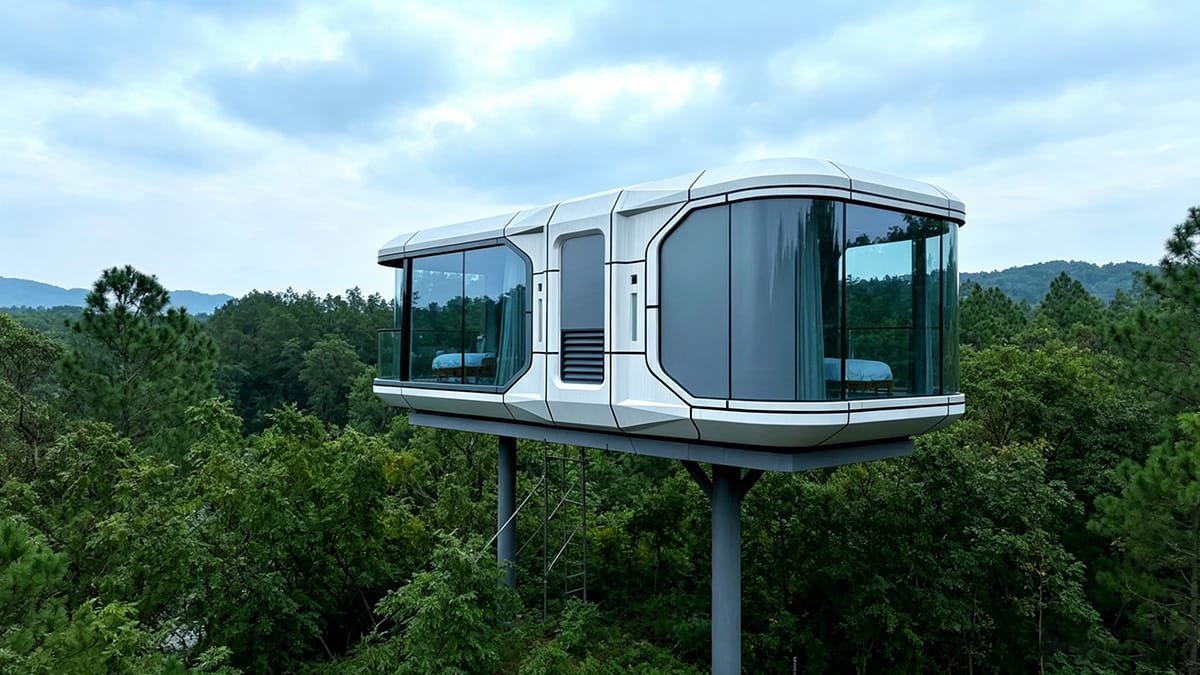
Eco-resorts use space capsule houses to give guests a cool and green place to stay. People who care about the earth like these homes. They use smart tech to save energy and money. You can add solar panels and climate systems to make them even better for the planet.
Here is how capsule houses help eco-resorts:
Guests get a special stay that feels modern and close to nature.
You spend less money to build and run the resort.
You can change the layout or add more houses as your business grows.
You use less energy and water, which helps the environment.
You meet the needs of eco-friendly travelers and make more money.
You can use capsule houses for short or long stays. Many eco-resorts pick these homes because they work in many ways and help the resort stand out.
Youth Apartments
Space capsule houses are great for youth apartments in busy cities. You get a small, private space that uses every inch well. Each pod is like a tiny apartment with a bed, desk, and storage. You have your own space but can also share kitchens or lounges with others.
The table shows why capsule houses are good for youth apartments:
Feature | Description |
|---|---|
Efficiency | You get a single-occupancy unit that fits city life. |
Modularity | Each pod gives you a place to sleep, work, and store your things. |
Community Spaces | You can use shared kitchens and lounges to meet friends and save money. |
Smart Technology Integration | You control locks and lights with your phone, which is great for tech-savvy youth. |
Inside, you will find smart furniture. Beds fold up, tables can be put away, and storage is hidden in small spaces. You can live well in a small home and still have space for friends and fun.
Off-Grid Living
You can use a space capsule house if you want to live away from city systems. This is good for people who want to be independent. You might pick this for a holiday cabin or a glamping site. Some people use it as a research station in nature. The small and light design makes it easy to move. You can set up your home almost anywhere.
Space capsule houses have smart features to keep you safe and comfy. Solar panels make electricity from sunlight. Some houses have wind turbines for extra power. Battery storage lets you save energy for cloudy days. Rainwater harvesting systems help you collect water. Composting toilets help you manage waste in an eco-friendly way.
Here is a table showing the main features in an off-grid capsule house:
Feature | Description |
|---|---|
Integrated Smart Systems | Automates climate control, lighting, and security through AI-driven management. |
Energy Recovery Ventilation | Captures and reuses 85% of thermal energy, enhancing energy efficiency. |
Insulation | Vacuum-insulated panels achieve R-values of R-50 per inch, surpassing conventional insulation. |
Solar Arrays | Typically integrate 3–5 kW solar arrays for off-grid energy generation. |
Battery Storage | Lithium-titanate batteries enable 72+ hours of off-grid operation. |
Water Recycling Systems | Processes 95% of greywater, promoting sustainable water management. |
These features help you live well without city utilities. Insulation keeps your home warm in winter and cool in summer. Smart systems let you control lights and temperature with your phone. Water recycling systems clean and reuse most of your water.
You get a home that is easy to move and set up.
Solar panels and batteries give you your own energy.
Rainwater harvesting and composting toilets help you live green.
Tip: If you want to try living off-grid, a space capsule house gives you what you need. You can enjoy nature, save money, and help the planet.
Space capsule houses work in many places, but off-grid living is special for people who want freedom. You can build your home in mountains, forests, or deserts. You control your energy, water, and waste. This makes off-grid living fun for families, couples, or solo adventurers.
Capsule House Ownership Considerations
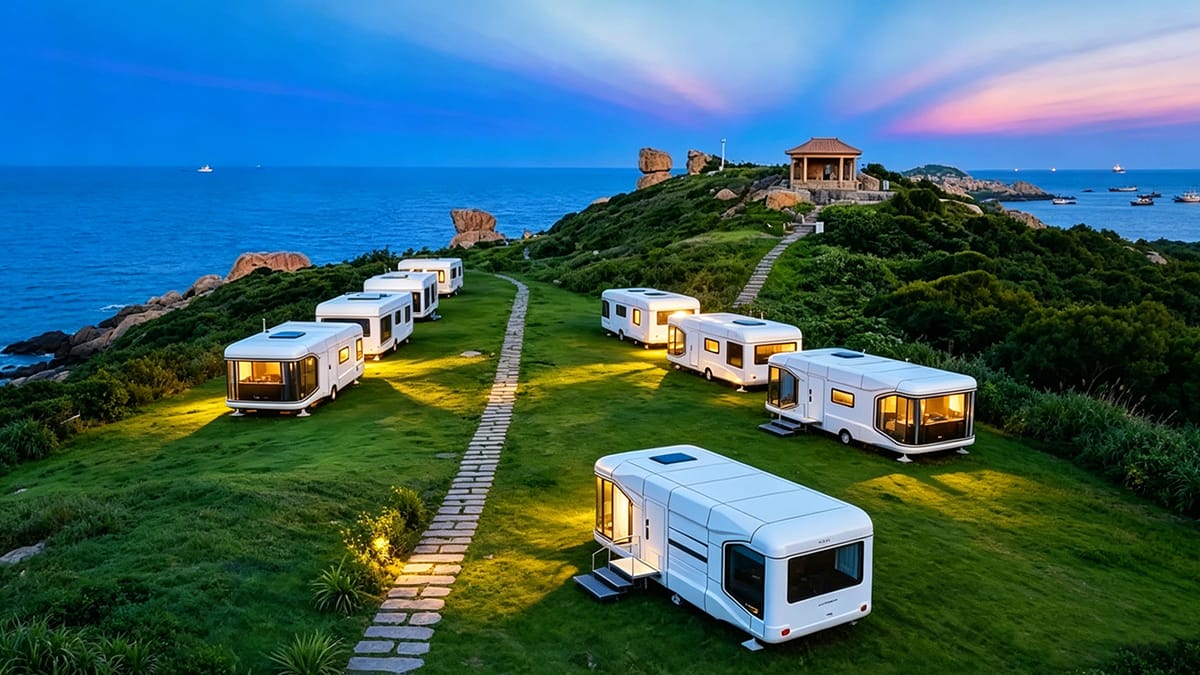
Shopping Advice
When you buy a capsule house, you need to plan well. This helps you have a good experience and keep costs low. Here are the main things to think about:
Manufacturing Timeline: Most capsule houses take 4 to 6 weeks to build. Ask the seller how long yours will take.
Shipping: After your house is built, shipping takes 2 to 5 weeks. The price depends on how far your house must go.
Site Preparation: You need to get your land ready. This means getting permits and making sure utilities are set up.
Pickup, Transportation, and Placement: Plan how your house will get to your land. Make sure the road is clear so there are no delays or extra costs.
Installation: Connect water, power, and finish any extra work. Make sure your capsule house is ready to live in.
Tip: Always ask for a full quote. Check what is included and what costs extra. This helps you avoid surprises and plan your money.
Legal and Zoning
You must follow local rules when you put up a capsule house. Zoning rules decide how you can use your land. Some places do not allow capsule houses or have strict rules. Building codes set safety standards. You need to meet these for fire and strength.
Zoning rules may not let you have capsule houses.
Building codes cover safety and how houses are built.
Always check local rules before you buy a capsule house.
You must send plans, pay fees, and pass inspections.
Permits are needed for electric and plumbing work.
Talk to local offices or legal experts to learn the rules.
Some places want houses to be a certain size. Capsule houses may be too small.
Getting permits can be hard in cities with strict rules.
Safety rules change by place. You may need extra tests.
Note: Legal and zoning rules can change your cost and timeline. Make sure you know all the rules before you start.
Insurance and Financing
You need to protect your capsule house and plan your money. Insurance pays for damage from storms, fire, or theft. Some companies have special insurance for capsule houses. Compare plans and pick one that fits you.
Banks may give loans for capsule houses. You need to show you own the house and follow their rules. Some banks do not give loans for unusual houses, so check first. The price of insurance and loans changes by where you live, how much your house costs, and how you use it.
Tip: Ask your insurance agent about coverage for capsule houses. Check with banks about loan choices. Planning ahead helps you manage your money and protect your house.
Maintenance and Durability
You want your home to last a long time and be easy to care for. Space capsule houses use strong materials like steel, aluminum, and fiberglass. These materials help protect your house from wind, rain, and snow. You do not need to worry about rust or cracks. The design helps your house stay nice for many years.
Capsule houses are different because they need less fixing than regular modular homes. You can move your capsule house many times and it will not break. Some people move their houses over 50 times, and they still stay strong. You spend less money and time fixing things. Experts say this saves you money and helps the environment.
Here is a table that shows how space capsule houses and traditional modular homes compare:
Feature | Space Capsule Houses | Traditional Modular Homes |
|---|---|---|
Relocation Resilience | Maintains integrity after over 50 relocations | Suffers damage and structural degradation |
Maintenance Requirements | Requires more frequent and costly repairs |
Capsule houses give you more good things:
You do not have to fix things a lot.
The design makes cleaning and care easy.
You help the earth by using fewer resources.
You save money over 20 years.
Capsule houses use smart ideas to make maintenance simple. You can clean the surfaces quickly. You do not need to paint or change parts often. The house stays strong and looks nice for a long time.
Tip: If you want a home that lasts and is easy to care for, a space capsule house is a smart pick.
Resale Value
You might want to sell your capsule house later. The price you get depends on many things. Where your house is matters most. If your house is close to parks, stores, or buses, you can get up to 20% more money. The way your house is built and how big it is also help. Smart layouts and bright rooms can raise the price by about 15%.
The market can change the value too. When home prices go up, your capsule house can be worth more. In 2021, prices went up by 5.6%. Things like solar panels, energy-saving appliances, and smart home systems add value. These can make your price go up by up to 4%.
Here are the main things that change resale value:
Where your house is and what is nearby
Smart design and good lighting
Market changes and what people want
Eco-friendly features and technology
You can make your capsule house worth more by adding smart systems and keeping it nice. Buyers want homes that save energy and feel comfy. You get a better price if your house stands out and fits what people want today.
Note: Keep your capsule house clean and up to date. This helps you get the best price when you want to sell.
Capsule House Investment Potential
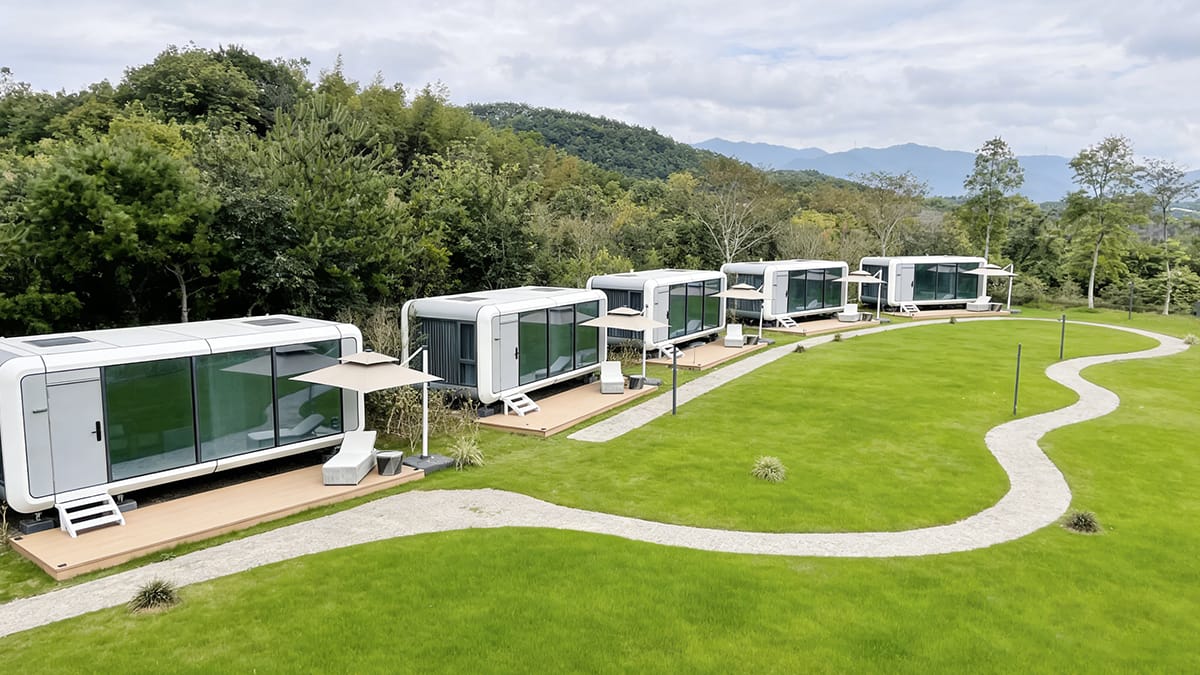
Payback Period
You want to know how fast you get your money back. The payback period shows how long it takes to earn back what you spent. You do this by renting out or using your capsule house for business. Most capsule hotels reach this point in about 27 months. This means you can start making money in just over two years if you keep your rooms full. For example, a capsule hotel that costs $735,000 needs about 78% of its rooms filled to cover costs and reach this payback time. You can use this as a guide when you plan your own project.
Most capsule house investments pay off in 2–3 years if you have lots of bookings.
Keeping your rooms full helps you make your money back faster.
You can change your prices and ads to help your payback period.
Tip: Write down your bookings and costs every month. This helps you know when you will break even and start making money.
Cost-Effectiveness
You want your capsule house to be a good deal for your money. The starting price may be higher than a tiny house or a simple container home. But you get more in the long run. Capsule houses save energy and need fewer repairs. You spend less on heating, cooling, and fixing things. Over time, you save real money.
Many owners find their capsule house costs 40–50% less to run than a regular home. You pay less for bills, repairs, and even property taxes. These savings add up and make your investment better. Most people see a return in 5–8 years because of these lower costs. This makes capsule houses a smart choice for people who want long-term value.
You can see the benefits in this table:
Feature | Capsule House | Traditional Home |
|---|---|---|
Utility Bills | Much lower | Higher |
Maintenance | Minimal | Frequent |
Property Taxes | Reduced | Standard |
Payback Period | 2–8 years | 15+ years |
You get more value from your capsule house because you save money every year. The smart design and energy savings make it a top choice for small homes.
ESG Appeal
You care about the earth and want your investment to match your values. Capsule houses are great for the environment and eco-friendly living. The design uses recycled materials and strong insulation. This means you use less energy and make less waste. Many capsule houses have solar panels and water-saving systems. These features help you lower your impact on the planet.
Capsule houses support green building. You help the earth by picking a house that uses fewer resources. The small size means you need less land and make less pollution. Many people want homes that are good for the planet. This makes your capsule house worth more over time.
You also help people and communities. Capsule houses can give affordable homes in cities and country areas. You help build better places to live by offering smart, green homes.
Note: Picking a capsule house shows you care about the earth, health, and your community. You make a difference with your investment.
Community Value
When you pick a space capsule house, you help your community. These homes do more than just give you a place to live. They open up new chances for people nearby. Capsule houses can help local shops, give cheaper places to live, and make neighborhoods stronger.
Capsule houses are good for many kinds of people. You can put a few together for students, workers, or families. This helps people find safe and cozy places to stay. It also lets people live closer to work or school. Adding capsule houses to your area can cut down on long drives and traffic.
Many towns need homes that can change as needed. Capsule houses can help with this problem. You can use them for short-term shelters, guest rooms, or even small shops. This gives your town more choices and helps during busy times or emergencies.
Here is a table showing how capsule houses help your community:
Community Benefit | Description |
|---|---|
Affordable Housing | Gives more people a chance to own or rent |
Local Business Support | Brings new customers to shops and services |
Emergency Shelter | Offers quick help during disasters |
Flexible Spaces | Adapts to changing needs and events |
Social Connection | Creates shared spaces for neighbors |
Capsule houses can help people get to know each other. Shared gardens, kitchens, or lounges let neighbors meet and become friends. This makes your area feel friendly and fun.
Tip: If you want to help your community, think about adding capsule houses for group living or shared spaces.
Capsule houses are also good for the earth. They use less land and fewer resources. This keeps your neighborhood greener and healthier. You show others that smart design can help everyone.
When you invest in capsule houses, you get more than just money back. You help your town grow and get stronger. You give people homes and help local shops. You help build a future where everyone can live well and work together.
You now know the main reasons why a capsule house can be a smart choice. You save money, enjoy a modern design, and see a strong return on your investment. You also get a home that is easy to care for and fits many needs.
Review your goals and budget.
Compare features and locations.
Ask questions before you buy.
Tip: Take your time to research and talk to experts. This helps you make the best decision for your future.
FAQ
How much does a space capsule house cost?
You can buy a basic capsule house for $3,000. A luxury model can cost up to $120,000. The price depends on size, materials, and features. Always ask for a full quote before you buy.
Can you move a capsule house to a new location?
Yes, you can move most capsule houses. The lightweight design makes relocation easy. You need a truck or crane for transport. Always check local rules before moving your house.
What maintenance does a capsule house need?
You need to clean surfaces and check seals. Most capsule houses use strong materials like steel or fiberglass. You spend less on repairs compared to traditional homes. Regular checks keep your house in good shape.
Do you need a permit for a capsule house?
You usually need a permit. Local zoning and building codes decide what you can build. Always contact your city or county office before you set up your capsule house.
Can you live in a capsule house year-round?
Yes, you can live in a capsule house all year. Good insulation and climate control keep you comfortable in most weather. You may need extra heating or cooling in extreme climates.
What utilities can you use in a capsule house?
You can connect to city water, power, and internet. Many capsule houses also support solar panels, rainwater tanks, and off-grid systems. You choose what works best for your location.
Is a capsule house a good investment?
A capsule house can be a smart investment. You save money on energy and repairs. You can rent it out or use it for business. Many owners see a return in 2–8 years.