

13 Apr Comparing Modular Capsule House Models and Their Key Features
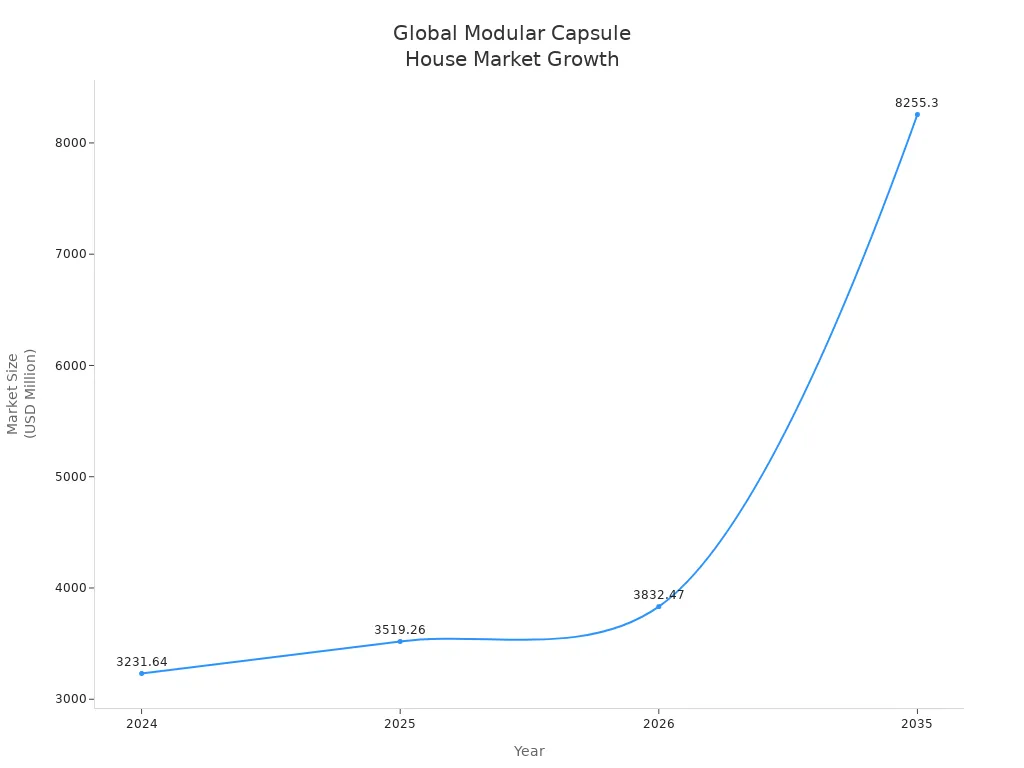
You might hear more people talk about modular capsule house choices now. The market is getting bigger very quickly. This happens most in cities where cheap small homes are important. Look at the chart below to see how the global modular capsule house market is growing:
When you compare models like the Slead CV-9 modular capsule house and Rovellc CV-36 capsule house, you should check specs, price, and design. These things help you pick what works best for you. Customization choices, smart features, and strong materials also matter a lot.
Key Takeaways
Modular capsule houses are becoming more popular. This is true in cities where people need cheaper homes.
When you pick a model, look at important things. These include size, price, ways to change it, and how much energy it saves. This helps you choose what works best for you.
Strong materials and good insulation are very important. They make your home last longer and save energy. These things help your house handle different weather.
Customization lets you change your modular house for your life. It makes your home more comfortable and useful. You can add smart technology and special layouts.
You need to know about prices and any hidden costs. This helps you not get surprised. It also helps you get the most for your money.
Modular Capsule House Model Overview
Rovellc-V306 Series
If you want a simple and smart living space, you might like the Rovellc-V306 series. This modular capsule house gives you a cozy area of about 21.5 square meters. You get one bedroom, one living room, and one bathroom. The size is 6.5 meters long, 3.3 meters wide, and 3.35 meters high. It weighs about 4.5 tons, so it feels sturdy. You can see the main details in the table below:
Feature | Details |
|---|---|
Model | V306 Prefab House |
Area | 21.5 ㎡ |
Size | 6.5 × 3.3 × 3.35 m (L×W×H) |
Gross Weight | 4.5 tons |
Layout | 1 bedroom, 1 living, 1 bath |
Slead-CV9 Series
The Slead-CV9 series stands out if you want more flexibility. These modular capsule house models often come with options for stacking or joining units. You can use them for a single person or a small family. The Slead-CV9 usually offers a bit more space and lets you pick different layouts. Many people like this series for its modern look and easy setup.
Other Models
You can find other models that fit special needs. Some modular capsule house designs focus on luxury or extra space. Others work well for offices or pop-up shops. You might see custom models that let you choose the inside layout, colors, and even smart home features.
Size and Price Range
You have lots of choices when it comes to size and price. Stackable modular capsule house models usually cost between $30,000 and $80,000. If you want a custom design, prices range from $60,000 to $130,000. Bigger modular homes can go up to $200,000. You can pick what fits your budget and space needs.
Key Features and Specifications
Materials and Construction
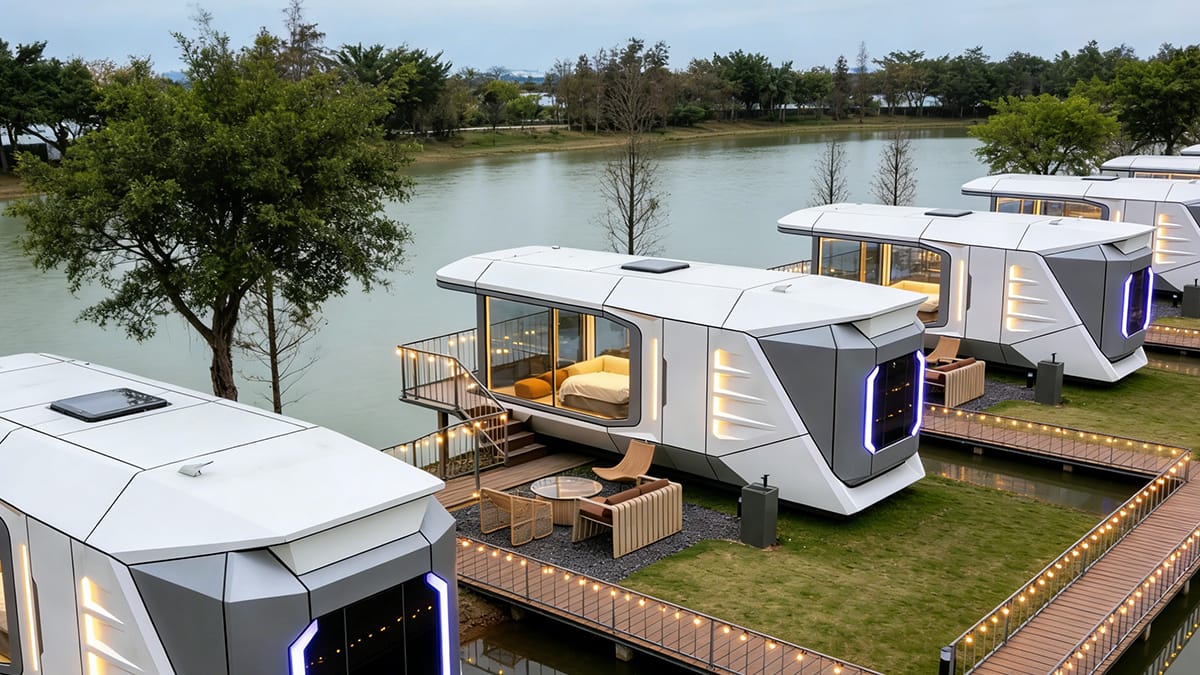
You want your modular capsule house to last a long time. The materials used in these homes are very important. Builders use concrete for a strong base and fire safety. Metal frames make the house sturdy and easy to build fast. Wood makes the house feel warm and helps keep heat inside. Eco-friendly materials, like bamboo and recycled things, help the planet. Glass gives the house a modern style and helps keep it warm or cool. Insulation materials keep the inside comfy and save energy.
Here’s a quick look at the most common materials and how they affect durability:
Material | Impact on Durability |
|---|---|
Concrete | Provides a solid foundation, fire resistance, and sound insulation; ideal for structural integrity. |
Insulation Materials | Ensures energy efficiency and comfort, reducing heating/cooling costs; critical for small volume homes. |
Glass | Enhances aesthetics and thermal performance; strategic placement can improve energy efficiency. |
Eco-Friendly Materials | Reduces environmental impact and supports sustainability; includes bamboo and recycled materials. |
Wood | Lightweight, excellent thermal insulation, and contributes to a warm atmosphere; supports eco-practices. |
Metal | Offers strength and durability; essential for structural integrity and rapid assembly in modular designs. |
Builders use smart ideas when picking materials. They choose things that are strong, light, and easy to move. Many modular capsule house models use recycled steel and insulation that breaks down naturally. These choices help lower pollution and make the house use less energy. Some homes use special materials like carbon fiber and insulated steel for extra strength and easy moving.
Insulation and Energy Efficiency
You want your home to stay warm in winter and cool in summer. Insulation is very important for saving energy. Modular capsule house models use different kinds of insulation to keep costs low and comfort high.
Check out these common insulation technologies:
Insulation Technology | Description | Benefits |
|---|---|---|
Polyurethane Foam | Excellent thermal insulator, used in roof and window sections. | Absorbs and retracts heat, lightweight. |
Lightweight Composite Panels | Made from fiberglass, aluminum, and other composites for exterior walls. | Reduces weight and enhances insulation. |
Mineral Wool | Made from slag or volcanic rocks, enhances fire and sound resistance. | Provides protection, comfort, and stability. |
Polycarbonate Panels | Translucent and transparent, used for roofing and walls. | Allows diffuse sunlight without added weight. |
Advanced Thermal Insulation | Utilized in energy efficiency management systems. | Reduces energy consumption for low-carbon living. |
Fiberglass Reinforced Plastic | Weather resistant, fire resistant, and energy efficient shell material. | Enhances overall energy efficiency. |
Many homes use polyurethane foam in the roof and windows. This foam keeps heat out and makes the house light. Composite panels made from fiberglass and aluminum help make the house lighter and warmer. Mineral wool helps protect against fire and noise. Polycarbonate panels let sunlight in but do not add much weight. Advanced insulation and energy systems help you save energy and live greener.
The shell of the capsule house is made from advanced materials like fiberglass reinforced plastic or insulated composite panels. These materials are strong against weather, fire, and help save energy.
Climate Adaptability
You want your modular capsule house to handle all kinds of weather. These homes are built to resist hurricanes, tornadoes, heavy snow, and strong rain. Many models use galvanized steel and strong frames for extra safety. Shapes that cut through wind help keep the house safe. Watertight building keeps water out during storms. Raised designs help protect against floods.
Here’s a table showing how these homes adapt to different climates:
Feature | Description |
|---|---|
Hurricane Proof Design | Engineered to withstand severe weather events, including high-velocity winds. |
Robust Materials | Utilizes galvanized steel and reinforced framing to enhance structural integrity. |
Aerodynamic Shapes | Designed to reduce wind pressure and stress on the structure. |
Corrosion Resistance | Built to endure salt air and coastal conditions. |
Watertight Construction | Minimizes water intrusion risks, suitable for hurricane-prone areas. |
Elevated Design | Structures are elevated to reduce flood risks. |
Thermal Resistance | Insulation materials provide superior heat retention, suitable for cold climates. |
Air Tightness | Minimizes air leakage, enhancing energy efficiency and comfort in varying climates. |
Capsule houses can handle temperatures from 23°F to 131°F. Polyurethane foam insulation keeps heat inside during cold months and saves money. Strong steel and tough glass make the house safe in storms. You get a home that works well in hot and cold places.
Capsule houses are made to push away strong winds, so they work well in places with hurricanes and tornadoes.
Using strong steel and tough glass makes the house safer in bad weather.
The house can handle heavy snow and lots of rain because of its strong design.
Customization Options
You want your modular capsule house to match your style and needs. Customization lets you pick layouts, finishes, and smart technology. You can choose a special layout for your family or add fancy finishes for a modern look. Smart technology options include IoT systems and solar panels.
Here’s how customization affects cost:
Customization Option | Cost Increase (%) |
|---|---|
Bespoke Layouts | 20% – 50% |
Luxury Finishes | 15% – 35% |
Smart Technology | 10% – 25% |
You can mix features to make your perfect home. Adding smart technology or fancy finishes will cost more, but you get more comfort. Custom layouts help you use space better and make the house feel special.
If you want a modular capsule house that is unique, customization lets you design a space that fits your life.
Performance and Durability
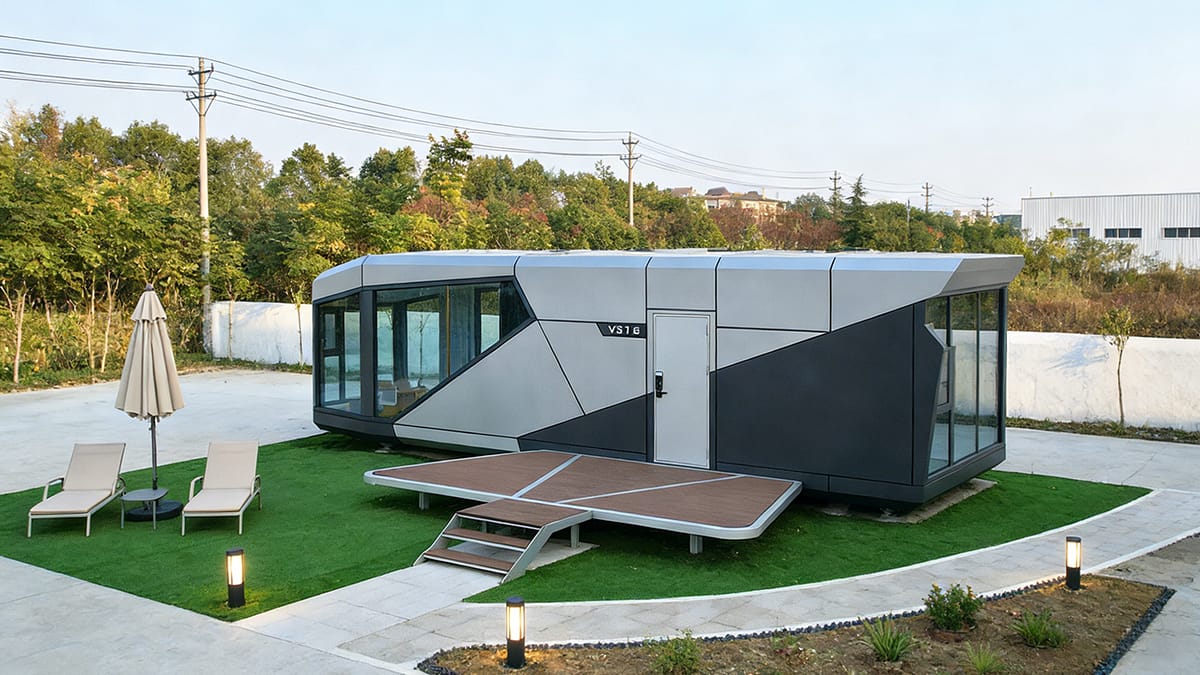
Cold Climate Upgrades
You want your house to stay warm when it is cold. Many modular capsule house models have upgrades for cold weather. Builders use strong metal and steel frames for heavy snow. You get special insulation like spray foam and vacuum panels. These keep the inside warm. Radiant floor heating and heat pumps help save energy. Airtight walls stop cold air from getting in. Fewer seams mean snow and ice cannot sneak inside. Sleek designs look nice and fit winter places well.
Upgrade Type | Description |
|---|---|
Handles heavy snow loads | |
Superior Insulation | Maintains consistent indoor temperatures |
Radiant Heating | Minimizes energy use |
Airtight Construction | Prevents drafts and heat loss |
Low Maintenance | Reduces snow and ice infiltration |
Modern Aesthetics | Fits well in winter landscapes |
Hot Climate Adaptability
You need your house to stay cool when it is hot. Modular capsule house models use shiny roofs and shading panels. These keep the inside cool. Split AC units give strong cooling. Insulation stops heat from coming in. You stay comfy even if it is 140°F outside. Tight walls keep hot air out and the temperature steady.
Feature | Description |
|---|---|
Keeps interiors cool | |
Split AC Units | Ensures optimal cooling |
Thermal Resistance | Works efficiently in high temperatures |
Air Tightness | Prevents hot air entry |
Urban and Rural Suitability
You can put your modular capsule house in a city or the country. Cities cost more because land and services are expensive. You get easy ways to travel and see a doctor. Smart designs help you use space well. In the country, land costs less but travel can be harder. Designs focus on outdoor space and relaxing. Urban models use tough materials for busy life. Rural models use eco-friendly materials for weather and nature.
Factor | Urban Considerations | Rural Considerations |
|---|---|---|
Higher costs due to land value | Lower costs, transport and access important | |
Location and Integration | Close to services | Natural surroundings, zoning laws matter |
Purpose and Usage | Maximize space and amenities | Outdoor features for vacation homes |
Design and Functionality | Vertical space use | Outdoor integration and relaxation |
Quality and Materials | Withstand wear and tear | Sustainability and weather resistance |
Structural Durability and Lifespan
You want your house to last a long time. Builders use anti-seismic steel and strong aluminum plates. These help your house stand up to big earthquakes and strong winds. The main structure has high fire resistance. With good care, your modular capsule house can last over 50 years.
Feature | Details |
|---|---|
Construction Materials | Anti-seismic steel, aviation-grade aluminum |
Lifespan | Over 50 years with maintenance |
Wind Resistance | Up to 70 m/s (level 12) |
Earthquake Resistance | Up to magnitude 9 |
Fire Resistance | Grade A main structure, grade B1+ interior walls |
Tip: Take care of your house so it stays safe and strong for many years.
Environmental Impact and Sustainability
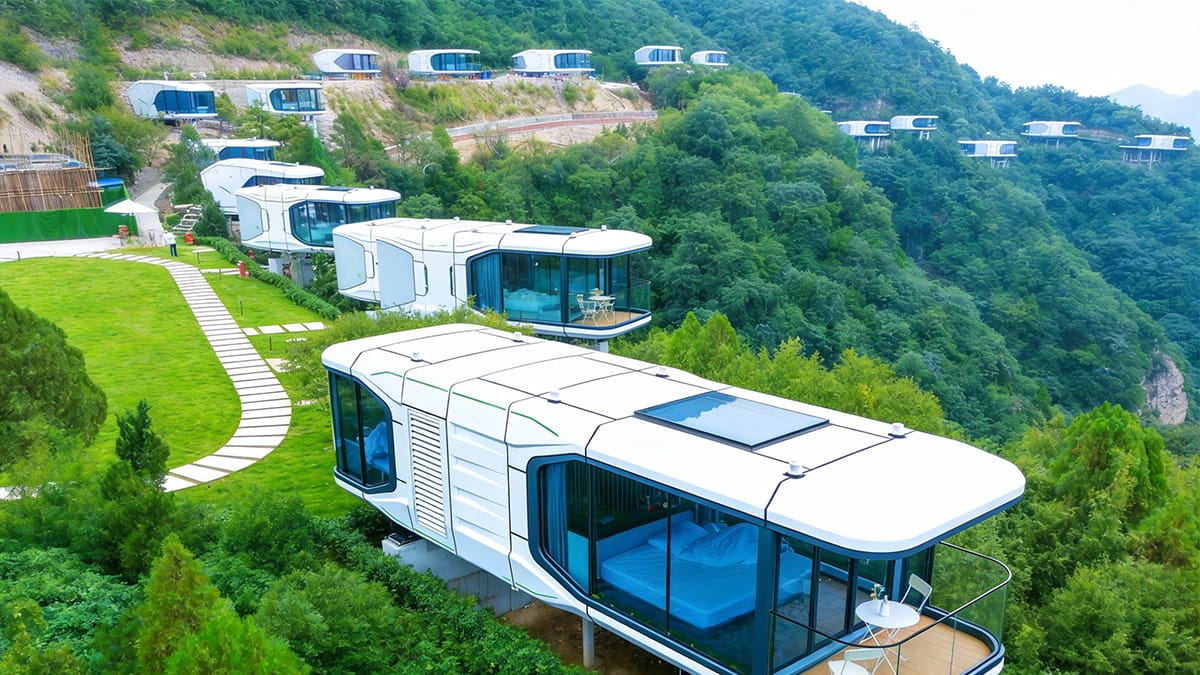
Eco-Friendly Materials
You want your home to help the planet. Builders pick safe materials that last a long time. These materials do not harm your air. Many modular capsule houses use eco-friendly certified materials. You see recycled steel and reclaimed wood in the walls and floors. Low-impact concrete is also used. These choices help cut down waste and pollution. Non-toxic, low-VOC materials make your indoor air healthier.
Recycled steel
Reclaimed wood
Low-impact concrete
Non-toxic, low-VOC materials
Eco-friendly certified materials
Many homes have solar panels and double-glazed windows. High-quality insulation helps save energy and protects the environment.
Energy Efficiency
You want your home to use less energy and save money. Modular capsule houses have smart insulation and energy-saving features. Multi-layer thermal insulation keeps your house warm in winter. It keeps your house cool in summer. Double-glazed windows stop heat from escaping. Solar panels give you clean power. Look at the table to see how these homes compare to traditional houses:
Feature | Modular Capsule Houses | Traditional Constructions |
|---|---|---|
Energy Efficiency Rating | Standard efficiency | |
Insulation Technology | Multi-layer thermal | Basic insulation |
Heating/Cooling Cost Savings | Significant savings | Limited savings |
You save a lot on heating and cooling bills. Your home stays comfortable all year.
Sustainability Factors
You want your home to help the planet stay green. Modular capsule houses use materials that can be recycled or reused. Builders design homes to use less water and energy. Smart systems manage power and reduce waste. Many homes use solar panels and collect rainwater. Choosing a home like this helps the planet. It uses fewer resources and lasts longer.
Tip: If you want to lower your carbon footprint, pick a home with eco-friendly materials and energy-saving features. You help the planet every day.
Cost and Value Comparison
Price Differences by Model
You probably want to know how much each model costs. Prices change a lot because of size, features, and custom choices. Small stackable models cost between $30,000 and $80,000. Custom designs cost from $60,000 to $130,000. Big modular homes can cost up to $200,000. If you add smart tech or fancy finishes, the price goes up. You pay more for extra insulation, solar panels, or special layouts.
Here’s a quick table that shows price ranges:
Model Type | Price Range | Customization Impact |
|---|---|---|
Stackable Capsule | $30,000 – $80,000 | Basic upgrades |
Custom Capsule | $60,000 – $130,000 | Layout, finishes, tech |
Large Modular Home | Up to $200,000 | High-end features |
You should check what comes with the price. Some models have basic furniture and appliances. Others only give you the shell. Always ask about extra costs before you buy.
Service and Logistics
You might think the price is simple, but service and delivery can add hidden fees. These costs depend on how the builder ships and sets up your house. If you pick EXW pricing, you pay for all shipping and handling. This can mean extra costs and risks. You might need to set up transport, customs, and insurance yourself.
DAP pricing makes things easier for you. The builder handles everything until your house gets to the port. You know the total cost before your house arrives.
Service and delivery costs can add hidden fees and risks.
EXW pricing means you handle shipping, which can cost more.
DAP pricing covers everything until your house reaches your port, so you avoid surprises.
Tip: Always ask about the pricing model. If you want less stress, DAP pricing is usually better.
Quality and Design Evaluation
You want your house to look nice and last a long time. Quality and design depend on many things. Material strength matters most. Strong steel frames and composite panels help your house stand up to bad weather. You need certification and rules for legal approval and insurance. Long-term costs affect how much you spend over the years.
Here’s a table that shows how materials affect quality and design:
Impact on Quality and Design | |
|---|---|
Structural components | High-strength lightweight steel frames enhance durability. |
Wall systems | Composite panels with insulation improve energy efficiency. |
Interior surfaces | Low-VOC materials promote healthy indoor air quality. |
Exterior cladding | Weather-resistant composites ensure longevity and aesthetics. |
You should also think about how easy it is to put the house together. If it is easy to build, you save time and money. Good shipping and packing can lower costs and stop damage. Lead time is important if you need your house by a certain date.
Strong materials help your house last in different weather.
Certification and rules make sure you can get insurance and legal approval.
Long-term costs decide how much you pay for repairs and energy.
Note: If you want a modular capsule house that fits your needs, check the materials, building process, and certifications. These details help you get the best value for your money.
Modular Capsule House Comparison Table
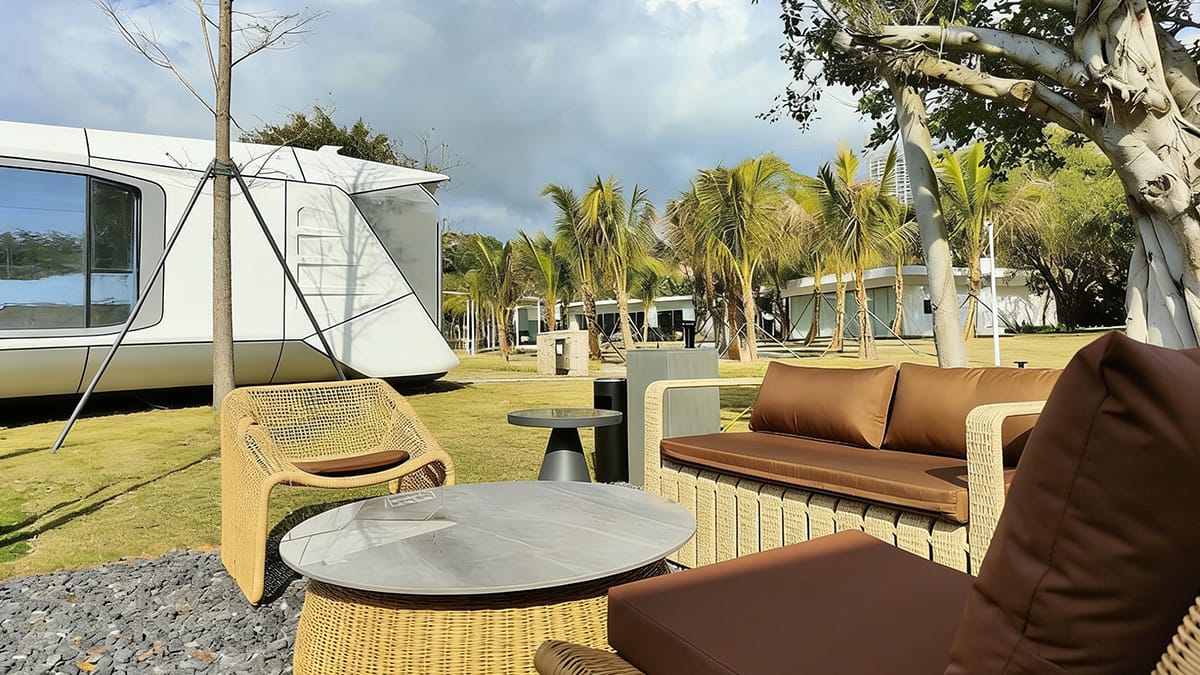
You might want to know how modular capsule house models compare. Looking at them side by side helps you see the main features. The table below shows three popular types. These are Outdoor Space Capsule, Standard Prefab Tiny Home, and Container/Pod Tiny House.
Feature | Outdoor Space Capsule | Standard Prefab Tiny Home | Container/Pod Tiny House |
|---|---|---|---|
Design | Futuristic, capsule look | Traditional cabin or box | Modular pod style |
Structure | Steel + aluminum shell | Wood, steel, SIPs | Steel or composite |
Delivery | Crane-installed, turnkey | Modular sections | Ready or minimal assembly |
Energy Efficiency | High insulation | Variable | Moderate, upgrades possible |
Smart Features | Often built-in | Optional | Standard in new models |
Use Cases | Residential, commercial | Guest house, main home | Airbnb, backyard, rec use |
Install Speed | Days | Weeks to months | Days |
Cost Range | Mid-high, customizable | Wide range | Lower to mid range |
Outdoor Space Capsule models look modern and use strong steel shells. They are fast to set up and usually have smart features. Standard prefab tiny homes look more classic. You can pick from many prices and materials. Container or pod tiny houses use a modular design. They are good for backyards or short stays.
Tip: If you want a quick setup and a modern look, Outdoor Space Capsule or Container/Pod models are a good choice. If you like a classic style or need more room, Standard Prefab Tiny Homes give you more options.
This table makes it easy to compare the main features. You can choose the model that fits your needs, budget, and style. Think about what is most important for your new home.
Choosing the Best Model
Budget-Friendly Options
You want to save money but still get a great home. You have some good choices if you look for budget-friendly models. The DIY Miniature House Kit on Amazon costs only $45.36. This is the lowest price you can find. Some B2C products on Amazon range from $45.36 up to $21,044.37. These options help you start small and add more units later if you need more space. You can build them yourself, which saves on labor costs. Many people like these models because they are easy to put together and do not need special tools.
Low upfront cost
Easy assembly
Good for adding more units later
Tip: If you want to keep your costs down, start with a basic model and upgrade when you can.
Best for Extreme Climates
You might live in a place with tough weather. You need a home that can handle storms, snow, heat, or earthquakes. Some modular capsule house models use special features to keep you safe and comfortable. Check out this table to see what works best for each weather type:
Weather Condition | Construction Feature | Performance Benefit |
|---|---|---|
High Winds & Storms | Steel frames, aerodynamic shapes, secure anchoring | Strong structure, resists wind |
Heavy Snow Load | Reinforced roofs, steep pitches, strong support beams | Roof does not collapse, snow slides off |
Extreme Heat/Cold | Advanced insulation, thermal breaks | Keeps inside comfy, saves energy |
Humidity & Rain | Weather-resistant cladding, sealed joints, ventilation | Stops mold, rot, and leaks |
Seismic Activity | Flexible foundations, lightweight strong materials | Absorbs shocks, less damage in earthquakes |
You can pick a model with these features if you want to feel safe in any climate.
Customization and Upgrades
You want your home to fit your life and style. Many models let you change the layout, colors, and features. You can add smart tech or eco-friendly upgrades. Some people want a modern look, while others like a cozy feel. You can choose what works for you. Here is a table to help you think about what matters most:
Criteria | Description |
|---|---|
Budget Planning | Think about how much you want to spend and where you want to live. |
Aesthetic Preferences | Pick a style you like—modern, simple, or green. |
Customization for Lifestyles | Change the layout or features to match your needs. |
Note: Custom upgrades can make your modular capsule house feel special and work better for your family.
You can find a model that matches your budget, stands up to your weather, and fits your style. Take your time and pick the one that feels right for you.
You have many choices when it comes to modular capsule houses. Some models fit small budgets and work well for hobbies or simple living. Others give you full homes with kitchens and bedrooms. Check out this table to see how different options match your needs:
Budget Category | Price Range | Best For |
|---|---|---|
$45 – $21,000 | Hobbyists, small spaces, décor | |
Full-Scale Living | $10,000 – $100,000+ | Families, rentals, long-term use |
Each model offers smart layouts, eco-friendly features, and easy upgrades. Think about what matters most to you. 🏡
Tip: Make a list of your top needs and reach out to a supplier for more details.
FAQ
How long does it take to set up a modular capsule house?
You can set up your modular capsule house in a few days. Some models need a crane to put them in place. Other models are ready to use right away. This setup is much faster than building a regular house.
Can I customize the layout and features?
You have many ways to make your house special. You can pick the layout, colors, and smart technology. Many suppliers let you add things like solar panels or fancy finishes. You can make your home match your style.
Are modular capsule houses safe in extreme weather?
Most modular capsule houses use strong steel frames and tough materials. These homes can handle storms, heavy snow, and earthquakes. You will be safe and comfortable in different kinds of weather.
What is included in the price?
You usually get the main structure, some furniture, and appliances. Some models only give you the outside shell. Always ask your supplier what is included. Check if you need to pay more for delivery or upgrades.
Can I move my modular capsule house later?
You can move most modular capsule houses if you want to. The design makes it easy to transport. You just need the right tools and help from experts.